Reports that Mike Ditka has died at age 86 have sent collectors back to one of football’s more compact but historically important vintage card runs. Ditka’s playing career came during an era when football card production was far less expansive than it is today, leaving a relatively short list of early issues for collectors to chase.
That scarcity, combined with Ditka’s place in NFL history, has kept attention fixed on a handful of key Topps cards from the 1960s. As a player, he helped redefine the tight end position with a rare blend of receiving ability and blocking strength. As a coach, he became permanently linked to the Chicago Bears and their Super Bowl XX title team. His cultural footprint only widened from there, making him one of the most recognizable figures the sport has produced.
For the card market, that legacy is reflected most clearly in three early Topps releases that continue to stand above the rest: his 1962 Topps rookie, his 1963 Topps third-year card, and his 1966 Topps issue from the close of his Chicago playing days.
Why Mike Ditka’s vintage cards matter
Ditka’s cardboard profile is different from that of many modern football legends. There is no deep run of chromium parallels, serial-numbered autographs, or endless insert variations to sort through. Instead, collectors are working with a small group of foundational vintage cards, where condition, historical context, and player significance do most of the value-driving work.
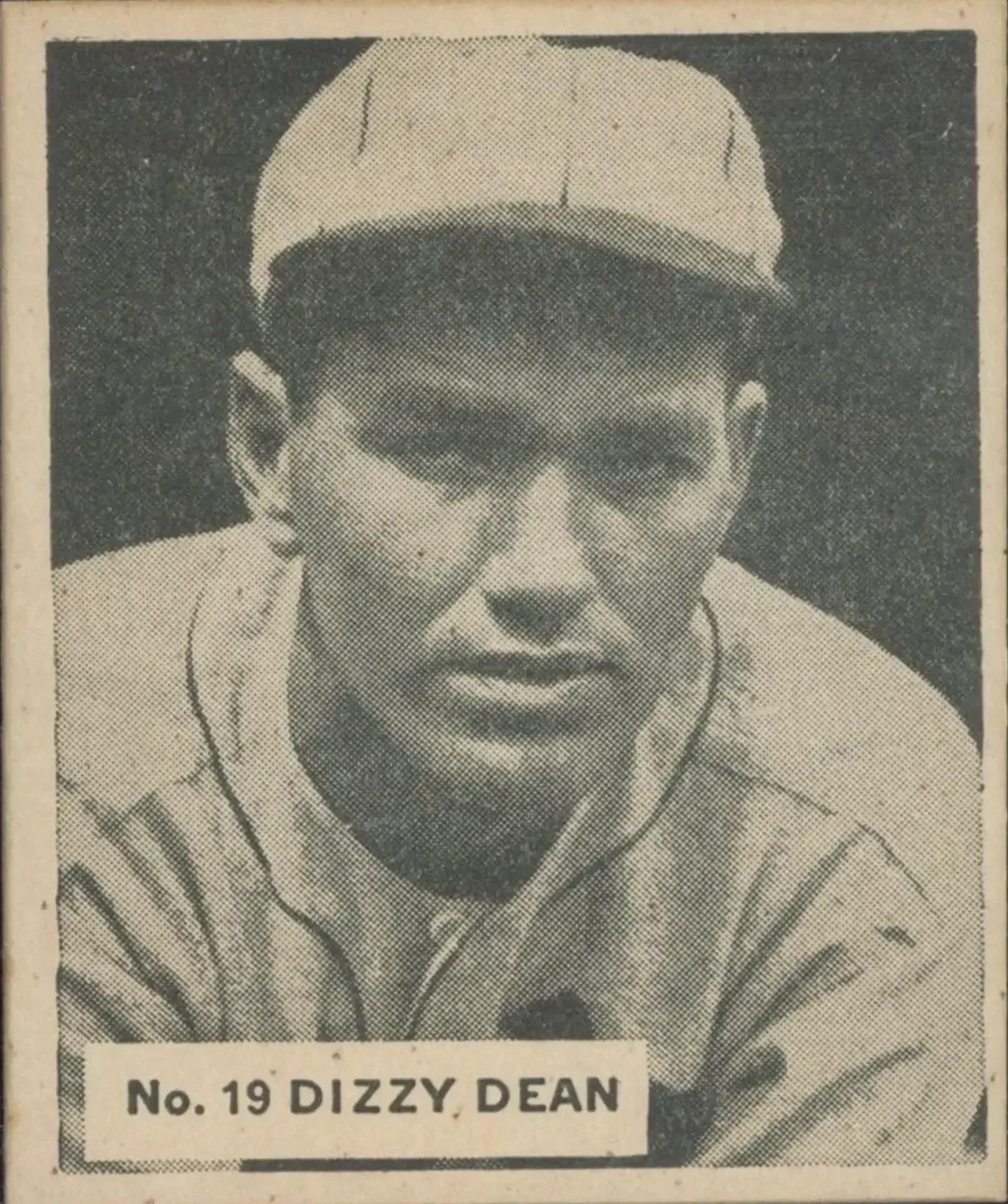
For more collector background, read Top 3 Most Valuable Cards in the 1936 World Wide Gum Set.
That makes high-grade examples especially important. In vintage football, a difference of one or two grading points can dramatically change market value, particularly for stars whose cards were printed and handled more than 60 years ago. Centering, print quality, corners, and surface wear all become major factors, and elite copies can be extremely difficult to find.
Ditka’s popularity adds another layer. He is not just a Hall of Fame player or a Super Bowl-winning coach. He is one of the defining football personalities of his generation, remembered for his time with the Bears, his national television presence, and the larger-than-life image that made him recognizable well beyond the hobby.
1962 Topps #17 stands as the cornerstone card
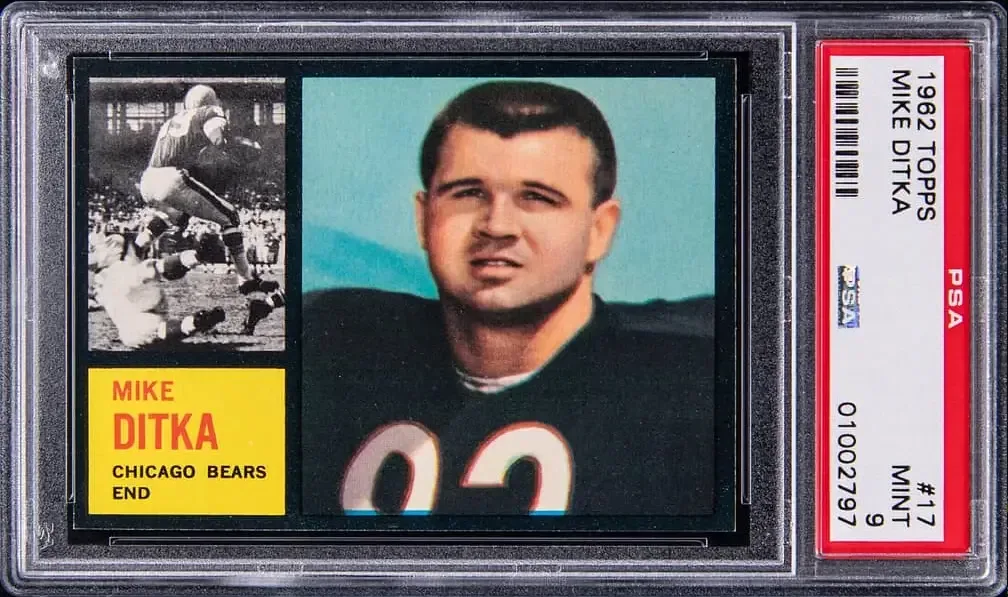
The most important Mike Ditka card remains his 1962 Topps rookie, card No. 17. For vintage football collectors, it is the card most closely tied to his hobby legacy and the one that has produced the most eye-catching results at the top end of the market.
For another perspective on this story, read Mike Ditka’s Three Key Vintage Football Cards, From a $3,837 Topps Issue to a $207,525 Rookie.
The card uses a split-image design that helps it stand out among early 1960s football releases. It features a youthful portrait of Ditka along with an action image, giving collectors both a close-up player presentation and a game-related visual on the same card. It is a classic rookie issue from a period when football cards were still establishing their visual identity, and that helps explain why it remains such a focal point today.
Condition scarcity is a major part of the story. A PSA 9 example sold for $207,525.66 on June 21, 2025, a result that shows just how powerful the combination of rookie-card status, Hall of Fame credentials, and elite preservation can be. The grade is significant on its own, but population data adds even more weight. PSA’s certification lookup lists only four copies in PSA 9, with none graded higher.
That population reality places the best surviving examples in exceptionally thin air. For collectors who want the definitive Ditka card, the 1962 Topps rookie is the clear starting point, and for many, it is the finish line as well.
1963 Topps #62 remains a major follow-up card
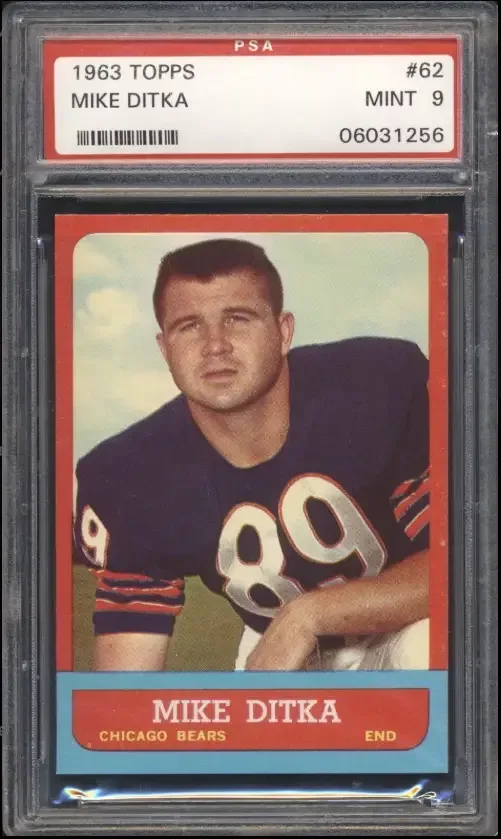
While rookie cards tend to dominate hobby conversations, Ditka’s 1963 Topps No. 62 has developed into a strong collector target in its own right. As a third-year card, it captures Ditka after he had already begun establishing himself as one of the game’s emerging stars.
The design offers a slightly fuller player image than the previous year’s card, showing more of his uniform and giving the issue a distinct presentation within his early run. By the time this card reached the market in its original era, Ditka had already made two Pro Bowls and was on his way to his first of two All-Pro selections, making the card an appealing snapshot from his rise into the league’s upper tier.
A PSA 9 copy sold for $5,433 on June 26, 2025. That figure sits far below the level reached by his rookie, but it still underscores the demand for premium-condition Ditka vintage. Card Ladder’s current tracking placed the card’s value at $10,740 after that sale, reflecting the market’s interest in top-grade examples of his early career issues.
For collectors who want a significant Ditka card without stepping into rookie-card pricing, the 1963 Topps offers an important alternative. It carries vintage appeal, strong player context, and condition sensitivity, all of which make it one of his most relevant non-rookie cards.
1966 Topps #32 tells an interesting transitional story
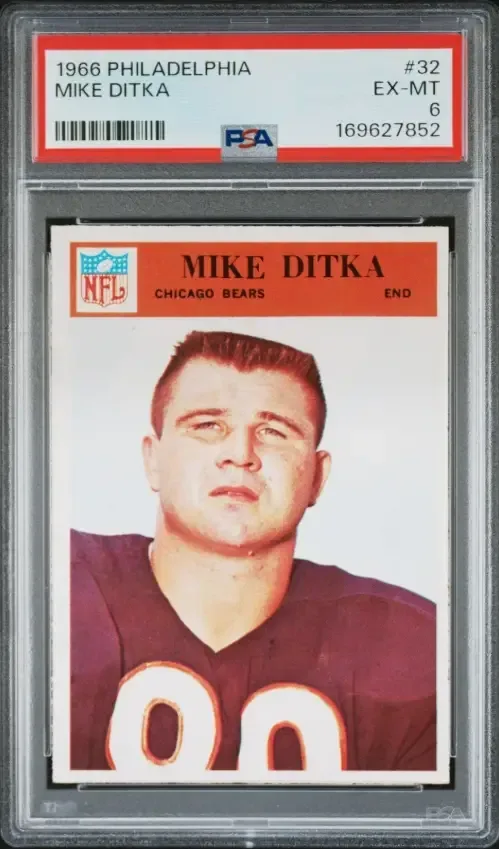
Ditka’s 1966 Topps No. 32 is not valued at the same level as the two earlier cards, but it has a compelling place in his collecting profile. The card shows him in Bears gear and identifies him with Chicago on the card front, yet grading labels have also drawn attention because some identify the issue with Philadelphia.
That quirk lines up with the timing of Ditka’s final season in Chicago before his move to the Eagles. The result is a card with a transitional feel, one that connects the final chapter of his Bears playing career with the next stop in his NFL journey. For vintage collectors, unusual hobby details like that often add interest beyond straightforward price guides.
The top publicized sale for this card reached $3,837 on March 24, 2019, for a PSA 6 example. Card Ladder currently tracks a value of $2,275 for the issue, illustrating that even lower on the hierarchy of Ditka’s best-known vintage cards, there is still meaningful collector demand.
It is also a reminder that not every important vintage card has to be a rookie or a highest-grade trophy piece. Sometimes the appeal comes from the story the card tells, and the 1966 Topps has more narrative texture than many later-career issues.
Key Mike Ditka cards drawing collector attention
- 1962 Topps #17 - Ditka’s rookie card and the centerpiece of his vintage card market.
- 1963 Topps #62 - A highly regarded early-career issue from his rise to NFL stardom.
- 1966 Topps #32 - A late-Bears-era card with notable team-identification intrigue.
How Ditka’s football legacy shapes demand
The market for Ditka cards is tied directly to the unusual breadth of his football identity. He was not simply a remembered player from a distant era. He changed how the tight end position was viewed, bringing a more forceful, all-around style that helped define the role for later generations.
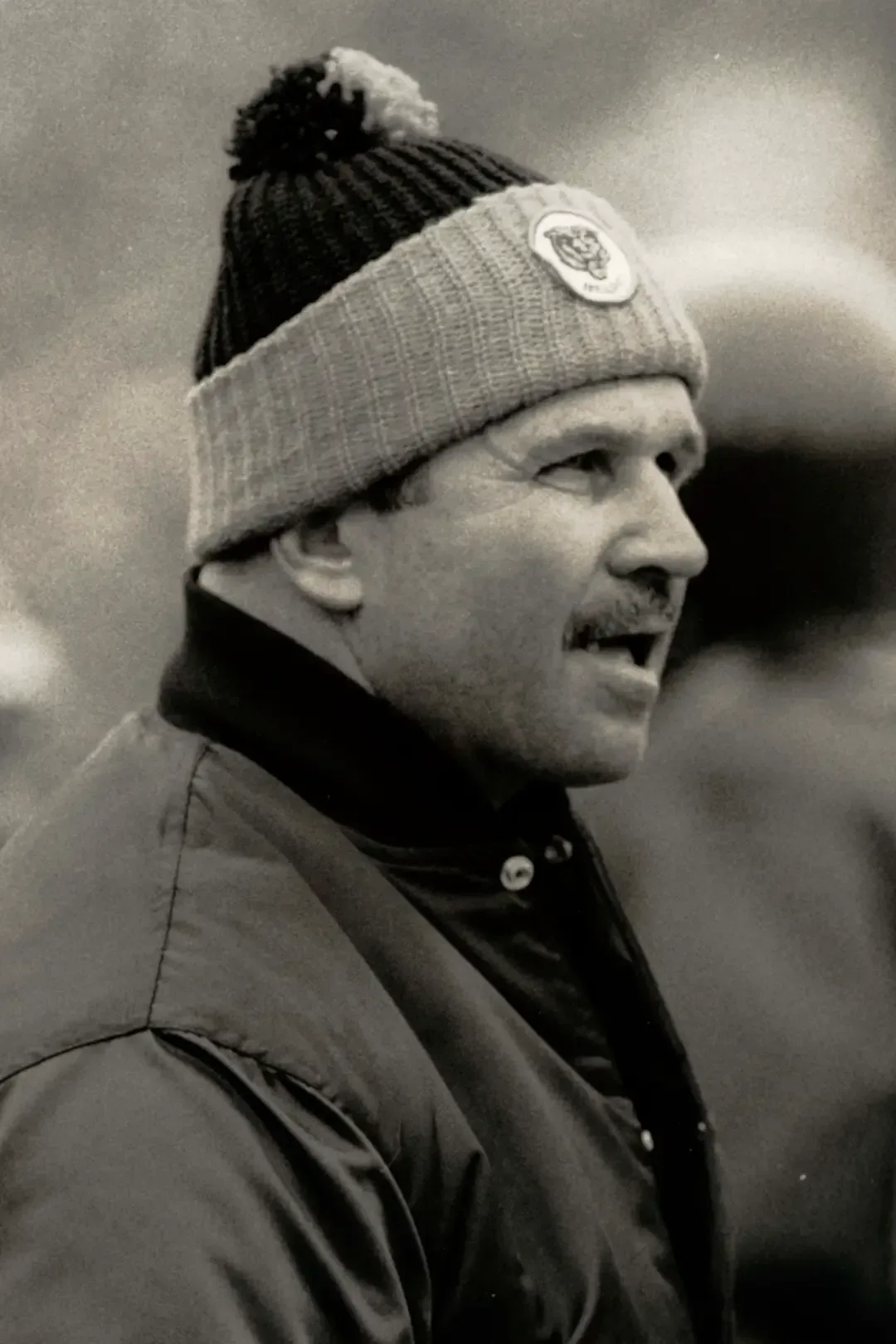
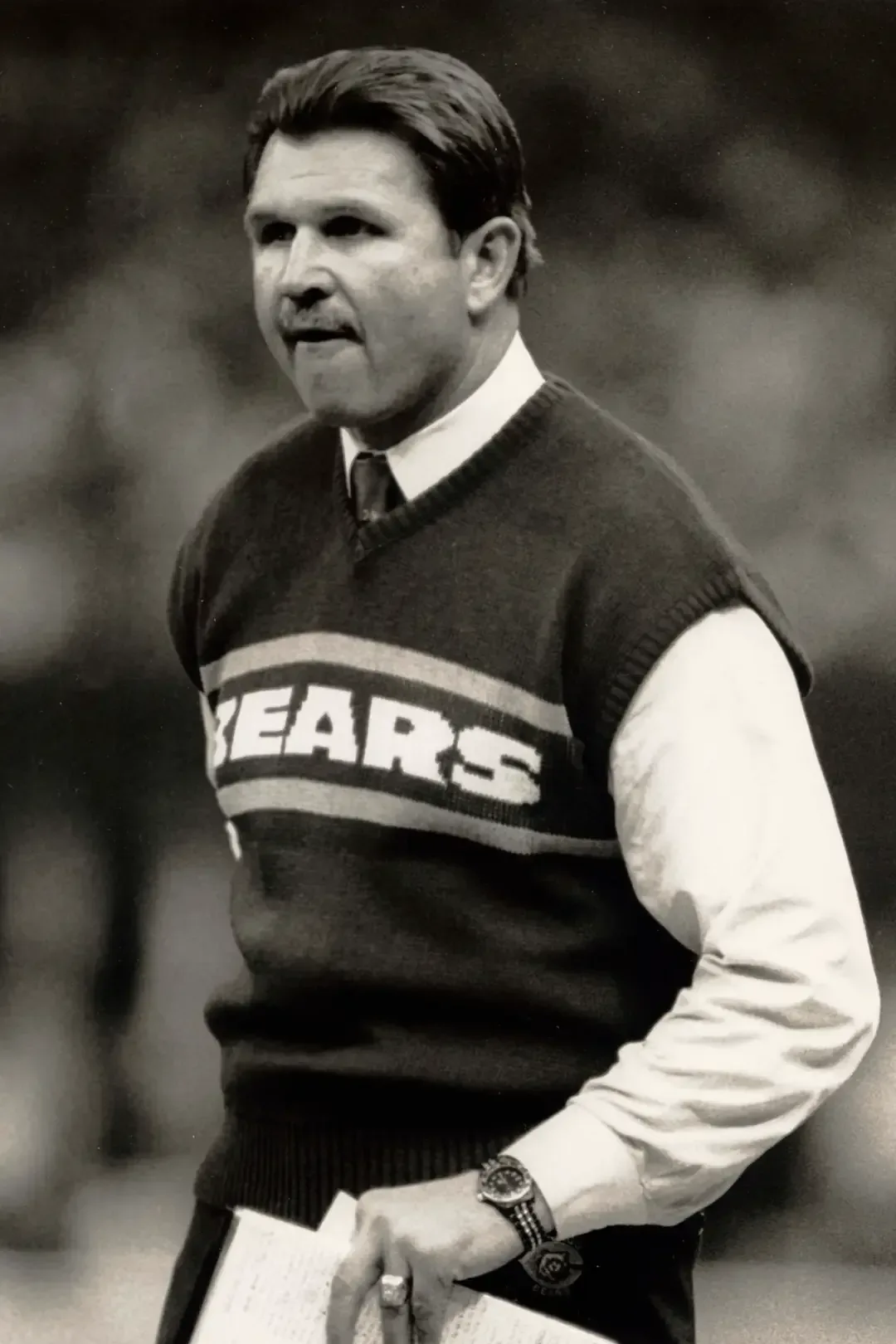
After his playing days, his profile only grew. He became the face of the 1985 Bears, one of the most iconic teams in league history, and that alone would have secured his place in football memory. But Ditka’s personality, sideline presence, and connection to Chicago pushed him into a different category. He became a sports figure who crossed into mainstream American culture.
That matters in the hobby because broad recognition tends to support long-term collector interest. Vintage football collectors may focus on his playing accomplishments, while Bears collectors may prioritize his coaching legacy. Pop-culture aware buyers may simply want a card of a figure they instantly recognize. When multiple collector groups converge on the same small run of vintage cards, the best examples can remain in demand for years.
What collectors should watch in the Ditka market
In the near term, increased attention following major news can create a temporary rush toward landmark cards, especially rookies and high-grade vintage examples. That does not always mean every copy rises in lockstep. Condition remains the biggest separator in Ditka’s market, and buyers are likely to continue paying the strongest premiums for clean, well-centered examples in top holders.
Collectors should also keep the structure of his card catalog in mind. Because the early-card supply is limited compared with later stars, even modest bursts of demand can have an outsized effect on asking prices and auction participation. Lower-grade copies may become more visible as owners test the market, while top-population or near-top-population examples can remain tightly held.
For entry-level buyers, that could put more focus on eye appeal rather than just chasing the highest technical grade possible. For advanced collectors, population reports and recent sale history on the 1962 Topps rookie will likely remain the key indicators of where the upper end of the Ditka market stands.
A compact vintage run with lasting significance
One reason Ditka’s card market remains so easy to understand is that it is anchored by a concise group of vintage essentials. There is little confusion about which cards matter most. The 1962 Topps rookie sits at the top, the 1963 Topps holds firm as a major early-career piece, and the 1966 Topps continues to attract interest because of its place in his career timeline.
For collectors revisiting Ditka’s legacy, those cards offer a direct link to the playing career that came before the fame of the sideline, the sweaters, the mustache, and the lasting image of one of football’s most recognizable figures. In a hobby full of sprawling checklists and constant new releases, Mike Ditka’s most important cards remain rooted in a short vintage run that still carries real weight across the market.
Photo Gallery