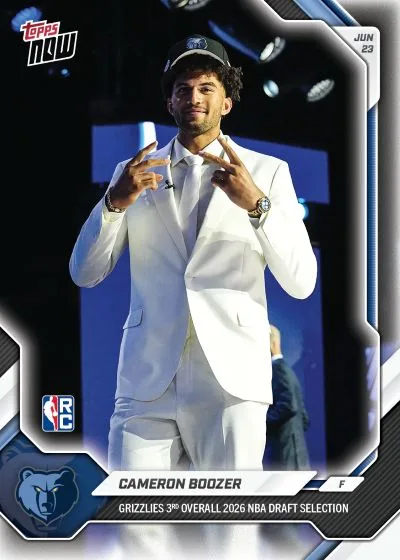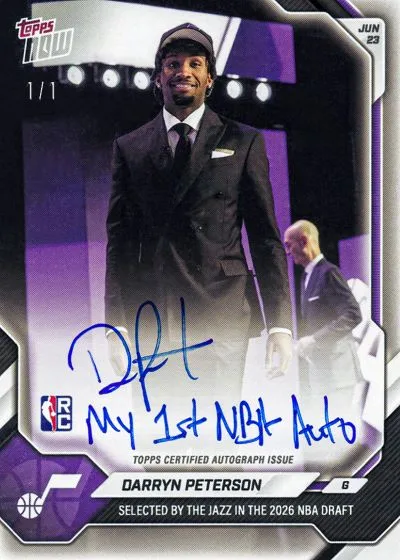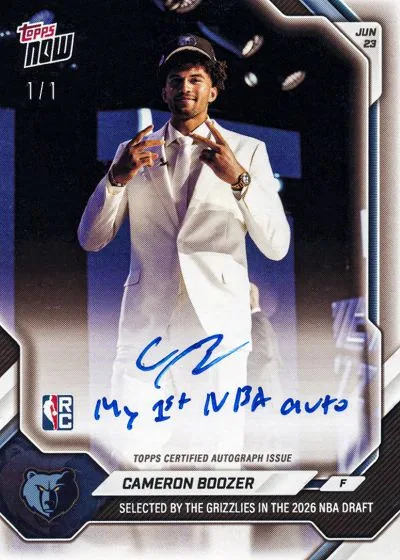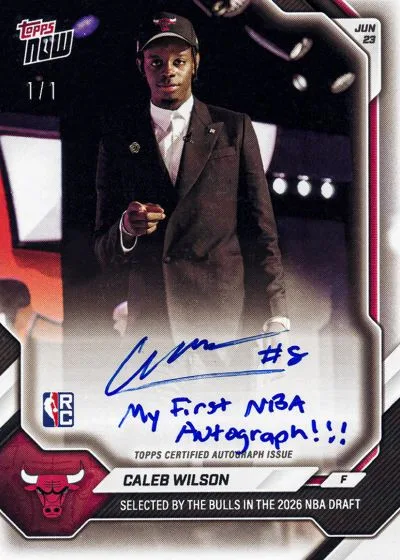
The 2026 Topps Now NBA Draft release gives collectors an immediate entry point into the newest rookie class, with cards issued right around draft night and sold for a limited 48-hour window. It also introduces Topps' new NBA rookie card logo, making the set notable not just for the players included, but for the branding attached to their earliest officially packaged NBA cards.
For player collectors, prospect investors and Topps Now builders, this release is built around speed and scarcity. The base cards are produced to order, while select parallels, short-printed image variations and autograph cards are randomly inserted into qualifying purchases. That combination keeps the product approachable at the entry level while still offering several chase layers for collectors hunting rarer versions.
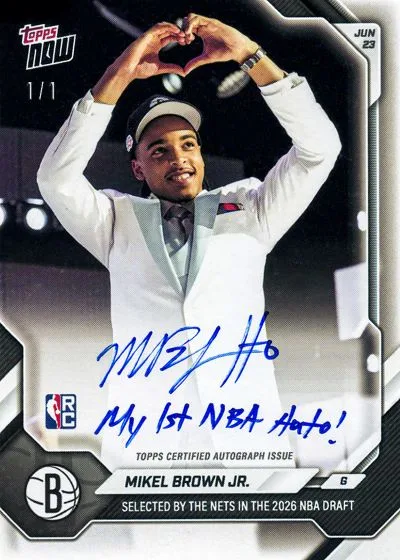
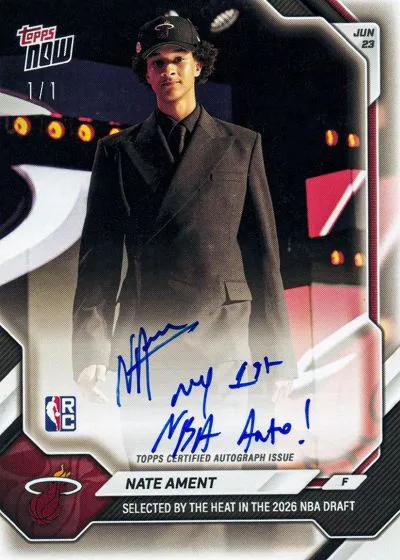
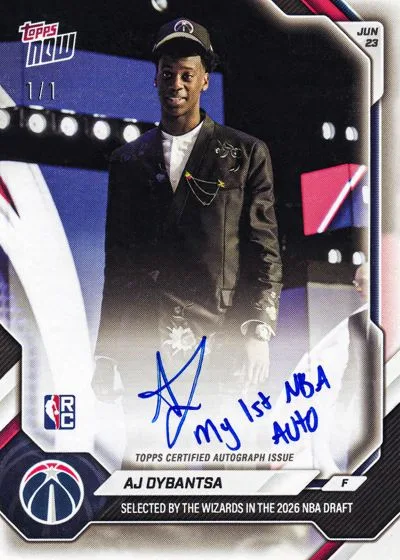
One of the biggest talking points in the set is the return of the draft-night signed 1/1 concept. A number of first-round picks signed one-of-one cards created during the event and inscribed them with “My 1st NBA Auto.” That inscription gives the cards a strong first-appearance angle and ties the product closely to the moment each player entered the league.
What Makes 2026 Topps Now NBA Draft Stand Out
This release covers 23 players selected in the first round of the 2026 NBA Draft, including every one of the top 19 picks. That broad first-round coverage gives the checklist more depth than a release focused only on the very top names, while still keeping the product compact enough for team collectors and rookie-focused buyers to chase specific players.
The set is especially important because it offers one of the earliest collectible card appearances for many of these players in their NBA team identities. In a market that often reacts quickly to first cards, first logos and first-team associations, timing matters. A Topps Now issue arriving directly off the draft can attract attention well beyond the usual daily card audience.
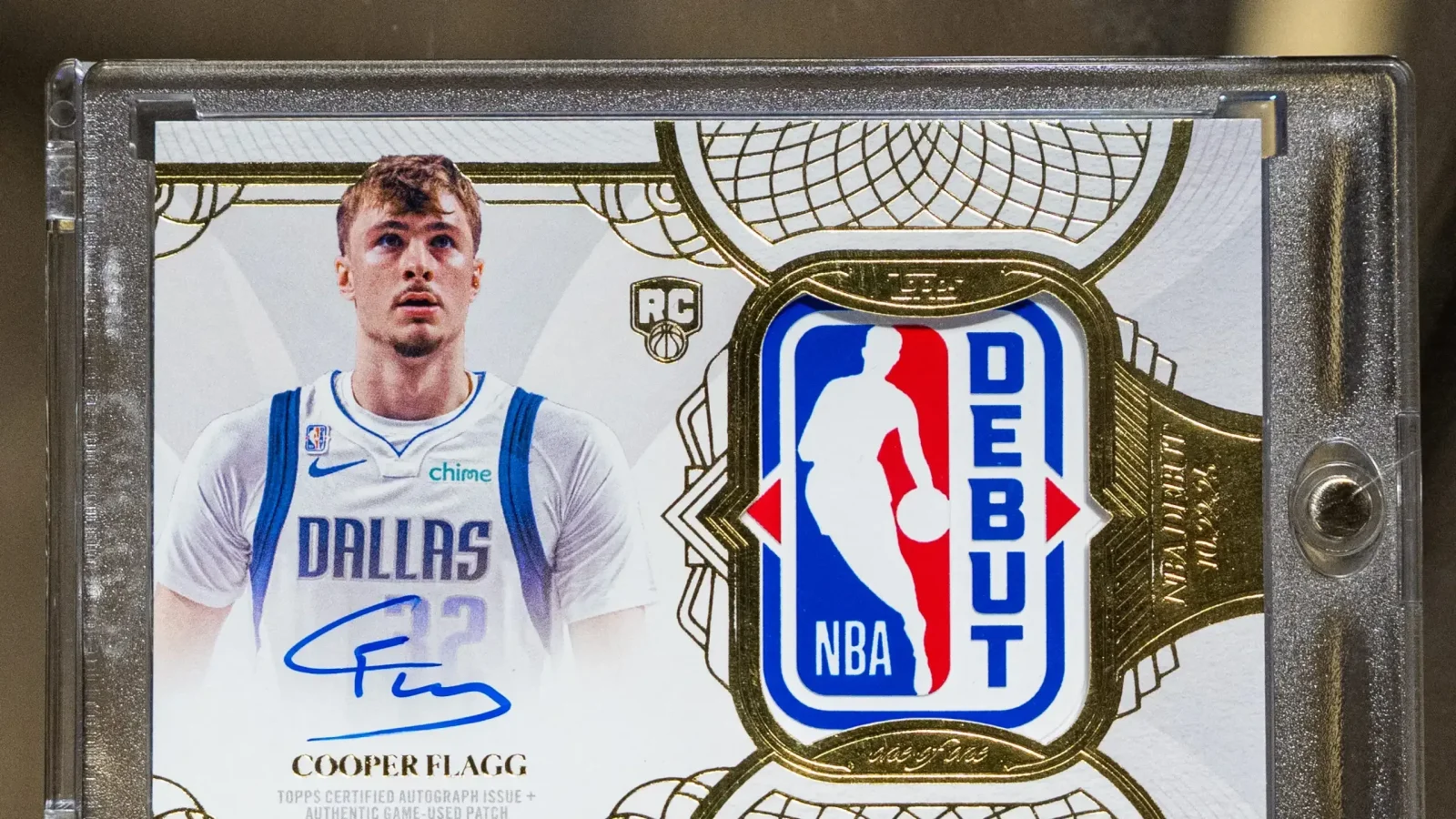
The rookie card logo debut adds another layer of significance. Collectors frequently pay attention to branding changes, especially when they mark the start of a new licensing era or a new visual standard. In this case, the product is not just documenting the draft class. It is also introducing a new presentation element that could matter to long-term set and rookie card collectors.
How the Ordering Window Works
Like other Topps Now releases, the 2026 Topps Now NBA Draft cards are offered for a short purchasing window rather than distributed through traditional hobby boxes. Each card is available directly through Fanatics for 48 hours, with orders needing to be placed by June 25. After that window closes, the print run is set based on the total number of orders placed.
This print-to-order format means the base version of each card does not have a preset production cap. Instead, Topps prints exactly what the market orders during the sale period. That structure creates a different collecting dynamic from standard-pack products. Rather than wondering how much sealed product exists, collectors focus on final print runs, parallel odds within fulfilled orders and whether a player's card reaches certain production thresholds that unlock extra chase content.
Because of the short sales window, the secondary market usually develops quickly. Single-card sellers and bulk buyers often list base copies soon after the ordering period ends, while rarer parallels and autograph hits can command immediate attention once they surface.
Base Parallels in the 2026 Topps Now NBA Draft Set
Every player in the base set has a standard card along with a familiar Topps Now-style foil parallel lineup. These versions give collectors a more limited path to the same draft-night images and team associations found on the standard issue.
- Gold Foil /50
- Orange Foil /25
- Black Foil /10
- Red Foil /5
- FoilFractor /1
For collectors who like ranking cards by scarcity tiers, this lineup gives a clean progression from semi-tough to elite. Gold Foil /50 offers the most accessible serial-numbered chase, while the FoilFractor 1/1 sits at the top of the parallel ladder. In a draft release, where player demand can change dramatically over time, even the mid-tier parallels can become important if a prospect breaks out early.
Autographs and the “My 1st NBA Auto” Inscription
The autograph portion of the release is one of its strongest selling points. Many of the first-round selections signed a draft-night one-of-one card featuring the inscription “My 1st NBA Auto.” Cards with a true event-specific inscription tend to stand apart from standard certified autographs, and in this case the wording directly ties the card to a milestone moment in the player's pro journey.
Topps also added autograph redemptions for select players in two additional limited tiers:
- Autographs /10
- Autographs /5
That gives the release three autograph lanes to watch: the signed one-of-one draft-night cards, the /10 autograph redemptions and the /5 autograph redemptions. Collectors chasing signature cards should note one key exception on the checklist. Darius Acuff Jr. is the only player in the set without an autograph version.
Because these autographs are inserted into direct orders rather than pulled from a traditional pack product, the experience is a little different from opening wax. Buyers place an order for the cards they want, then wait to see whether their shipment includes a parallel, variation or autograph hit. That model can create more targeted buying, especially for collectors who want exposure to a specific player without having to rip broader sealed product.
Chrome Unlock Tiers and Print Run Chase Levels
An unusual feature of this release is its print-run-based Chrome unlock system. If a specific player card reaches certain order thresholds, additional Chrome chase cards become available. That means the popularity of a player does more than raise their base print run. It can also expand the reward structure attached to their card.
The unlock tiers are as follows:
- 50,000+ print run: Chrome parallels /99 and /50
- 100,000+ print run: Chrome parallels /25, /10, /5 and 1/1 SuperFractor
- 250,000+ print run: Opal Chrome parallels /50, /25, /10 and /5
- 500,000+ print run: White Opal Chrome parallel 1/1
This mechanism adds another strategic angle for collectors and flippers. A widely anticipated prospect could produce a very large base run, but that same popularity can also unlock more premium chase versions. In other words, high demand may increase supply at the base level while simultaneously creating new rare cards that become especially desirable.
The Chrome tiers are also useful from a market analysis perspective. They can serve as a rough indicator of which rookies are generating the strongest early hobby response. If a player's print run reaches one or more of these thresholds, that is a strong sign of broad collector interest right out of the gate.
Short-Printed Photo Variations
Four players in the release have short-printed photo variations. These alternate-image cards add another chase layer for collectors who prefer visual differences rather than just serial-numbered color changes.
The short-printed variation players are:
- A.J. Dybantsa, Washington Wizards
- Darryn Peterson, Utah Jazz
- Cameron Boozer, Memphis Grizzlies
- Caleb Wilson, Chicago Bulls
Because Topps Now products are often image-driven and event-based, variation photography can become one of the more interesting long-term angles in a checklist. Collectors who want the fullest player run may end up chasing the base card, numbered parallels, autographs where applicable and the variation for these four names.
2026 Topps Now NBA Draft Checklist
The 23-card lineup covers a broad slice of the first round. All listed players have autograph versions except Darius Acuff Jr. Players marked with an asterisk have short-printed photo variations.
- ADYB A.J. Dybantsa, Washington Wizards*
- DPET Darryn Peterson, Utah Jazz*
- CBOO Cameron Boozer, Memphis Grizzlies*
- CWIL Caleb Wilson, Chicago Bulls*
- KWAG Keaton Wagler, Los Angeles Clippers
- MBRO Mikel Brown Jr., Brooklyn Nets
- DACU Darius Acuff Jr., Sacramento Kings
- KFLE Kingston Flemings, Atlanta Hawks
- MJOH Morez Johnson Jr., Dallas Mavericks
- BBUR Brayden Burries, Milwaukee Bucks
- YLEN Yaxel Lendeborg, Golden State Warriors
- AMAR Aday Mara, Oklahoma City Thunder
- NAME Nate Ament, Miami Heat
- HSTE Hannes Steinbach, Charlotte Hornets
- DSWA Dailyn Swain, Chicago Bulls
- BSTI Bennett Stirtz, Memphis Grizzlies
- EOKO Ebuka Okorie, Oklahoma City Thunder
- CAND Christian Anderson, Charlotte Hornets
- AGRA Allen Graves, Toronto Raptors
- LPHI Labaron Philon Jr., Philadelphia 76ers
- CCAR Cameron Carr, New York Knicks
- CCEN Chris Cenac Jr., Boston Celtics
- JJEF Joshua Jefferson, Minnesota Timberwolves
Key Rookie Names Collectors Will Watch
At the top of the checklist, A.J. Dybantsa, Darryn Peterson, Cameron Boozer and Caleb Wilson stand out because each has a short-printed variation in addition to the standard card path. Those names are also likely to draw some of the earliest hobby attention simply because premium prospects tend to dominate draft-night demand. When a player has a base card, serial-numbered parallels, potential autograph versions and an SP image variation, the collecting tree becomes much deeper very quickly.
The checklist also includes players tied to high-profile franchises, which can push demand beyond prospecting alone. Team-based interest can matter early in Topps Now products, especially when fan bases want the first card of a new draftee in official team branding. That can be a factor for cards tied to clubs like the Wizards, Jazz, Bulls, Knicks, Celtics and Lakers-adjacent market teams such as the Clippers, even if long-term value will still depend heavily on player performance.
Another angle to monitor is how multi-player team representation affects collecting patterns. Chicago appears with Caleb Wilson and Dailyn Swain. Memphis lands Cameron Boozer and Bennett Stirtz. Oklahoma City has Aday Mara and Ebuka Okorie. Charlotte also has two names in Hannes Steinbach and Christian Anderson. Collectors focused on team lots and early roster building may gravitate toward those pairings.
What the Release Means for the Secondary Market
Topps Now basketball releases often hit the secondary market in waves. The first wave is base singles posted by bulk buyers as soon as the ordering window ends or shipments begin to arrive. The second wave is numbered parallels and SP variations, which can create quick price spikes if very few copies surface at first. The third wave involves autographs, especially low-numbered redemptions and one-of-one inscriptions, where value can be harder to define because each card is effectively a unique event-driven piece.
This release has several traits that can create early volatility: first NBA team cards for draft picks, a newly introduced rookie card logo, direct-to-consumer distribution, a limited purchase window and premium autograph inscriptions. Those features tend to attract both collectors and speculators, particularly for the top names.
Print run size will be critical context when evaluating base singles. A popular player's standard card may be extremely easy to find if orders surge, but the more limited foil parallels, SP image variations and autograph tiers can still hold a very different market profile. Collectors comparing player values should separate base-card demand from chase-card demand rather than treating them as the same market.
Collector Details to Know Before Buying
If you are targeting the 2026 Topps Now NBA Draft release, the main decision is whether you want exposure through direct orders during the on-sale period or through the secondary market afterward. Ordering during the 48-hour window gives you a chance at bonus hits packed into your purchase, including numbered parallels, SPs and autographs. Buying later lets you focus on a specific card, player or rarity without taking on the uncertainty of the random insert process.
Collectors building player rainbows should pay close attention to the full ladder: base, Gold Foil /50, Orange Foil /25, Black Foil /10, Red Foil /5 and FoilFractor /1. For select stars, that path may expand further if Chrome tiers unlock. Variation chasers also need to note the four SP players, while autograph collectors should remember that Darius Acuff Jr. does not have a signed version in the release.
With a 23-player checklist, multiple foil parallels, draft-night one-of-one inscriptions and print-run-triggered Chrome additions, the 2026 Topps Now NBA Draft set offers much more than a simple commemorative release. It functions as an early rookie snapshot, a prospecting vehicle and a first-wave chase product for the newest NBA class, with orders available only during the brief Fanatics sales window.
Photo Gallery