The 2026 Panini World Cup Prizm release has given soccer collectors one of the year’s most talked-about chase inserts in Manga. Since the product arrived in June across hobby and retail formats, the case-hit style insert has turned into a major driver of both ripping excitement and secondary-market activity.
Sales data through the 18th shows just how active the category has been. The Manga insert generated $3,673,349.99 across 2,956 sales, making it one of the strongest-performing insert runs in the product. What stands out most, though, is the split between the players bringing in the most total money and the players changing hands most often.
At the high end, a small group of global stars has dominated the dollars. By volume, a different tier of names has taken over, including a few results that many collectors would not have predicted when the set first released.
The biggest Manga sales by total dollars
Three players have carried the market from a revenue standpoint: Lamine Yamal, Cristiano Ronaldo, and Lionel Messi. Combined, those three account for $2,293,827.94 in sales, or 62% of all individual Manga card sales tracked from the 2026 Panini World Cup Prizm release window covered here.
For more collector background, read Top 3 Football Card Sales of the Week: Tom Brady, Patrick Mahomes, Walter Payton.
That concentration is not especially surprising when viewed through the lens of collector demand. Messi and Ronaldo remain two of the most globally recognized names in the hobby, with multi-generation appeal that reaches well beyond dedicated soccer collectors. Yamal, meanwhile, continues to attract strong modern-card demand thanks to his age, talent, and long-term upside in the market.
The average raw sale for Lionel Messi’s Manga was listed at $9,088.50 during the period referenced here, a figure that helps explain how a small number of star cards can heavily tilt the total dollar leaderboard. Even if other players are selling more frequently, premium pricing at the very top quickly separates those elite names from the rest of the checklist.
For collectors, that split matters. It suggests the Manga market is functioning on two tracks at once. One track is driven by trophy-card buyers chasing iconic names and willing to pay for centerpiece pieces. The other is a broader transaction market where more affordable cards can post far higher unit counts.
Volume tells a very different story
When the focus shifts from total dollars to number of transactions, the leaderboard changes. Instead of being led by the three most expensive stars, the volume side is topped by players with much lower entry points and, in some cases, very different collector profiles.
Five names separated themselves by sales count: Diego Luna, Tim Howard, Bukayo Saka, Emiliano Martinez, and Raphinha. None of them matched the star trio in total money generated, but all five proved to be highly active on the market.
That difference can happen for several reasons. Lower raw prices expand the buyer pool, making it easier for collectors to grab a copy without stretching their budget. Certain players can also benefit from national-team popularity, club allegiances, or a collectible niche that is strong even if the player is not among the set’s most expensive names.
In the case of World Cup Prizm Manga, volume appears to reflect accessibility just as much as prestige.
Top five Manga leaders by sales volume
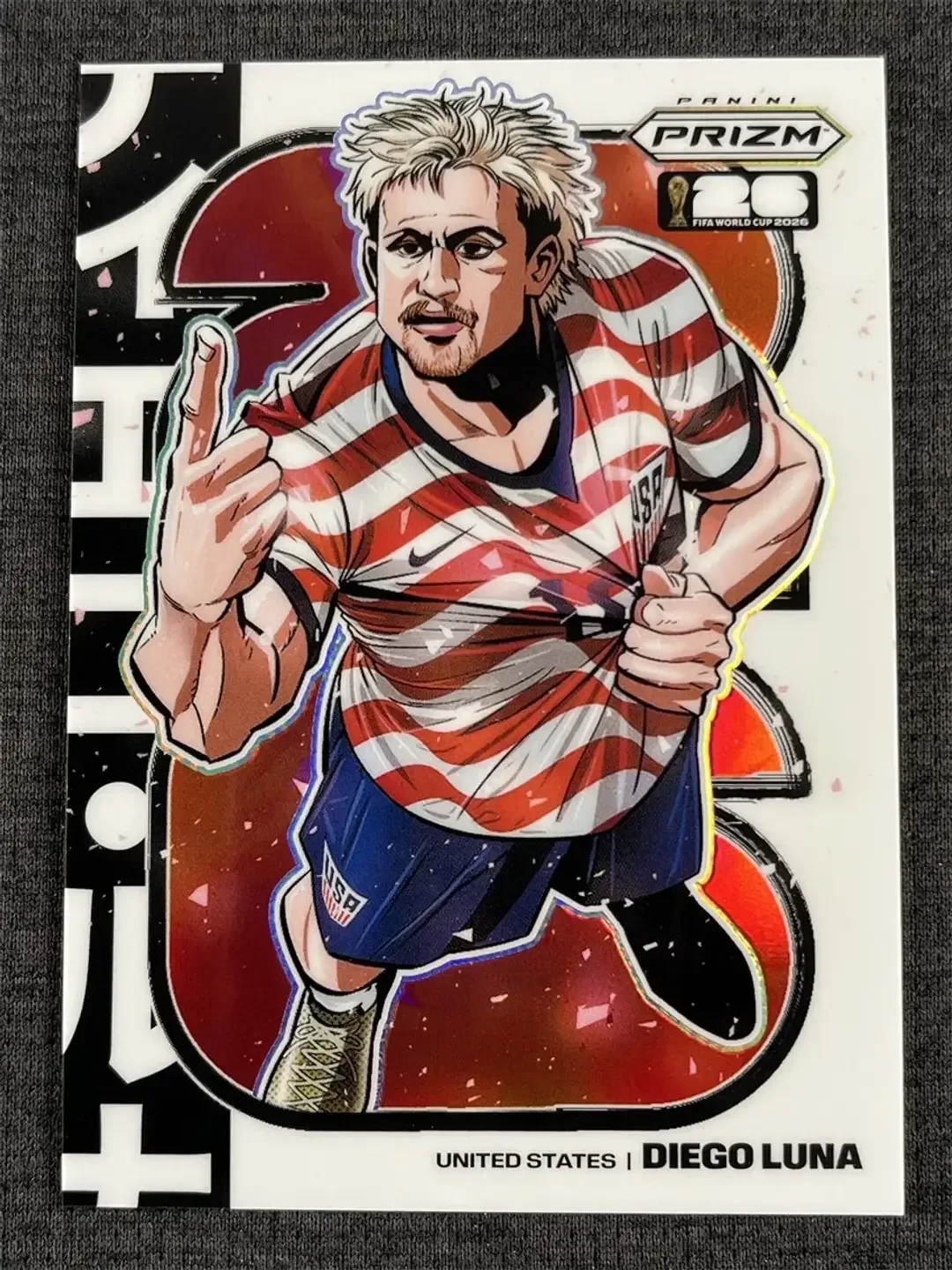
1. Diego Luna, United States
Diego Luna led the category in sales count with 155 transactions, the highest total among the 30-player Manga checklist. That result stands out immediately because Luna was not among the release’s most obvious headline chases, yet his card moved more often than any other Manga during the period covered.
The last recorded sale for a Luna Manga was $85, and there had been no PSA 10 sales noted at that point. The low raw price likely played a major role in the transaction volume. At that level, collectors can take a chance on a recognizable U.S. name without entering the upper price tier attached to the biggest global stars.
Luna’s profile also points to the value of domestic collector bases in a World Cup product. U.S. players can draw interest from a wide audience of American buyers, and lower-cost inserts often become easy targets for player collectors and set builders alike.
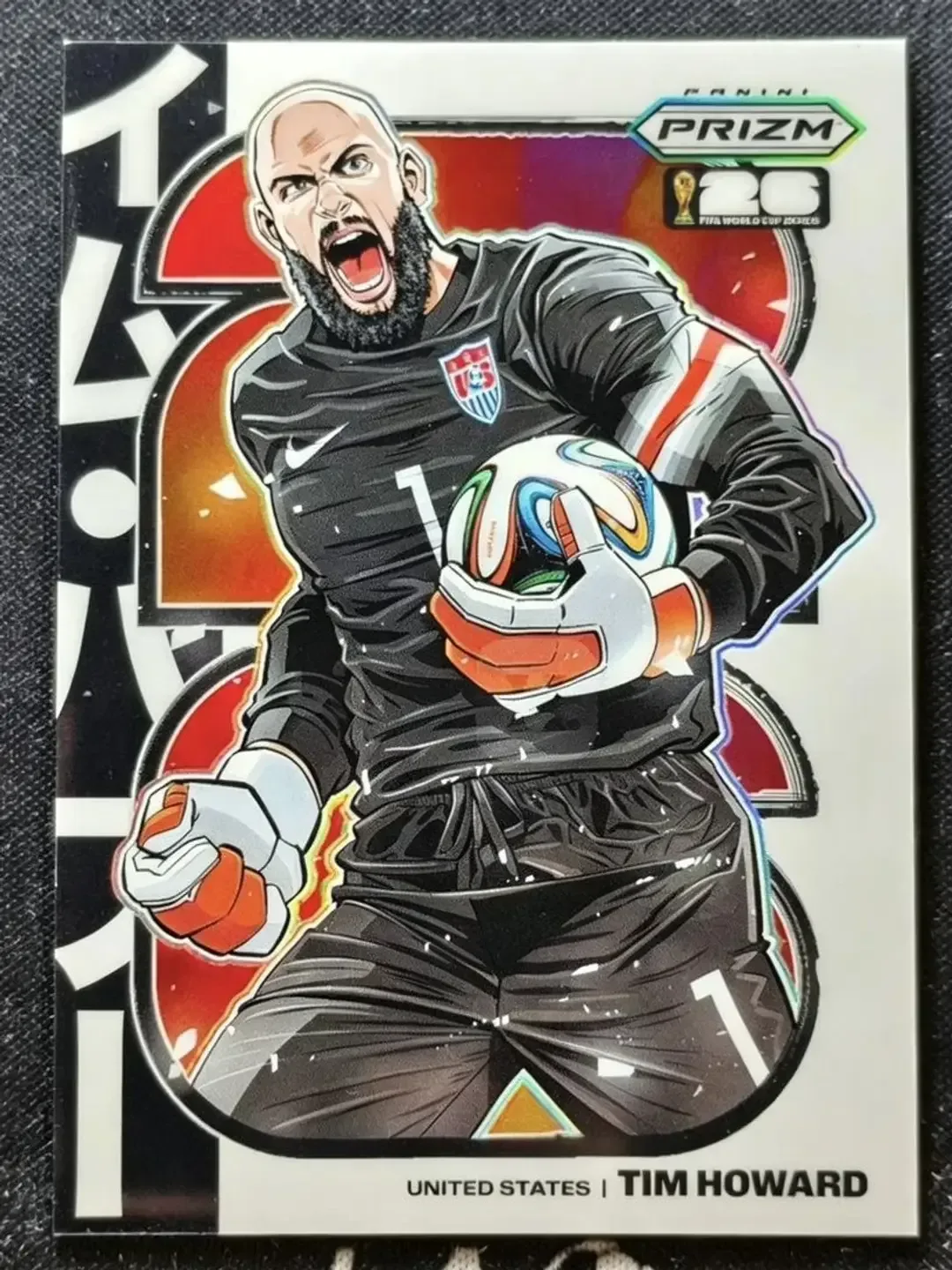
2. Tim Howard, United States
Tim Howard ranked second in volume with 129 sales, making him one of the more surprising names on the list. He is a retired player, and goalkeepers generally do not command the same hobby attention as attacking stars. Even so, Howard’s place near the top suggests that iconic national-team relevance still matters in a major way.
The last raw Tim Howard Manga sale came in at $160, with no PSA 10 sales recorded at the time referenced. While that price is higher than Luna’s, it remains well within reach compared with the top names in the set.
Howard’s transaction count may reflect a blend of nostalgia and U.S. Soccer appeal. He remains one of the most familiar American goalkeeper names of the modern era, and collectors often gravitate to players who have a lasting place in national-team history even after retirement.
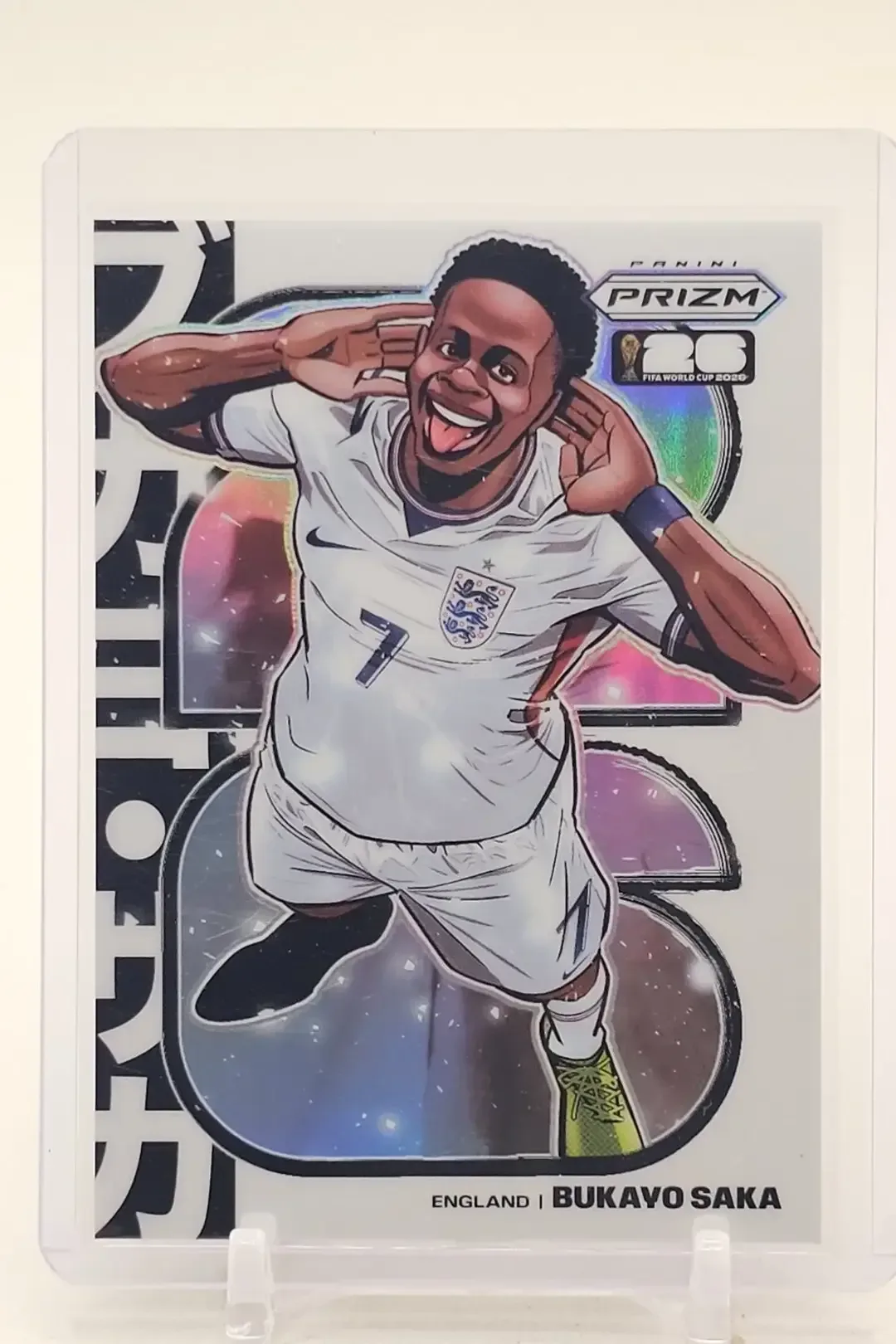
3. Bukayo Saka, England
Bukayo Saka finished third by volume with 123 sales. Among the top five names in transaction count, Saka may be the least surprising. He checks multiple hobby boxes at once: star national-team presence, club appeal, and a strong collector following tied to one of the Premier League’s biggest fan bases.
The last raw Saka Manga sale was $375, while the most recent PSA 10 sale mentioned here reached $1,182. Those figures place him in a noticeably stronger pricing tier than Luna, Howard, Martinez, or Raphinha, while still staying well below the premium heights attached to Messi.
Saka’s spot on the list hints at balanced demand. He is expensive enough to signal strong collector confidence, but still affordable enough relative to the top stars to sustain a healthy number of transactions.
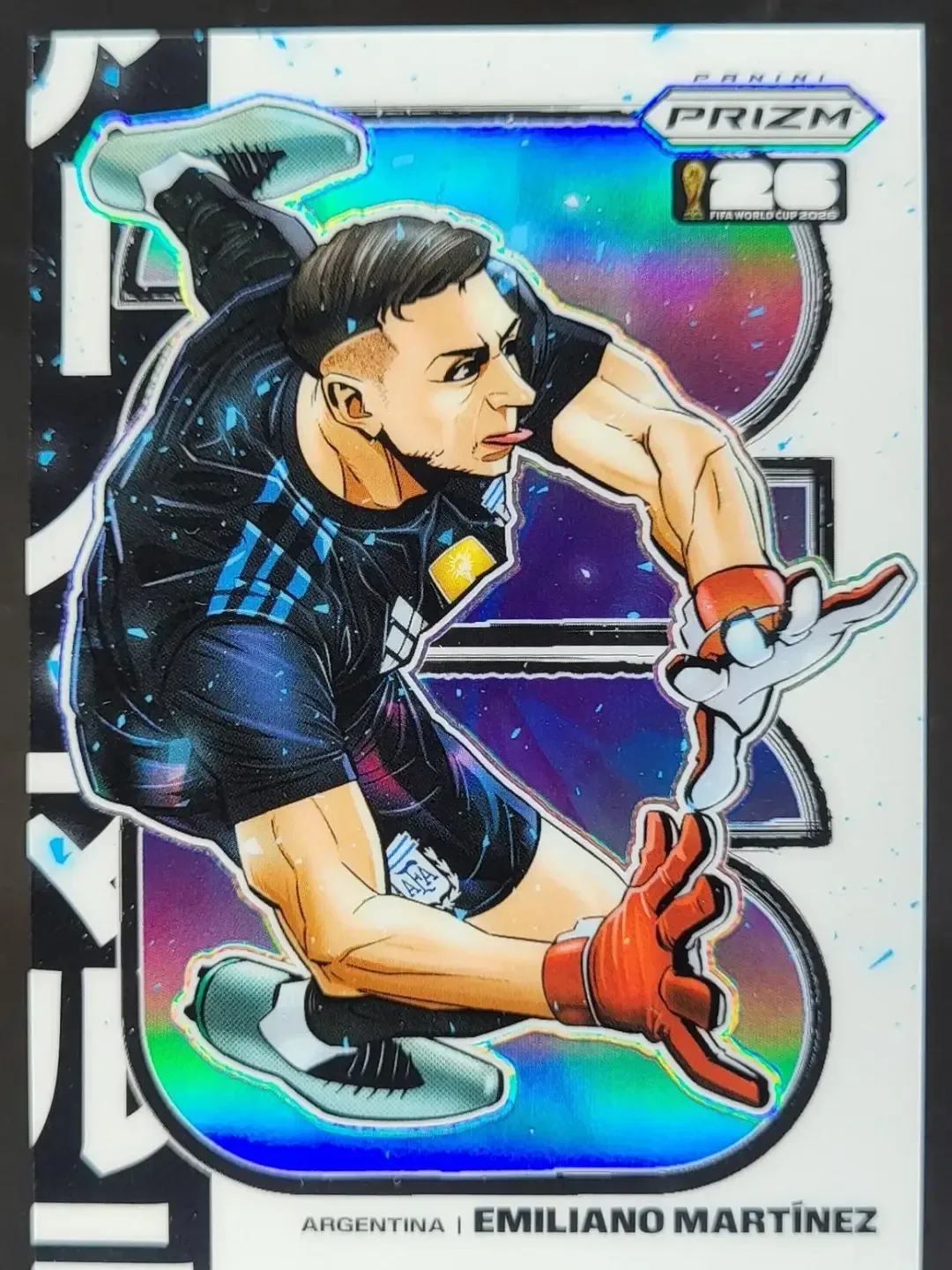
4. Emiliano Martinez, Argentina
Emiliano Martinez posted 122 sales, landing just behind Saka. Like Howard, Martinez is a goalkeeper, which makes his performance notable in a hobby that usually prioritizes goal scorers and attacking midfielders. But unlike most keepers, Martinez carries substantial international acclaim thanks to Argentina’s World Cup success.
The last raw sale for his Manga was $115.80, and the last PSA 10 sale was $660. Those prices support the idea that his card sits in a favorable middle ground: affordable enough to move frequently, but meaningful enough to attract graded-card buyers as well.
Collectors often talk about the lack of hobby attention for keepers, yet special inserts can create exceptions when the player has a major international resume. Martinez appears to be one of those exceptions in this release.
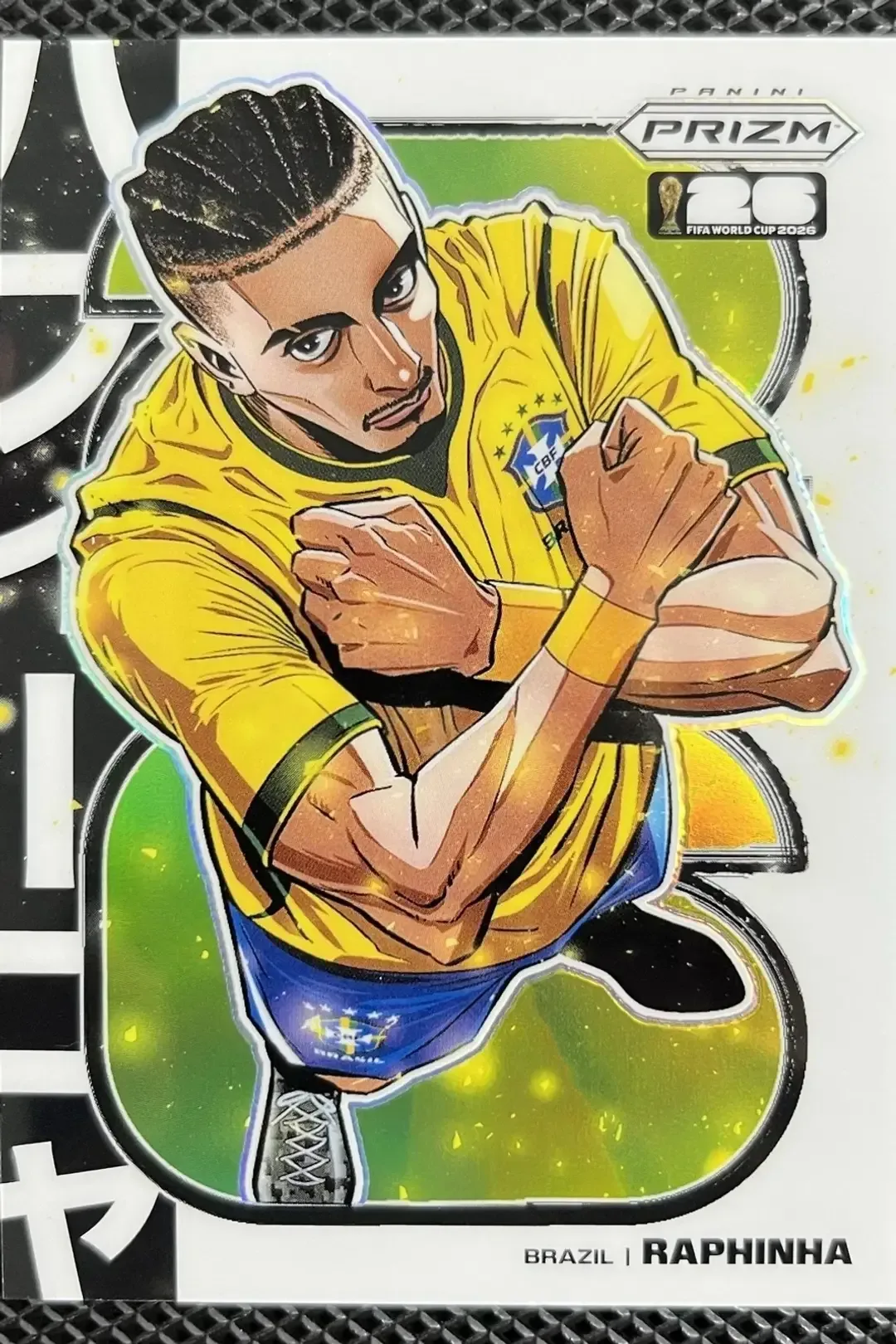
5. Raphinha, Brazil
Raphinha rounded out the top five with 119 sales. His inclusion makes sense on talent and national-team visibility alone, but it also reflects the pull of both Brazil and Barcelona in the global soccer card market. Even when a player is not at the absolute top of the hobby hierarchy, affiliation with powerhouse teams can help sustain consistent activity.
The last raw Raphinha Manga sale was $306.65, and the last PSA 10 sold for $950. Those numbers put him in a stronger pricing position than Martinez and Howard, while keeping him below Saka’s last noted PSA 10 level.
Raphinha’s volume suggests steady collector interest rather than extreme speculation. He may not be the first name many buyers mention when discussing the release’s biggest chases, but the transaction count shows that his Manga has been a reliable mover on the market.
Why the market split matters
The gap between dollar leaders and volume leaders offers one of the clearest insights into how collectors are approaching 2026 Panini World Cup Prizm Manga. The insert is not being driven by a single type of buyer.
At the top, there are premium-card collectors chasing landmark names. Messi, Ronaldo, and Yamal sit in a class where even a relatively modest number of sales can produce outsized dollar totals. These are the cards that can define a collection, anchor a showcase, or serve as a major investment-style pickup.
Below that level, the market becomes much broader. Cards priced between roughly $85 and $375 on the raw side can trade over and over as different collectors enter the mix. Some are buying personal favorites. Some are hunting national-team stars. Others are trying to complete portions of the checklist without spending into four-figure territory.
This is one of the strengths of a successful case-hit insert. The top cards provide headline-grabbing numbers, while the deeper checklist creates enough affordability to keep transaction counts active across a larger group of players.
Checklist depth is helping the category move
The Manga insert includes 30 players, giving collectors a relatively focused but still varied chase list. That size is small enough to create attention around each individual card, yet deep enough to support meaningful diversity in the market.
A shorter checklist often helps special inserts because collectors can learn the player mix quickly and target favorites without getting lost in an oversized parallel structure. In this case, the 30-player format seems to be supporting both ends of the market. Elite names stand out immediately, while lesser-priced entries still benefit from the insert’s overall popularity.
The presence of two U.S. names at the top of the volume list also highlights how checklist composition can shape transaction patterns. International prestige remains essential for the biggest prices, but regional fan interest can strongly influence how often specific cards sell.
Retail visibility played a role in collector attention
The 2026 Panini World Cup Prizm release was available in several configurations, including retail box, preferred hobby box, mega box, and retail-exclusive blaster boxes. That broad distribution likely helped fuel awareness and excitement around Manga early in the product cycle.
When a case-hit style insert is showing up across formats that a wide range of collectors can access, social chatter and secondary sales tend to follow quickly. The result is a market that becomes active not only because of high-end buyers, but also because a large number of collectors are familiar with the chase and eager to participate at different spending levels.
That context helps explain why transaction counts have been so strong. The insert was not confined to a narrow release path. More product exposure usually means more rips, more singles entering the market, and more collectors recognizing the design as a key target.
What collectors can take from the early sales data
The early Manga numbers point to a category with clear hierarchy and broad liquidity. Messi, Ronaldo, and Yamal remain the biggest financial engines, but the transaction leaderboard proves there is plenty of action beyond the obvious headliners.
Collectors watching this market should pay attention to both metrics rather than only one. Total dollars reveal where the highest-end demand is concentrated. Sales count shows where the market is deepest and most active. Those are not always the same thing, and in this release they are very clearly not.
For buyers searching for affordability, names like Diego Luna, Tim Howard, Emiliano Martinez, Raphinha, and Bukayo Saka show that there is real movement below the ultra-premium tier. For collectors chasing the biggest cards in the set, the data reinforces that Messi, Ronaldo, and Yamal continue to set the pace in a major way, with Messi’s raw average alone illustrating just how expensive the top of the Manga market has become.
With 30 players on the checklist and nearly 3,000 sales already recorded in the covered window, the 2026 Panini World Cup Prizm Manga insert has quickly established itself as one of the defining soccer card chases of the release.
Photo Gallery