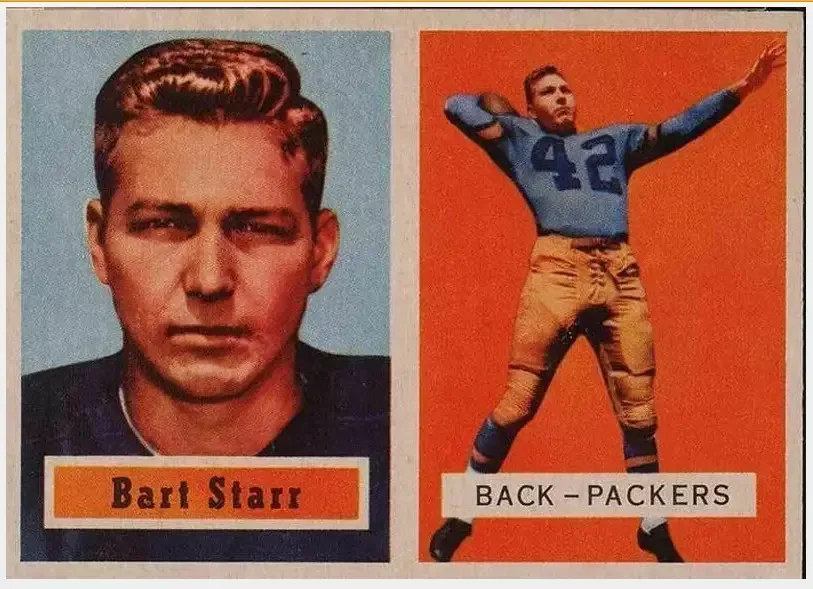
The 1957 Topps Football set has long been one of vintage football's most recognizable releases. Its horizontal layout, split-image presentation and deep roster of stars give it lasting appeal, but some of the most intriguing cards in the set are not always the biggest names. In top condition, scarcity becomes the story.
That is especially true at the PSA 10 level, where several otherwise modestly priced singles become major prizes because so few high-end examples exist. For vintage-focused collectors, the chase is not only about Hall of Fame status or rookie-card prestige. It is also about population pressure, eye appeal and just how difficult it is to locate a true Gem Mint survivor from the late 1950s.
Four cards from the 1957 Topps Football set continue to illustrate that point clearly: Gino Marchetti, Royce Womble, Howard Cassady and Leo Nomellini. In raw form, each can be relatively affordable. In PSA 10, each becomes a dramatically different asset.
Why 1957 Topps Football Is So Tough in High Grade
Collectors have known for years that 1957 Topps Football can be unforgiving in top grades. Cards from the era are vulnerable to print and handling issues, and even strong-looking copies can miss the Gem Mint level because of centering, edges, corners or surface wear. That leaves PSA 10 examples of many cards with extremely limited populations.
For more collector background, read Three Topps Pre-Orders to Watch on October 5: Bowman U Best Football, Cosmic Chrome Baseball and Inception Football.
What makes this set especially interesting is that the scarcity does not only affect headline cards. While stars like Bart Starr help define the set's broader popularity, condition rarity has created a different lane of demand for lesser-known names. When a card has just one PSA 10 on record and only a thin supply of PSA 9s behind it, the market can move well beyond what the player alone might suggest.
That dynamic is one of the clearest reminders that vintage card pricing often reflects two separate forces at once: player importance and condition scarcity. In some cases, scarcity wins by a wide margin.
Gino Marchetti PSA 10 Leads the Group
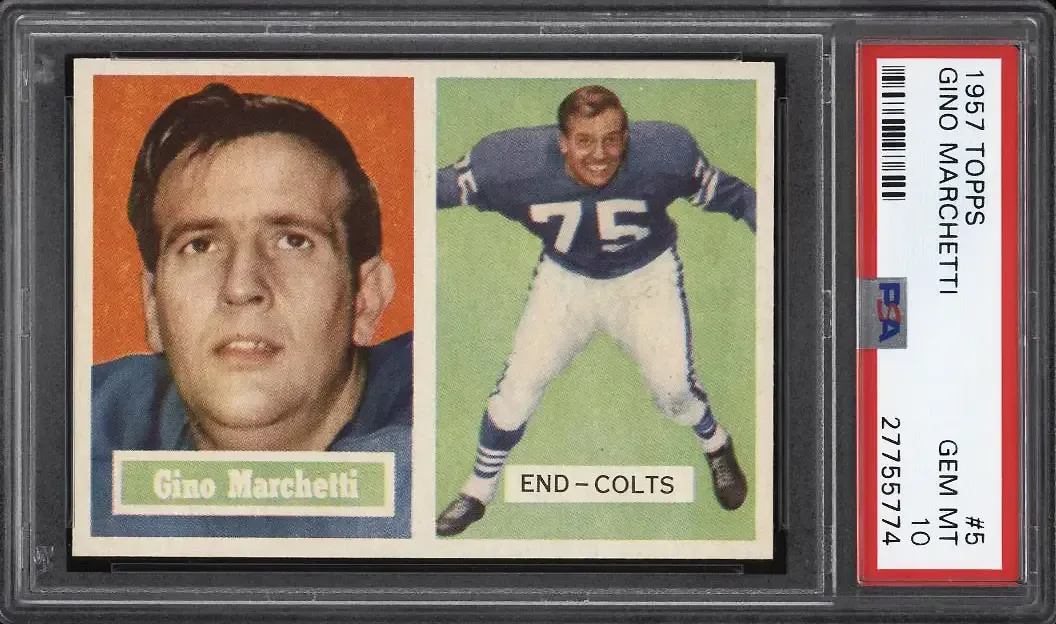
Among these four cards, the 1957 Topps Gino Marchetti, card No. 5, stands out as the strongest public sale noted in this group. Raw copies generally trade in a modest range of about $6 to $15, which makes the Gem Mint jump especially striking.
For another perspective on this story, read Four 1957 Topps Football PSA 10s Show the Set’s Extreme Condition Premium.
PSA population data cited for the card shows just 1 PSA 10, along with 16 PSA 9s and 155 PSA 8s. That kind of top-end bottleneck is exactly what vintage specialists watch. Once the population report reaches a point where there is only a single Gem Mint example, competition can escalate quickly if more than one advanced collector wants it.
The card's highest recorded public PSA 10 sale listed here came on September 23, 2018, when it sold for $6,800. That figure is a useful snapshot of how dramatically condition rarity can separate a card from its raw-market baseline. Even a respected football name like Marchetti does not typically generate four-figure activity in lower grades at anything close to that level. The premium is almost entirely about survival in extraordinary condition.
Royce Womble Shows How Scarcity Can Outrun Name Recognition
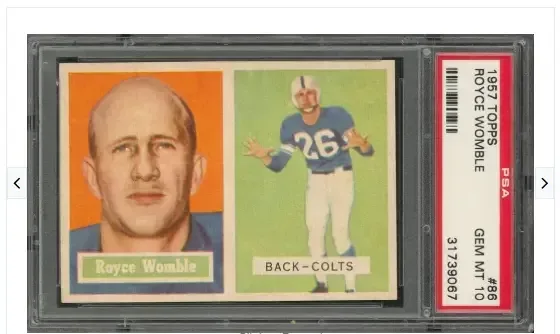
The 1957 Topps Royce Womble, card No. 86, may be the clearest example in this group of condition scarcity driving collector behavior. Raw copies generally sell for around $2 to $5, putting it among the most affordable cards in the set for casual buyers.
At the PSA 10 level, though, the profile changes completely. The cited population shows 1 PSA 10, 21 PSA 9s and 167 PSA 8s. Even with a slightly deeper PSA 9 count than some other cards in this group, the single Gem Mint copy creates a ceiling of availability that is nearly impossible to overcome.
The highest public PSA 10 sale noted here occurred on October 28, 2018, when the card brought $5,400. For a card with such a low raw entry point, that result says a lot about the mindset of elite vintage buyers. This is not a card people chase because it anchors the set or headlines football history. It is chased because a one-of-one population at the PSA 10 level can transform a common-looking card into a major condition trophy.
Howard Cassady Remains a Condition-Sensitive Standout
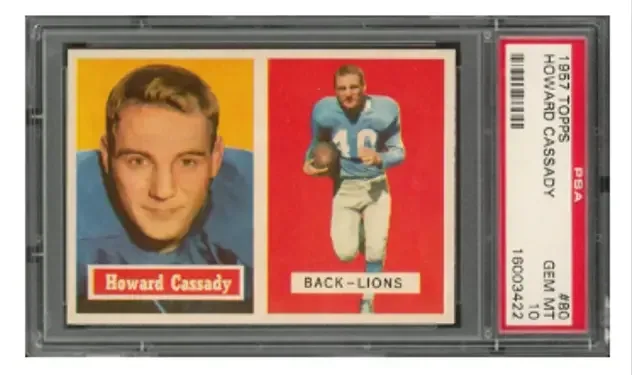
Howard Cassady's 1957 Topps card, No. 80, follows a similar pattern. Raw copies are generally accessible, typically trading in the $8 to $15 range. That keeps the base version within reach for set builders and vintage fans who simply want a representative copy.
The gap between accessible and elite emerges quickly in the graded population. The card is cited with 1 PSA 10, 16 PSA 9s and 137 PSA 8s. Again, the story is not broad scarcity at every level. There are enough mid-high grade copies for collectors to find respectable examples. The real pressure point is the absolute top of the scale, where Gem Mint availability collapses to a single card.
The highest public PSA 10 sale listed for Cassady came on October 28, 2018, at $2,880. That number is below the Marchetti and Womble highs, but it still represents a massive multiple over raw value. For collectors who specialize in high-grade vintage football, it reinforces a familiar lesson: a card does not need to be the set's most famous issue to become expensive when the finest known tier is nearly unattainable.
Leo Nomellini Adds Another One-of-One PSA 10
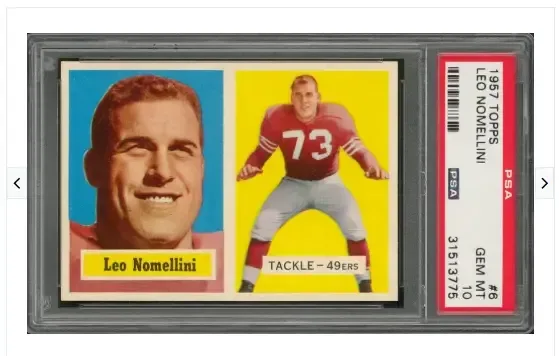
Leo Nomellini's 1957 Topps card, No. 6, rounds out the group with another population profile that helps explain lasting collector attention. Raw examples generally sell for about $8 to $20, making it another card whose ungraded market remains manageable by vintage standards.
At PSA, the card is cited with 1 PSA 10, 12 PSA 9s and 135 PSA 8s. The lower PSA 9 count compared with some of the others here adds another layer of difficulty. Collectors chasing a best-of-the-best copy are not just dealing with a single PSA 10. They are also looking at a relatively shallow next tier.
The highest public PSA 10 sale referenced for Nomellini came on October 28, 2018, when the card sold for $2,520. While that price is the lowest of the four highlighted here, it still dramatically exceeds raw-market levels and underscores the same central theme: elite condition can redefine value in this set.
Quick Look at the Four Key 1957 Topps Football PSA 10 Cards
- Gino Marchetti, No. 5
Raw value: about $6 to $15
PSA population: 1 PSA 10, 16 PSA 9, 155 PSA 8
Highest public PSA 10 sale noted: $6,800 on September 23, 2018 - Royce Womble, No. 86
Raw value: about $2 to $5
PSA population: 1 PSA 10, 21 PSA 9, 167 PSA 8
Highest public PSA 10 sale noted: $5,400 on October 28, 2018 - Howard Cassady, No. 80
Raw value: about $8 to $15
PSA population: 1 PSA 10, 16 PSA 9, 137 PSA 8
Highest public PSA 10 sale noted: $2,880 on October 28, 2018 - Leo Nomellini, No. 6
Raw value: about $8 to $20
PSA population: 1 PSA 10, 12 PSA 9, 135 PSA 8
Highest public PSA 10 sale noted: $2,520 on October 28, 2018
What Vintage Collectors See in These Cards
These sales help explain a segment of the market that can puzzle newer collectors. On paper, raw values for these cards are modest, and none of the four is the obvious centerpiece of the set. Yet once population reports show a single PSA 10 and a limited PSA 9 supply, the conversation changes from player popularity to opportunity cost.
For advanced collectors, the issue is simple: if a card comes to market only rarely in that grade, passing on one opportunity may mean waiting years for another. In a set as historically important and condition-sensitive as 1957 Topps Football, that kind of urgency creates real bidding pressure.
There is also a psychological factor that matters. Vintage collectors often appreciate the challenge of owning a card that is not merely expensive, but exceptionally hard to replace. A one-of-one PSA 10 can hold appeal even if the player is not the set's biggest star, because the card serves as a condition landmark within the release.
Why Raw-to-Gem Price Gaps Matter
The enormous gap between raw values and PSA 10 prices is more than a curiosity. It illustrates just how nonlinear the vintage market can be. In modern cards, collectors often expect grading premiums, but late-1950s football takes that concept to a different level. Here, a card worth only a few dollars raw can become a four-figure prize when it reaches the highest possible grade.
That also makes these cards risky and fascinating in equal measure. The low raw value does not mean an easy path to gem-level supply. It usually means the opposite. If more PSA 10-caliber copies were available, the population reports would not be sitting at one. The market premium is effectively paying for decades of failed attempts by the hobby to uncover more perfect examples.
Collectors building high-grade registry sets understand this well. They are not just buying cardboard and ink. They are buying rarity that has already been tested by time, submissions and repeated scrutiny.
The Set's Lasting Place in Vintage Football
Part of what keeps interest high in these cards is the strength of the 1957 Topps Football set itself. The issue remains one of the hobby's defining postwar football releases, helped by memorable design, important stars and a reputation for condition sensitivity. That creates a sturdy foundation for premium prices when truly elite copies appear.
Even collectors who focus mainly on star cards often keep an eye on condition-rarity outliers from this set, because they show where grading scarcity can have its biggest impact. The four cards highlighted here are strong examples of how the market behaves when a respected vintage issue meets extremely limited Gem Mint supply.
For anyone tracking the upper end of the football card market, these 1957 Topps singles remain worth watching. Whether it is Marchetti at the top of this group, Womble's dramatic raw-to-PSA 10 leap, or the ultra-thin populations behind Cassady and Nomellini, the set continues to reward collectors who understand that in vintage football, condition can be every bit as important as the player on the front.
Photo Gallery