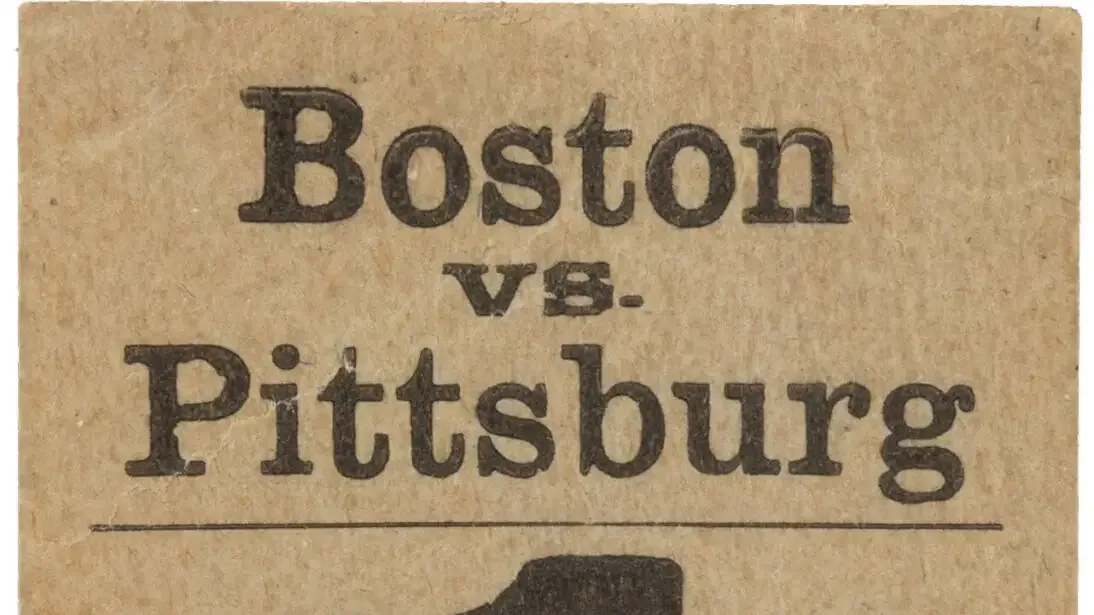
One of the earliest and most important surviving pieces of baseball admission history is back in the spotlight. A ticket from Game 1 of the 1903 World Series, the first World Series game ever played, is headed to Heritage Auctions as part of its Oct. 23-25 Fall Sports Catalog Auction with an estimated value of $300,000.
Historic tickets have become a major segment of the sports memorabilia market, but very few can match the significance of this example. The small pass dates to the matchup between the Pittsburgh Pirates and Boston Americans at Huntington Avenue Baseball Grounds in Boston, and it represents the opening game of what became one of the sport’s most enduring championship traditions.
At a time when modern World Series seats can run from hundreds to thousands of dollars, the original admission price for this landmark event was just 50 cents. More than a century later, the ticket itself has become the kind of artifact that advanced collectors rarely get a chance to chase.
Why This 1903 Ticket Matters
For collectors of baseball history, World Series material sits in a category of its own. A ticket from the first game of the first World Series pushes that appeal even further. It is tied not just to a championship event, but to the beginning of the World Series as a recurring piece of American sports culture.
For more collector background, read Barry Bonds 715th Home Run Ball, Jackie Robinson Bat and Mantle, Mays Jerseys Lead Goldin Fall Game-Used Auction.
The ticket is believed to be one of only two surviving examples issued for Game 1. That level of scarcity alone would place it among the hobby’s most coveted ticket stubs and passes. Add in its direct connection to the first World Series contest, and it becomes a centerpiece item rather than a niche collectible.
The estimate reflects that status. Heritage has placed the value at $300,000, a figure that would make sense for a true museum-level relic. For comparison, a ticket to Game 3 of the same 1903 World Series sold for $175,000 in 2022, offering a recent benchmark for how aggressively the market values material from this inaugural championship.
The First World Series Game in Baseball History
Game 1 of the 1903 World Series drew an announced crowd of 16,242 to Huntington Avenue Baseball Grounds. It was the first of what has since grown into hundreds of World Series games across more than a century of baseball history.
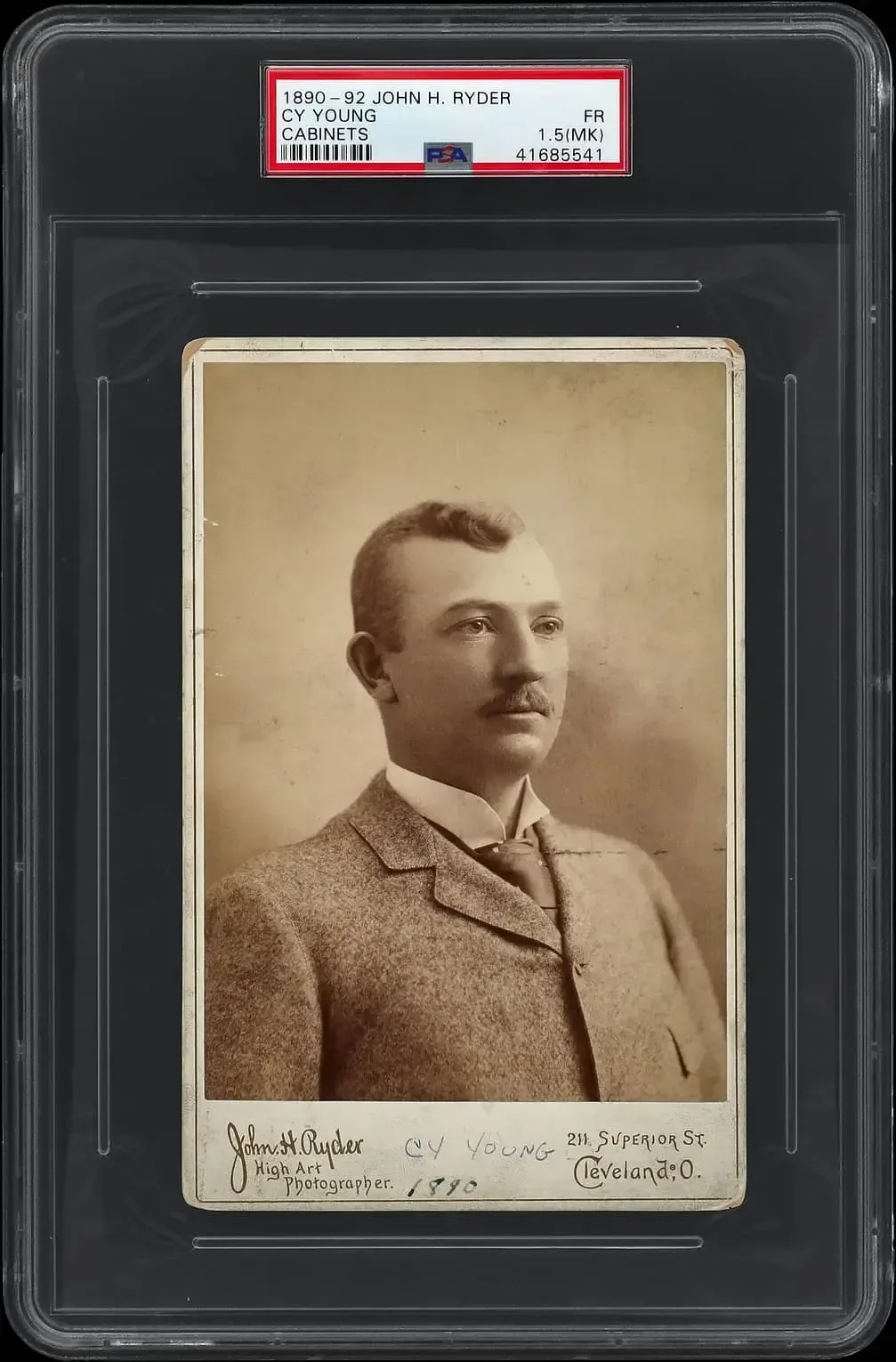
The pitching matchup alone gives the ticket added historical weight. Boston sent Cy Young to the mound, already one of the game’s dominant arms and later immortalized in the Hall of Fame. Young had won 28 games that season. Opposing him was Pittsburgh ace Deacon Phillippe, a 25-game winner and one of the most important figures in that series.
Pittsburgh struck quickly, scoring four runs in the first inning on the way to a 7-3 win. The contest also featured the first home run in World Series history, hit by Jimmy Sebring. That moment gives the ticket another layer of significance, linking it not only to the first game but to one of the first major milestones within World Series play itself.
The series turned into a classic. Pittsburgh built a 3-1 lead in the best-of-nine format, only to see Boston charge back with four straight victories to claim the championship. After taking the loss in Game 1, Young returned to win Games 5 and 7, helping swing the series.
Physical Details of the Ticket
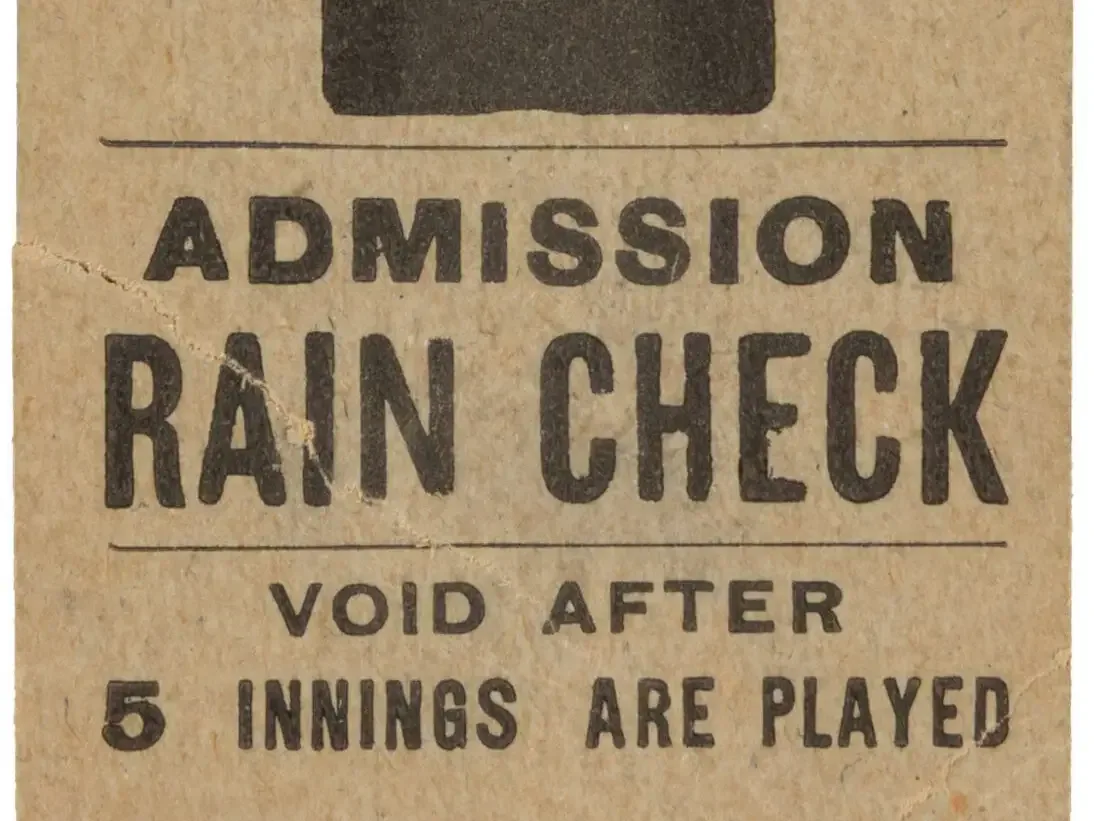
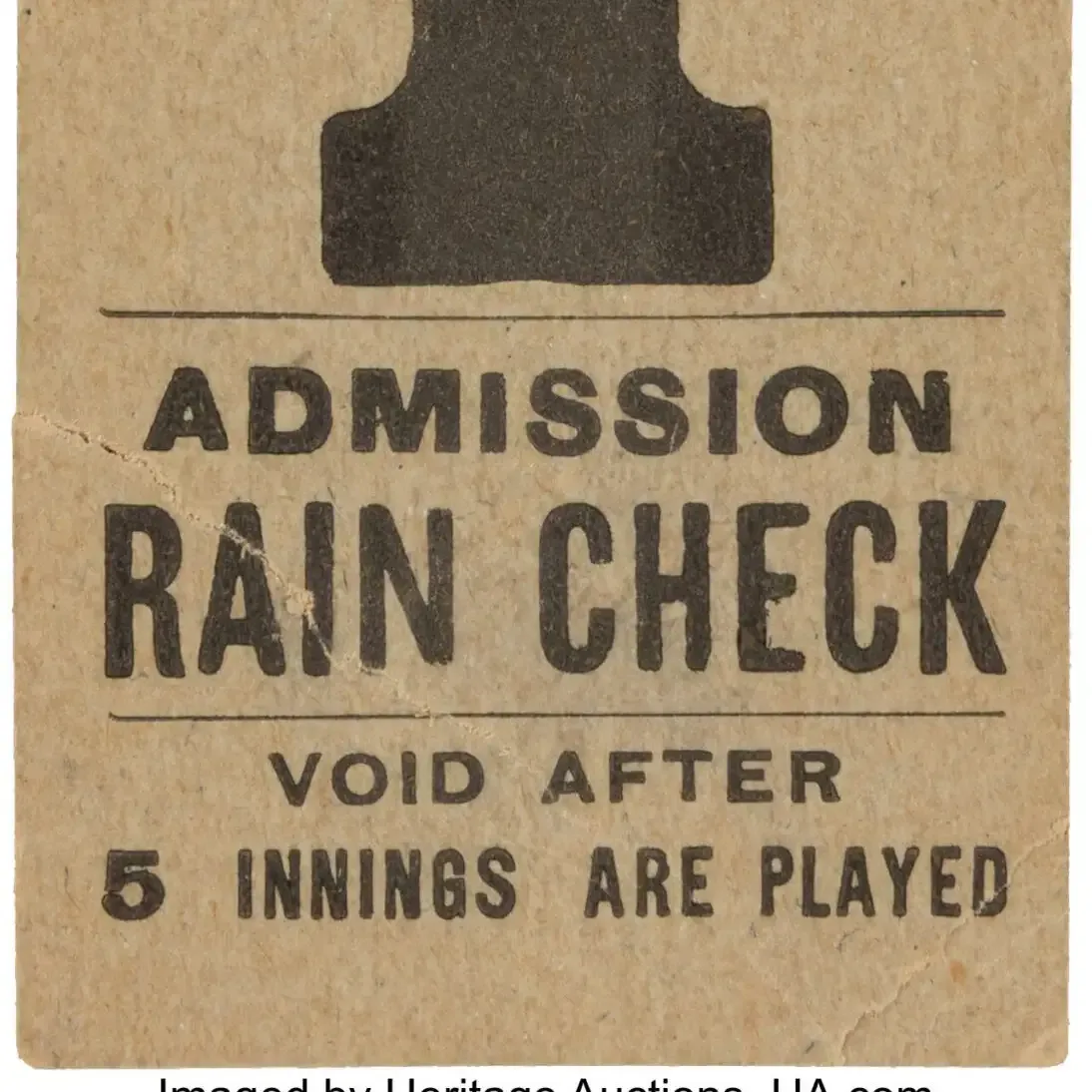
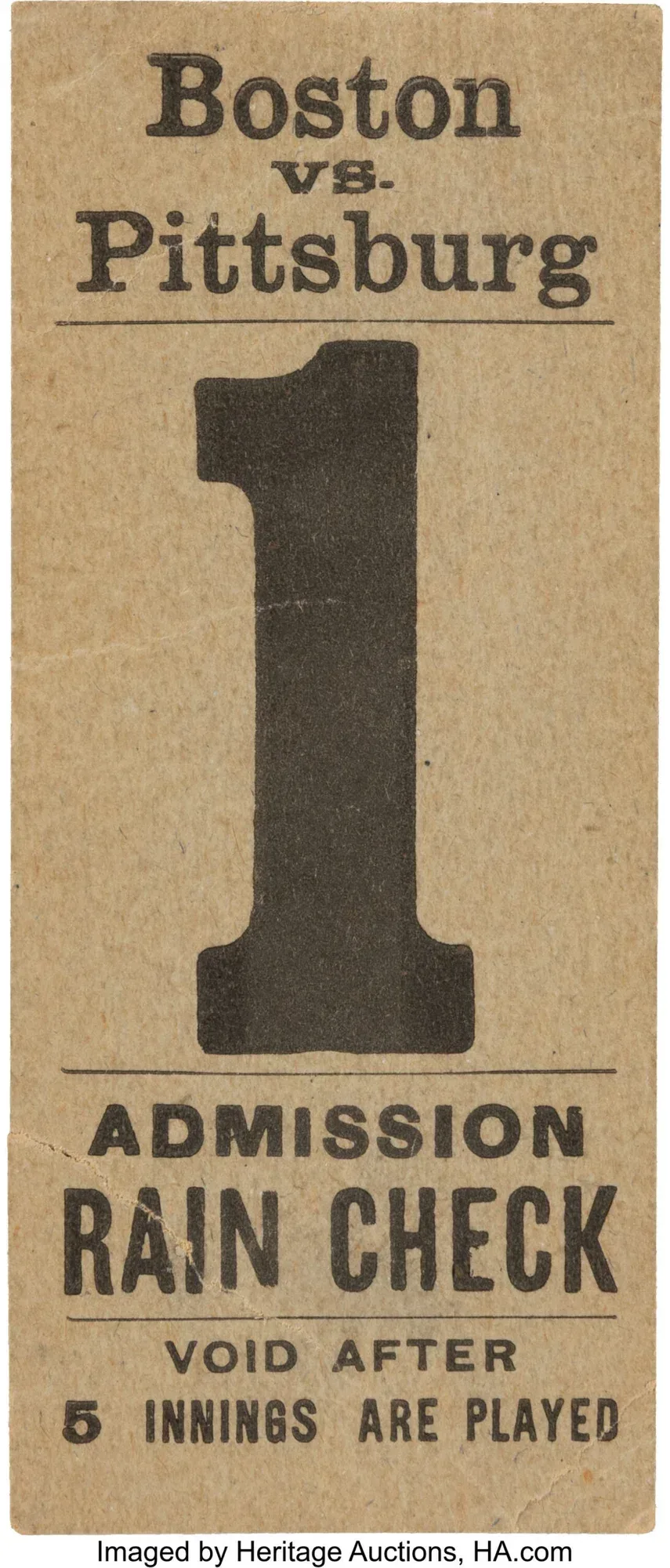
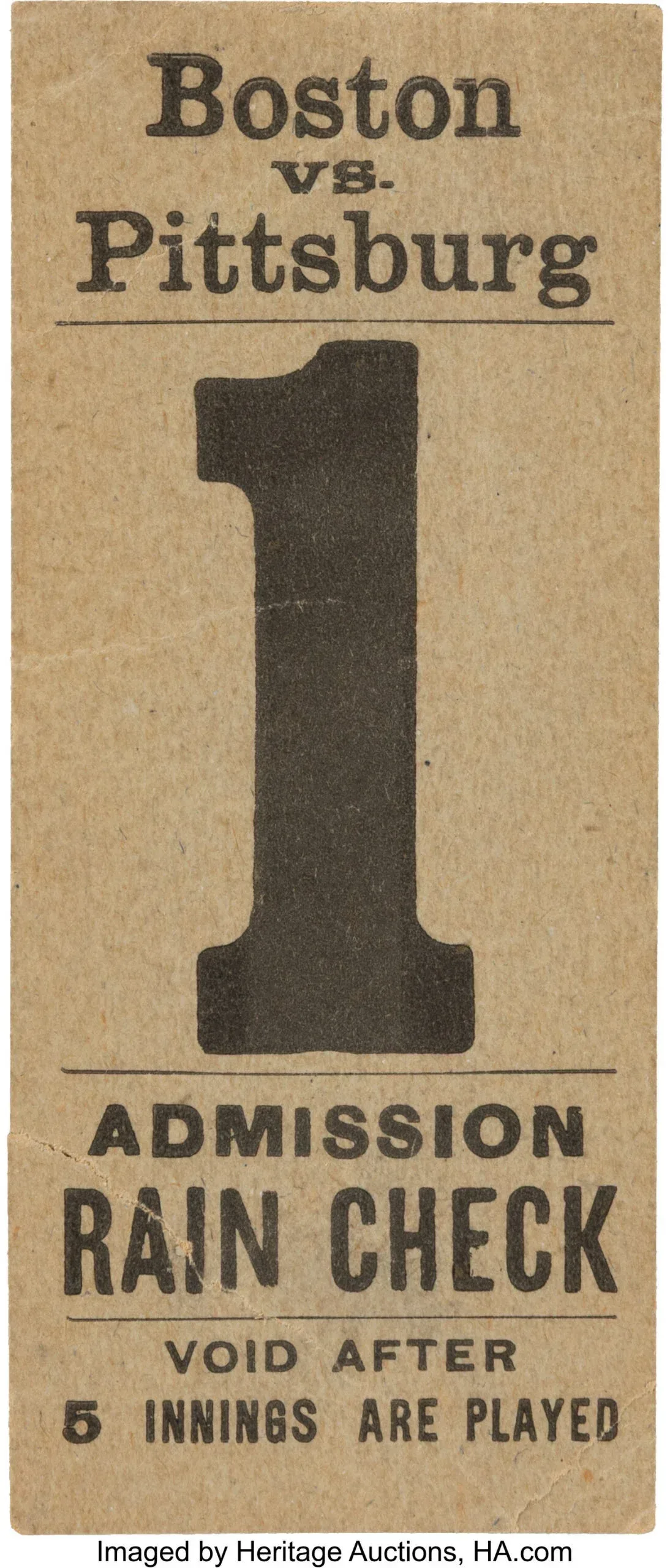
The surviving pass measures approximately 1.5 by 3.5 inches, a compact relic from the Dead Ball Era. The front carries the wording “Boston vs. Pittsburg” across the top, with the game designation “1” printed prominently in the center. It also includes the stipulation, “Admission Rain Check Void After 5 Innings Are Played.”
Those printed details matter to collectors because they firmly identify the piece as an issued game ticket rather than a later commemorative item or generic pass. The exact event wording and game number tie it directly to the first contest of the 1903 championship.
Condition is described as Fair, with moderate to heavy creasing. For many modern cards or tickets, that would be a major drawback. For an item of this age and rarity, it is simply part of the story. In fact, the condition is said to be stronger than the only other known surviving example from Game 1, which adds another important point in its favor for bidders looking for the best obtainable specimen.
A Handwritten Message Adds Another Layer of History
What sets this ticket apart from many other early admissions pieces is what appears on the back. The reverse carries a handwritten note addressed to “Charlie,” apparently written by someone who attended the game.
The message reflects amazement at the large crowd and explains that the champions of the National and American Leagues were playing for the championship of the world. That kind of first-person notation turns the ticket from a scarce printed survivor into something even more personal. It captures how the event was being processed in real time by someone who was there.
Collectors often debate whether writing on vintage material helps or hurts value, but in cases like this, the content can be historically enriching. Rather than random pen marks, the writing serves as period testimony connected to one of baseball’s most important early events.
Provenance and Holder Details
The ticket also brings notable hobby provenance. It once resided in the collection of Barry Halper, whose holdings remain legendary within sports memorabilia circles. It later appeared in the 1999 Sotheby’s auction of the Barry Halper Collection, one of the landmark sales in the history of the hobby.
That chain of ownership matters because provenance can provide an added layer of confidence and prestige for elite memorabilia. When a piece has already passed through one of the most famous baseball collections ever assembled, it tends to draw even more attention when it returns to the market.
The ticket is not encapsulated by PSA. That is not unusual in this case, as PSA does not holder tickets of such advanced age. For seasoned collectors, that detail is more practical than problematic, especially with a piece whose rarity and documented history already do much of the authentication heavy lifting.
World Series Tickets Continue to Gain Hobby Respect
Game-used equipment and vintage cards have long dominated the upper end of baseball collecting, but tickets have carved out a growing place in the hobby. Collectors increasingly see them as time capsules. Unlike many other items, a ticket marks an exact date, place, and event. It is tangible proof of admission to history.
That appeal has been especially strong for milestone games: debuts, no-hitters, record chases, championships, and firsts. A ticket to the first World Series game checks nearly every one of those boxes at once.
As more collectors pursue event-specific memorabilia, the best surviving examples from baseball’s formative years have become harder to source. That supply pressure is part of what drives estimates like this one. There may be many ways to collect the history of the World Series, but there are almost no opportunities to own a surviving admission piece from the event’s opening game.
Other Major Baseball Lots in the Same Auction
The 1903 ticket is not the only headline item in the sale. Heritage is also offering several blue-chip baseball pieces from the sport’s early decades, reinforcing the auction’s focus on foundational material.
Among the most notable is a 1909-11 T206 White Border Sweet Caporal Honus Wagner card graded PSA Authentic (Restored). Heritage notes that it is just the sixth example of the iconic Wagner card the company has offered. That matters because the T206 Wagner remains one of the hobby’s most recognizable and closely watched cards whenever it appears publicly.
Also in the sale is a 1933 Goudey Babe Ruth #144 graded PSA 6 with MBA Silver designation. The 1933 Goudey release is one of the hobby’s cornerstone pre-war sets, and Ruth’s cards from that issue remain perennial targets for advanced vintage collectors.
Ruth appears elsewhere in the auction as well through a 1920 Babe Ruth Type 1 original photograph by Paul Thompson. The image was later used for Ruth’s 1926 W512 Strip Card, giving the photo both visual appeal and direct card-related significance. The photograph captures Ruth during his first season with the New York Yankees after six years with the Boston Red Sox, a transitional point in baseball history that still resonates with collectors.
Another Ruth offering is a 1946-47 single-signed baseball graded PSA/DNA 7. Signed late in Ruth’s life as he battled cancer before his death in 1948, it stands as a powerful late-career autograph example from one of the game’s most important figures.
What Collectors Will Be Watching
For bidders and market watchers, the biggest question is whether the Game 1 ticket can meet or exceed its $300,000 estimate. Given its rarity, provenance, and place in baseball history, it has many of the traits that drive strong auction results in the upper tier of sports memorabilia.
Collectors will also be weighing the fact that it is one of only two known survivors, appears to be the stronger of the pair, and carries period writing that deepens its story. Those attributes make it more than a simple admission artifact. It is a compact document of baseball’s first championship stage.
With the Fall Classic approaching and collector attention naturally turning toward World Series lore, the timing adds another element of interest. The piece offers a direct connection to the day the World Series began, when a 50-cent ticket opened the gate to one of the most important games ever played.
Photo Gallery