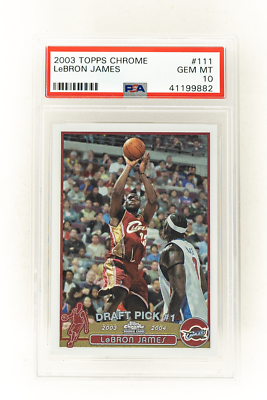
LeBron James has been one of the most important athletes in the modern sports card era for more than two decades. His rookie cards, autographs, patches, refractors, and high-grade flagship issues have remained core holdings for basketball collectors across multiple market cycles. That is why one question keeps coming up: will LeBron James retirement boost the value of his cards by a lot?
The short answer is yes, retirement could create a meaningful lift for parts of the LeBron market. But the idea that every LeBron card will instantly skyrocket is far less certain. In the sports card world, retirement often creates a surge in attention, stronger nostalgia, more media coverage, and a fresh wave of collector demand. At the same time, supply matters, grade population matters, and price levels already reflect a huge amount of LeBron’s legacy.
For collectors and investors, the better question is not whether retirement will matter. It is which LeBron James cards are most likely to benefit, how quickly the market may react, and whether the biggest gains could already be priced in.
Why retirement can be a major catalyst for sports card values
Retirement is one of the clearest narrative events in any athlete market. It closes the active playing chapter and shifts the hobby conversation from current performance to legacy. That change can be powerful.
When a superstar retires, several things usually happen at once. Mainstream media runs career retrospectives. Fans revisit signature moments. Highlight packages dominate social media. Debate around all-time rankings becomes louder. Collectors who have been waiting on the sidelines often return to buy key pieces tied to the player’s career.
For a player like LeBron, retirement would likely trigger one of the largest legacy-driven hobby moments basketball has seen in years. He is not just a great player. He is one of the defining athletes of his generation, with championships, records, MVPs, Olympic gold, and an unmatched timeline of relevance from the early 2000s to today.
That kind of career gives retirement real market power. But not every card responds the same way.
Why LeBron is different from most retired stars
LeBron James is not entering retirement as an underappreciated legend. He is already one of the most collected basketball players on Earth. His best cards have been chased for years by collectors, investors, and high-end buyers. In other words, the hobby already knows he is iconic.
That matters because the market often behaves differently when a player is already fully established. Retirement can still add fuel, but it may not produce the kind of surprise revaluation that happens when the hobby suddenly catches up to a player’s greatness.
LeBron also has one of the deepest card catalogs in basketball history. There are ultra-rare grails, but there are also many mass-produced base cards, inserts, parallels, and later-career issues. A wave of retirement excitement may lift the entire market briefly, but over time collectors tend to concentrate on the most important cards.
This is why broad statements like “all LeBron cards will skyrocket” can be misleading. Some cards could jump sharply. Others may see only modest gains. Some may barely move at all after the initial hype settles.
Which LeBron James cards are most likely to benefit
If retirement does create a strong price push, the biggest winners are likely to be cards that combine historical importance, rarity, condition scarcity, and broad hobby recognition.
Key rookie cards
LeBron’s 2003 rookie year remains the foundation of his market. Important rookie cards from flagship sets, chromium products, limited serial-numbered releases, and premium brands are the natural place many buyers will start. Collectors usually want an iconic rookie issue first, especially when a player retires and legacy collecting accelerates.
Cards like Topps Chrome rookies, refractors, and highly graded flagship rookies often become focal points during legacy moments because they are easy for the hobby to identify and discuss.
On-card autographs and premium RPAs
High-end autograph cards tend to carry major weight in retirement markets, especially if they are early-career issues and visually strong. For LeBron, premium rookie autographs and low-numbered patch autos sit near the top of the hierarchy. These cards are not just collectibles. They are status pieces in the basketball card market.
If retirement drives wealthy buyers back into the market, this tier could see serious competition, especially for iconic examples from top brands.
Low-pop, high-grade copies of recognizable cards
Sometimes the card itself is not ultra-rare, but the top grades are. If a famous LeBron rookie or early insert has a limited PSA 10, BGS 9.5, or high-end grade population, retirement could push buyers toward those finest-known examples. Scarcity at the condition level can be just as important as print scarcity.
Historic inserts and era-defining parallels
Certain LeBron cards have become hobby symbols because they capture the early 2000s basketball boom, the refractor era, or key premium product lines. Retirement tends to send collectors back toward these landmark cards because they tell the story of the player and the hobby at the same time.
Which LeBron cards may not skyrocket
This is the part many collectors overlook. Not every card will participate equally in a retirement rally.
Later-year base cards with huge supply are less likely to experience lasting gains. Common inserts, unnumbered parallels, and heavily graded cards with large populations may get a short-term bump if headlines bring in new buyers, but those gains can fade quickly once the excitement cools.
The same goes for cards that are collectible but not central to LeBron’s long-term hobby identity. When a superstar retires, collectors usually narrow their focus rather than expand it. Money tends to flow toward the cards with the clearest case for importance.
That means if you are expecting every LeBron card in a box to soar, history suggests caution. The market usually becomes more selective, not less.
What history says about retired legends and card prices
Looking at other all-time greats can help frame expectations. Retirement often helps legendary players, but the results vary depending on timing, broader market conditions, and how much hype was already baked into prices.
Michael Jordan is the clearest long-term example of a player whose card market remained deeply tied to legacy long after retirement. Kobe Bryant also saw strong and sustained collector demand because of his place in basketball history, cultural reach, and the significance of his key cards. Tim Duncan, Shaquille O’Neal, and other Hall of Fame players have seen notable attention spikes around career milestones and legacy reevaluations, but not every segment of their markets moved equally.
The lesson is simple. Truly iconic players keep collector demand for decades, but the strongest appreciation usually appears in the cards that best represent their careers. Retirement helps, but hobby hierarchy still rules.
Why LeBron retirement could still create a major short-term surge
Even though LeBron is already priced like a legend, retirement could still trigger a meaningful short-term run. There are a few reasons why.
First, retirement is likely to become a global sports news event. That kind of visibility pulls in casual buyers, returning collectors, and people who want a piece of history. Second, LeBron’s all-time status remains active in public debate. Every retirement conversation will include talk of championships, longevity, records, and his place alongside Jordan and other legends. Third, many collectors may want to act before Hall of Fame induction talk, tribute products, documentary coverage, or jersey retirement ceremonies create additional waves of demand.
In other words, retirement may not be the end of the story. It could be the start of a multi-year legacy cycle.
The biggest risk: much of the retirement premium may already be priced in
There is one major reason to avoid assuming a guaranteed moonshot. LeBron’s greatness is not a secret. Buyers have had years to position themselves. His key rookie cards and premium autographs have already been treated like blue-chip basketball assets for a long time.
That means some retirement expectations may already be embedded in current prices, especially for top-tier pieces. If the market runs up heavily before his official retirement announcement, the actual event could even create a sell-the-news moment for some cards. That does not mean long-term value disappears. It just means prices do not always move in a straight line after a major headline.
Collectors should also remember that the broader sports card market matters. Interest rates, collector sentiment, grading volume, auction strength, and overall demand for basketball can all influence what happens after retirement.
How collectors should think about buying before retirement
If you believe LeBron retirement will push his market higher, the smartest approach is usually quality over quantity. Focus on cards with a clear reason to matter five or ten years from now, not just during the first rush of attention.
That means asking a few simple questions before buying:
Is this card central to LeBron’s hobby story? Is it truly scarce, either by print run or high grade population? Is it a card that advanced collectors consistently want? Does it have strong eye appeal and liquidity? If the hype fades for six months, would you still be happy owning it?
Those questions can help separate durable cards from speculative ones.
For many collectors, the best targets are not random low-end pieces. They are recognizable rookie cards, strong-condition examples, premium autos, and cards that have proven demand across multiple years.
How current owners should think about timing
If you already own LeBron cards, retirement may present several options. Some collectors will want to hold through the retirement announcement, hoping for a broad market surge. Others may decide to sell into rising anticipation before the official news, especially if prices become overheated.
There is no perfect answer because timing depends on the specific card. A rare, iconic LeBron rookie auto may be worth holding through multiple legacy milestones. A more common card that spikes on headline-driven demand may be better sold into strength if the market gets too aggressive.
In either case, monitoring auction results is critical. Watch not just asking prices but actual completed sales. That is where the real market reveals itself.
Long-term outlook: higher floor, but selective upside
Over the long run, LeBron James retirement should strengthen his place as a pure legacy collectible. That usually supports values by shifting the conversation away from nightly performance and toward historical status. For a player of his stature, that is a healthy backdrop for long-term demand.
Still, the likely outcome is not that every card explodes forever. A more realistic outlook is that retirement raises the floor of important LeBron cards, increases attention on his best material, and creates selective upside for the most desirable examples.
That may not be as flashy as saying everything will skyrocket, but it is probably closer to how the market actually works.
FAQ
Will all LeBron James cards go up when he retires?
No. Key rookie cards, rare autographs, and low-pop high-grade issues are more likely to benefit than common base cards or high-supply later-year releases.
Which LeBron cards have the best retirement upside?
Generally, his most iconic 2003 rookie cards, premium autograph cards, rare parallels, and top-grade examples of recognized key issues offer the strongest potential.
Could LeBron card prices drop after retirement news?
Yes. If prices run up ahead of the announcement, some cards could see a sell-the-news dip. Long-term legacy demand may still remain strong.
Is LeBron already too established for retirement to matter?
Retirement still matters because it creates a major legacy event, but his top cards are already highly valued. That is why selective gains are more likely than a universal spike.
Final take
So, will LeBron James retirement boost the value of his cards by a lot? It absolutely could for the right cards. The strongest pieces in his market have all the ingredients collectors chase: historical significance, global recognition, proven demand, and limited top-end supply. Those are exactly the cards that can benefit when a player’s career officially closes and legacy collecting takes center stage.
But if the expectation is that every LeBron card will skyrocket overnight, that is probably too optimistic. Retirement is a powerful catalyst, not a magic wand. In the LeBron market, quality, rarity, and hobby importance will likely determine who really wins.
For OTIA readers, the smart play is to watch the top cards, ignore the noise, and remember that legendary players usually reward disciplined collecting more than emotional buying. LeBron’s retirement should be a huge hobby moment. The key is knowing which cards are built to carry that moment forward.