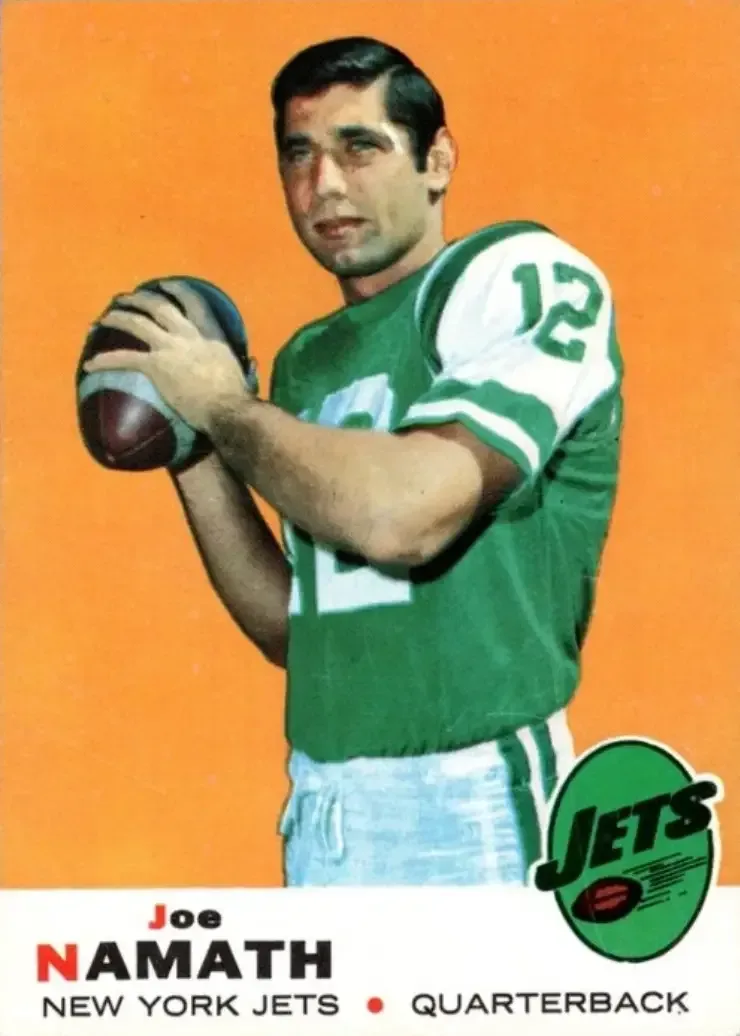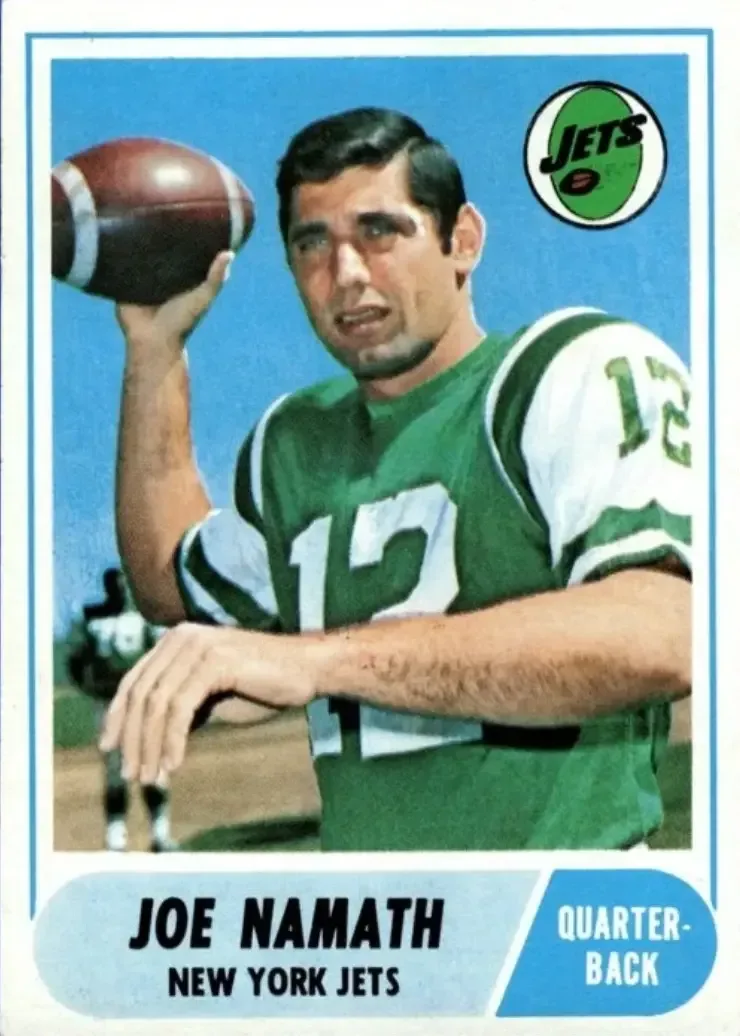
Joe Namath remains one of the most recognizable figures in football history, and his cardboard legacy still reflects that star power. From his larger-than-life personality to his Super Bowl III guarantee and MVP performance, Namath built a hobby resume that continues to attract vintage football collectors.
High-grade copies of Namath cards are especially difficult to find, which helps explain why the strongest examples can command major prices. For this OTIA Sports look at Broadway Joe, these are the top 3 Joe Namath football cards based on the strongest sale prices listed in the available data.
Top 3 Joe Namath Football Cards by Value
The three cards below stand above the rest in the provided sales history, with each one showing a mix of star appeal, vintage scarcity, and elite-condition demand.
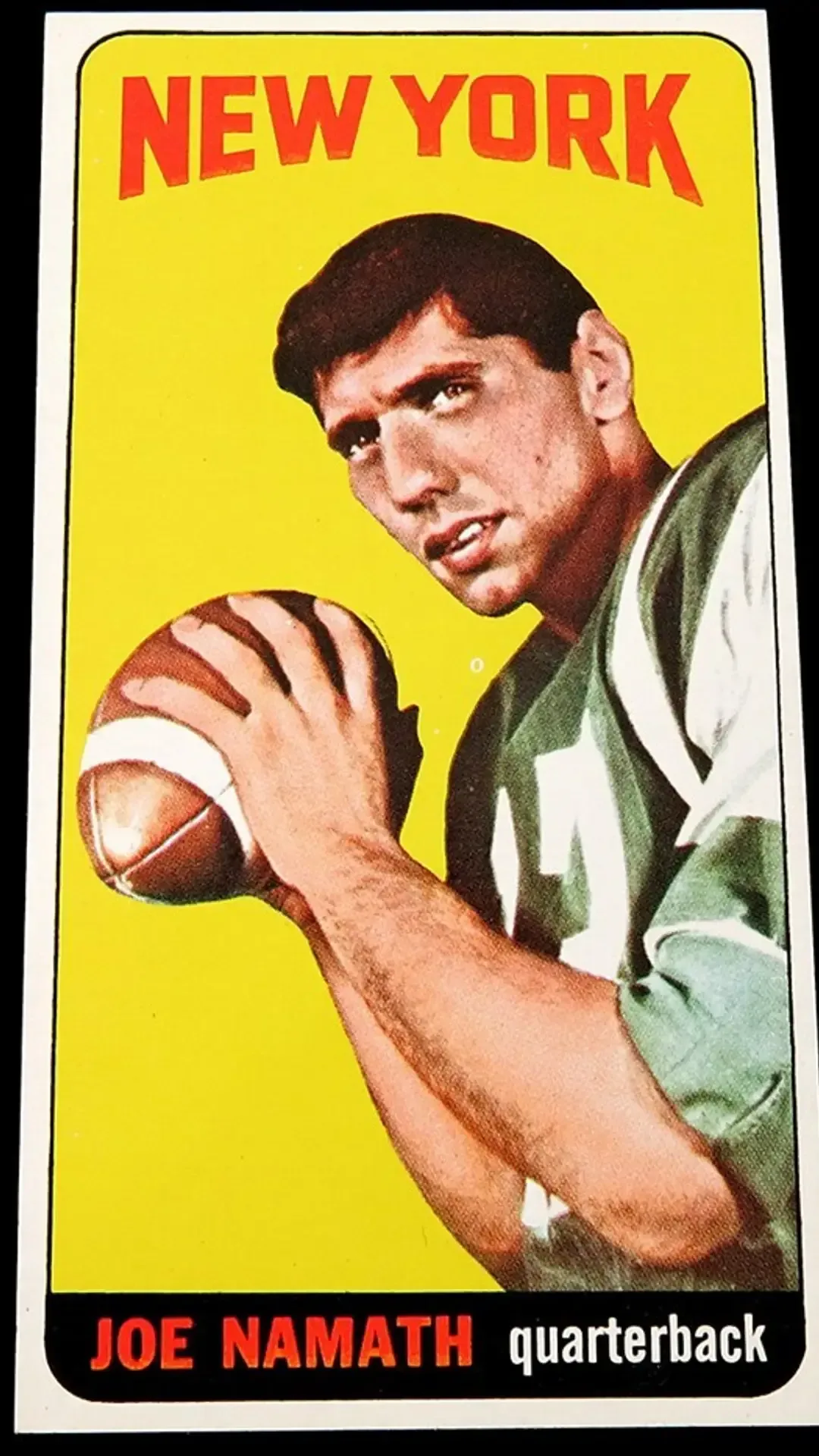
1. 1965 Topps Joe Namath #122
Top recorded sale: PSA 9 sold for $264,000 on February 23, 2018.
For more collector background, read John Elway’s Top 3 Most Valuable and Iconic Football Cards.
PSA 9 population: 5
Namath's 1965 Topps rookie card holds the top spot, and it is not particularly close. As his key rookie issue, it sits at the center of his football card market and remains the card many collectors associate first with his name. The design is instantly recognizable, featuring a bright yellow background that makes the image pop and gives the card strong display appeal.
Rookie cards are often the foundation of a Hall of Fame player's market, and that effect is magnified when the player is as culturally important as Namath. He was not just a quarterback with championships and awards. He became a symbol of football swagger during the AFL era and one of the sport's most memorable personalities. That kind of status tends to elevate rookie-card demand across generations of collectors.
The reported sale of $264,000 for a PSA 9 shows just how powerful that demand can be when condition rarity enters the equation. With only five PSA 9 examples noted in the provided data, high-grade survivors are limited enough to create intense competition. Vintage football cards from the mid-1960s are already challenging in top condition, and Namath's flagship rookie adds a layer of iconic status that pushes values to another level.
For collectors building a serious Joe Namath run, this is the centerpiece. It blends rookie-card prestige, vintage eye appeal, and one of the most important names in pro football history.
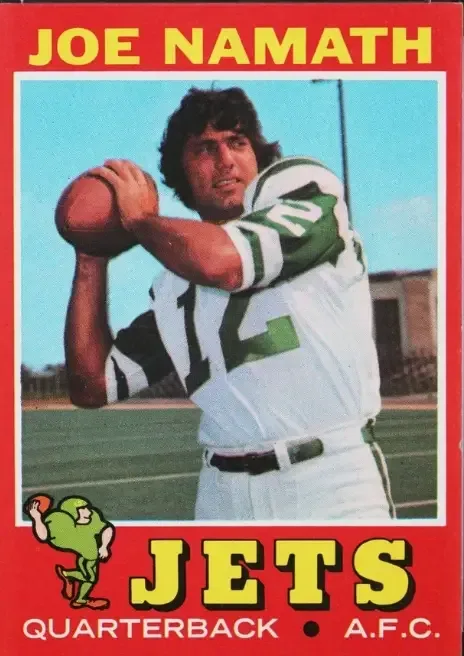
2. 1971 Topps Joe Namath #250
Top recorded sale: PSA 9 sold for $94,007 on August 16, 2025.
PSA 9 population: 3
The 1971 Topps Joe Namath #250 ranks second among the top three, and its place here shows how much the hobby values condition-sensitive vintage stars from strong classic sets. The 1971 Topps football release has long been popular with collectors, and Namath is one of the marquee names in the checklist.
This card benefits from several layers of hobby appeal. First, it comes from a well-liked early-1970s Topps design that remains a favorite among vintage football collectors. Second, Namath's popularity gives it star power beyond simple set-building demand. Third, the card appears to be extremely difficult in top grade, with just three PSA 9 copies cited in the available information.
That combination helped produce a sale just over $94,000, a remarkable result for a non-rookie Namath card. It highlights an important reality of the vintage football market: once population gets tight at the top of the grading scale, elite-condition examples can behave almost like one-of-a-kind trophies, even when the card itself is not a rookie.
Collectors also appreciate memorable set design elements from this era, and the 1971 Topps football issue has maintained a strong visual reputation over time. In the context of Namath's card catalog, #250 stands out as one of the toughest and most valuable mainstream cards to secure in high grade.
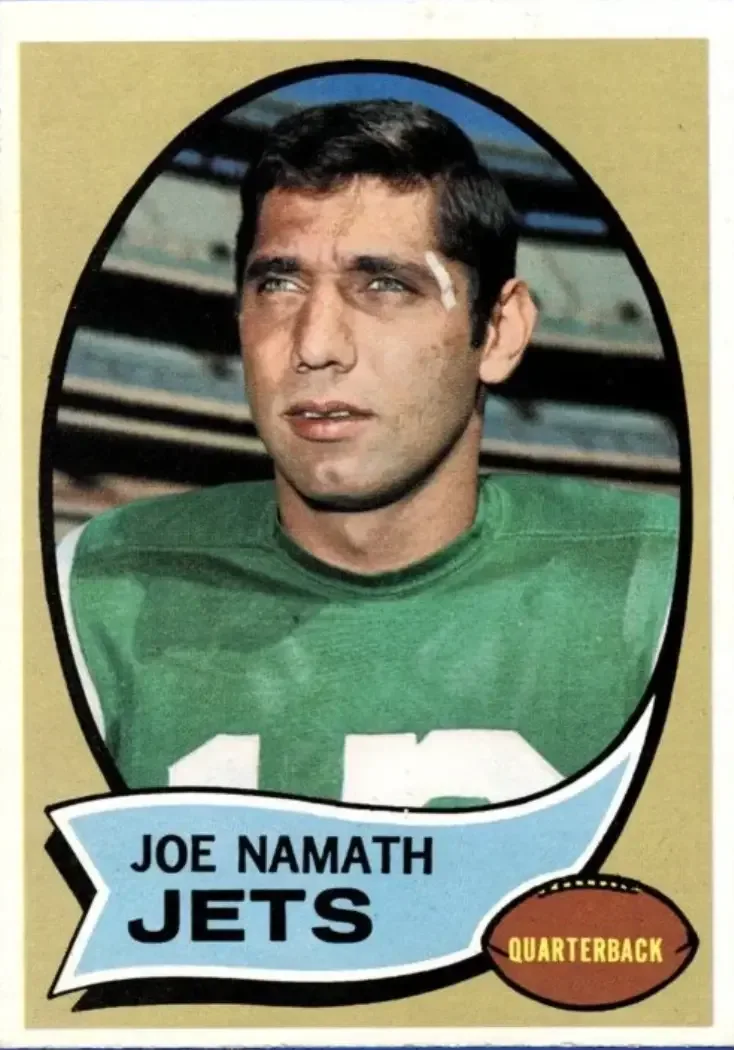
3. 1970 Topps Joe Namath #150
Top recorded sale: PSA 10 sold for $90,000 on July 21, 2021.
PSA 10 population: 1
Third on the list is 1970 Topps Joe Namath #150, a card whose value is driven heavily by extreme top-grade scarcity. The available data identifies just one PSA 10, and that lone gem mint example sold for $90,000 in 2021. When a major star's card has a single known copy at the highest grade level, it immediately becomes a headline piece in the player's market.
The card itself has a distinctive visual character. Namath is shown on the sidelines with stadium seating visible in the background, and the image reflects the rugged reality of his playing career. He is also shown wearing facial tape or bandaging, a fitting detail for a quarterback whose career became closely associated with playing through physical punishment.
That imagery gives the card more personality than a simple posed portrait. For collectors, cards that capture a player in a more natural football setting often carry added charm, especially when the subject is a legend whose public identity extended well beyond the field.
The one-of-one feel at the PSA 10 level is what makes this card especially powerful from a value standpoint. Even though high-end vintage collectors understand that lower grades may be much more obtainable, the best graded copy often creates its own market lane. With only one PSA 10 listed, this 1970 Topps Namath becomes a true condition census card.
Why These Three Namath Cards Lead the Market
These three cards represent different paths to hobby value, but all of them connect to core collector priorities.
- Rookie-card importance: The 1965 Topps #122 is Namath's signature rookie and the foundational card in his catalog.
- Condition scarcity: The 1970 Topps #150 and 1971 Topps #250 both show how small high-grade populations can lift prices dramatically.
- Vintage star power: Namath's cultural profile remains larger than many players from his era, which keeps demand steady.
- Strong visual appeal: Each of the three cards has a distinct look that helps it stand out in the hobby.
It is also worth noting that vintage football card markets often react strongly to elite examples because true top-condition copies can be much tougher than raw checklist size might suggest. Centering, print quality, edge wear, and surface issues become major separators, especially on cards that have been chased for decades.
What Collectors Should Watch
For collectors tracking Joe Namath cards, grade matters a great deal, but so does context. Population counts at the highest levels can shape the market quickly, especially when one of these cards resurfaces after a long gap. A fresh sale for a top-pop or lone-top-grade copy can reset expectations for the entire player market.
The 1965 Topps rookie will likely remain the benchmark card for Namath collectors, but the 1970 and 1971 Topps issues show that later-career cards can still post major numbers when supply gets tight at the top. That is a useful reminder for vintage football buyers who focus not only on rookie cards but also on key flagship appearances of legendary players.
Collectors looking at these cards should pay close attention to eye appeal beyond the label. Centering, color, registration, and overall presentation still matter, particularly in the vintage market where two cards with the same grade can draw very different levels of bidding interest. With a player like Namath, the combination of iconic status and premium condition can turn already desirable cards into true blue-chip pieces.
Joe Namath Top 3 Card Price Snapshot
- 1965 Topps Joe Namath #122
Top sale: $264,000
Grade: PSA 9
Sale date: February 23, 2018
Population noted: PSA 9 pop 5 - 1971 Topps Joe Namath #250
Top sale: $94,007
Grade: PSA 9
Sale date: August 16, 2025
Population noted: PSA 9 pop 3 - 1970 Topps Joe Namath #150
Top sale: $90,000
Grade: PSA 10
Sale date: July 21, 2021
Population noted: PSA 10 pop 1
For anyone building around one of football's most enduring names, these three cards define the top end of the Joe Namath market in the available sales data, with the 1965 Topps rookie leading the way and the early-1970s Topps issues proving how valuable high-grade vintage supply can become.
Photo Gallery