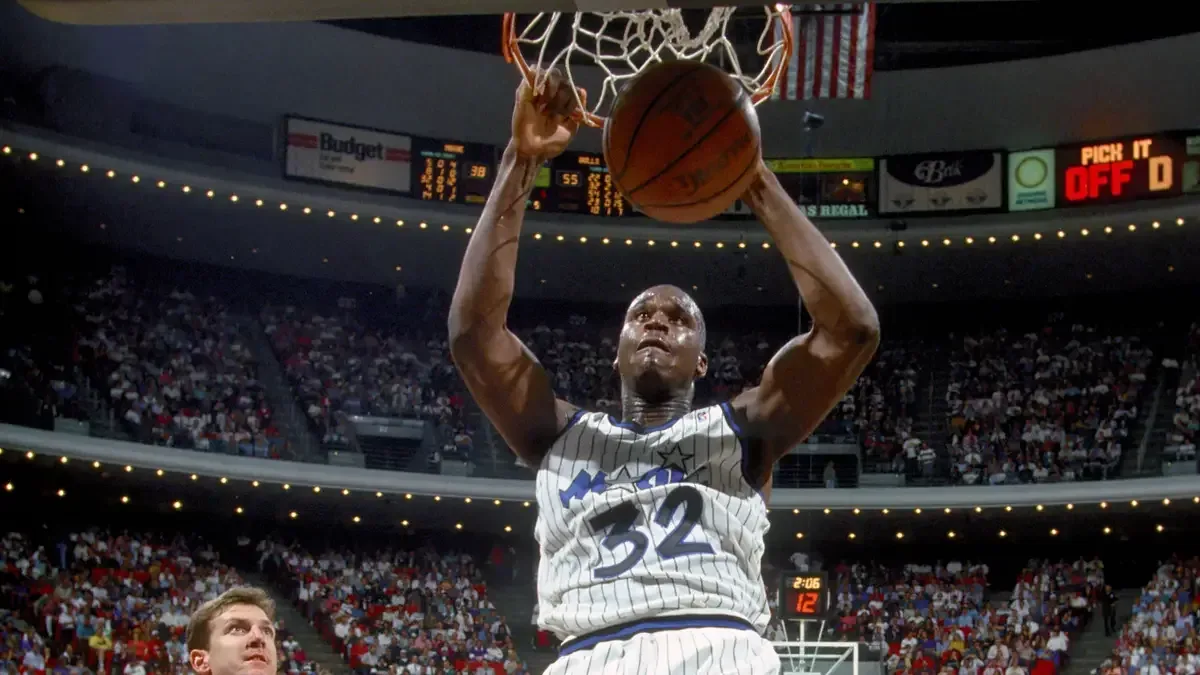
Shaquille O’Neal’s card market has moved from quietly undervalued to one of the hottest stories in the hobby. The latest wave is not limited to elite rarities or a few headline sales either. Prices are climbing across his best-known rookie cards, condition-sensitive 1990s inserts, and even long-overlooked early-career issues that spent decades sitting in binders, boxes, and bargain bins.
For years, collectors could make the case that O’Neal lagged behind other all-time basketball names in the market. That gap is getting harder to justify now. A four-time NBA champion, Hall of Famer, global celebrity, and one of the defining athletes of the 1990s and 2000s, O’Neal has the résumé, cultural relevance, and hobby visibility to support a much stronger card market than he carried for much of the modern boom.
What makes this surge especially notable is how broad it has become. High-end parallels and premium inserts have been strong attention-grabbers, but the recent momentum has spread well beyond the rarest cards. Base rookies, non-numbered inserts, and secondary subset cards are all participating, which gives this run a much deeper feel than a handful of isolated sales.
Why Shaq’s market is suddenly moving so fast
There is no single switch that explains a jump like this, but a few factors stand out. The first is simple: collectors are revisiting 1990s basketball with fresh urgency. That era remains one of the hobby’s strongest nostalgia engines, and O’Neal sits near the center of it. His rookie-year cards were heavily chased when they were released, his on-court dominance translated naturally to card demand, and his larger-than-life personality kept him relevant long after retirement.
For more collector background, read Rob Gronkowski Expands His Role in the Hobby With eBay Live Series and Big Event Appearances.
Another factor is relative value. In a hobby environment where many modern prospects have been priced aggressively before building Hall of Fame résumés, established icons often begin to look more appealing. O’Neal checks every box collectors want in a legacy star. He was a transformational player, won at the highest level, remained visible in mainstream culture, and has a card catalog full of recognizable 1990s designs.
Scarcity also matters, though it shows up in different ways depending on the card. For premium parallels like Precious Metal Gems, Skybox Rubies, and E-X Credentials, supply has always been a major driver because public sales are sparse. But scarcity is also playing out in condition-sensitive issues from the 1990s. Many of O’Neal’s cards were widely available when released, yet top-grade examples are far less common than raw population might suggest because so many were handled by kids, stored poorly, or never professionally graded.
The 1992 Upper Deck rookie is setting the tone
If one card still defines Shaq’s cardboard legacy for a broad swath of collectors, it is the 1992 Upper Deck rookie card. It remains one of the most recognizable basketball rookies of its era, and it has now become one of the clearest symbols of how rapidly O’Neal’s market is strengthening.
For another perspective on this story, read Shaquille O’Neal Basketball Cards Surge as 1990s Rookies and Inserts Heat Up.
Two years ago, a PSA 10 example could be found for under $2,000. Even six months ago, the market had only edged up to roughly $2,600. That changed dramatically in recent months, with a sale reaching $8,000 on August 29. From March to late August, that represents approximately 205% growth.
That kind of move matters because the 1992 Upper Deck rookie is not some obscure niche card. It is one of the cornerstone Shaq rookies that both veteran and newer collectors recognize immediately. When a flagship-style card like that jumps so hard, it often signals more than a one-off spike. It suggests a wider market repricing around the player.
It also reinforces an important hobby truth about 1990s stars: availability and true premium quality are not the same thing. Plenty of collectors remember seeing this card everywhere. Far fewer own examples that have survived in gem-mint shape. As demand rises, the highest grades can separate from the rest of the market in a hurry.
1990s inserts are posting some of the biggest gains
The more dramatic percentage moves are showing up in O’Neal’s 1990s inserts, especially the condition-sensitive, design-driven cards that have become favorites with advanced collectors. These are the kinds of releases that combine star power, era appeal, and visual identity, all while being difficult to secure in top grade.
One standout is the 1993 Ultra Scoring Kings. In PSA 9, the card has recently been trading in the $4,500 to $4,800 range after sitting near $750 just three months earlier. PSA 8 copies have also climbed sharply, moving from about $235 to more than $1,800 during the same stretch. That is the sort of acceleration that gets the hobby’s attention quickly.
The Scoring Kings move also highlights how the market often climbs in layers. Once elite buyers push up the best examples, the next grades below them can follow aggressively as collectors hunt for more attainable copies. In a market where PSA 10 examples may be practically unavailable or financially out of reach, PSA 8s and PSA 9s can become the action zone.
Other insert and subset cards are following the same pattern. O’Neal’s 1992 Ultra Rejectors #4 has surged despite being a lower-profile card historically. Over a three-month period, PSA 9 sales moved from $37 to $190, while PSA 8 copies jumped from $15 to $100. When gains like that start showing up on cards once ignored by much of the market, it suggests interest is broadening rather than narrowing.
The rally is spreading beyond marquee cards
One of the strongest signs that this is a real hobby-wide Shaq run is that less glamorous cards are participating too. The market is no longer focused only on top-tier rookies and iconic inserts. Collectors are bidding up secondary cards that had spent years or even decades at modest price points.
A PSA 9 1992 Stadium Club Members Only #201 was selling around $70 roughly 90 days earlier, then rose to $336. His 1992 Ultra All-Rookies #7 in PSA 9 followed a similar path, climbing from $47 to $211. These are not cards that typically lead mainstream hobby conversation, yet they are now seeing serious appreciation.
That type of movement can be even more meaningful than a headline-grabbing grail sale. It shows that collectors are not just competing for the obvious trophy pieces. They are re-evaluating O’Neal’s rookie-year catalog more broadly and assigning higher values across a wider range of issues.
Card Ladder’s data also points to just how widespread the jump has been. Over the last three months, O’Neal’s cards are up 120% overall in its index. Among his 86 rookie-year cards in the database, more than half have doubled in price, and 19 have increased by 200% or more. Those numbers paint a picture of a market move with unusual breadth.
Raw cards are getting dragged upward too
Another key development is that the rally is not confined to graded cards. Raw examples from O’Neal’s early Orlando years are also moving higher, which often happens when collector urgency outpaces available slab supply or when buyers begin taking chances on condition and submission potential.
The 1995 Skybox Premium Meltdown offers one of the most striking examples. Raw sales moved from $73 in early June to as high as $763 on August 24. That kind of increase is hard to dismiss as random noise. It signals that demand is pushing into any format the market can find, not just pristine slabs.
The same pattern appears in more accessible cards. For a long stretch, a raw 1992 Topps Gold #362 typically sold for under $25. Recent sales have pushed that value to over $100, more than tripling even without the explosive spike seen on some inserts. That is notable because it shows rising interest from a wider collector base, including buyers who may not be shopping only at the very top of the market.
When raw cards start to move this way, it can also ignite a feedback loop. Collectors dig through old collections, submit more cards for grading, and create even more visibility around the player’s catalog. That added attention tends to support interest in lesser-known issues, which can then create the next wave of price discovery.
Even overlooked subset cards are no longer being ignored
One of the clearest signs of changing perception is what is happening with cards that were previously easy to find for almost nothing. The 1995 Skybox Premium Electrified #293 has become a striking example of that dynamic. Just weeks earlier, it could be found widely for under $2. More recently, it has sold in the $25 to $40 range, with some examples reaching as high as $60.
Cards like Electrified are important market tells because they are not the first names casual collectors usually mention when discussing Shaq. When those types of cards suddenly catch fire, it points to a collector base that is digging deeper, learning the checklist, and reaching for more than just the best-known rookies.
This is often how a mature player market develops. It begins with iconic flagship cards, shifts toward major inserts and rare parallels, and eventually pulls up the wider ecosystem. Once collectors start chasing the full breadth of a star’s early-career output, forgotten inserts and subsets can become surprise winners.
What this means for collectors right now
For collectors who have held Shaq cards for years, the current market is rewarding patience. Cards that once felt common are being viewed differently, especially in strong condition. For buyers entering now, the challenge is figuring out which parts of the run still have room and which have already made their fastest move.
The safest long-term interest still appears tied to the strongest pieces of the catalog: key rookies, visually iconic inserts, and scarce premium parallels. Those cards align best with O’Neal’s place in basketball history and with the collecting habits that tend to hold value over time.
That said, the recent market action suggests there may still be overlooked opportunities in non-headline issues, especially cards that combine strong 1990s design with low awareness and limited top-grade supply. O’Neal’s market is giving collectors a reminder that hobby value does not always start at the obvious top. Sometimes it begins when people realize a player’s broader card catalog has been underpriced for years.
Anyone sorting old boxes from the early 1990s and mid-1990s now has a reason to look more carefully at Shaq cards that previously felt too common to matter. The current run has shown that rookie-year inserts, subsets, parallels, and even raw cards from his Orlando period can attract surprising bidding strength when demand shifts. With more than half of his rookie-year cards in key tracking data having doubled over the last 90 days, collectors checking old binders may be looking at a very different market than the one they remembered.
Photo Gallery