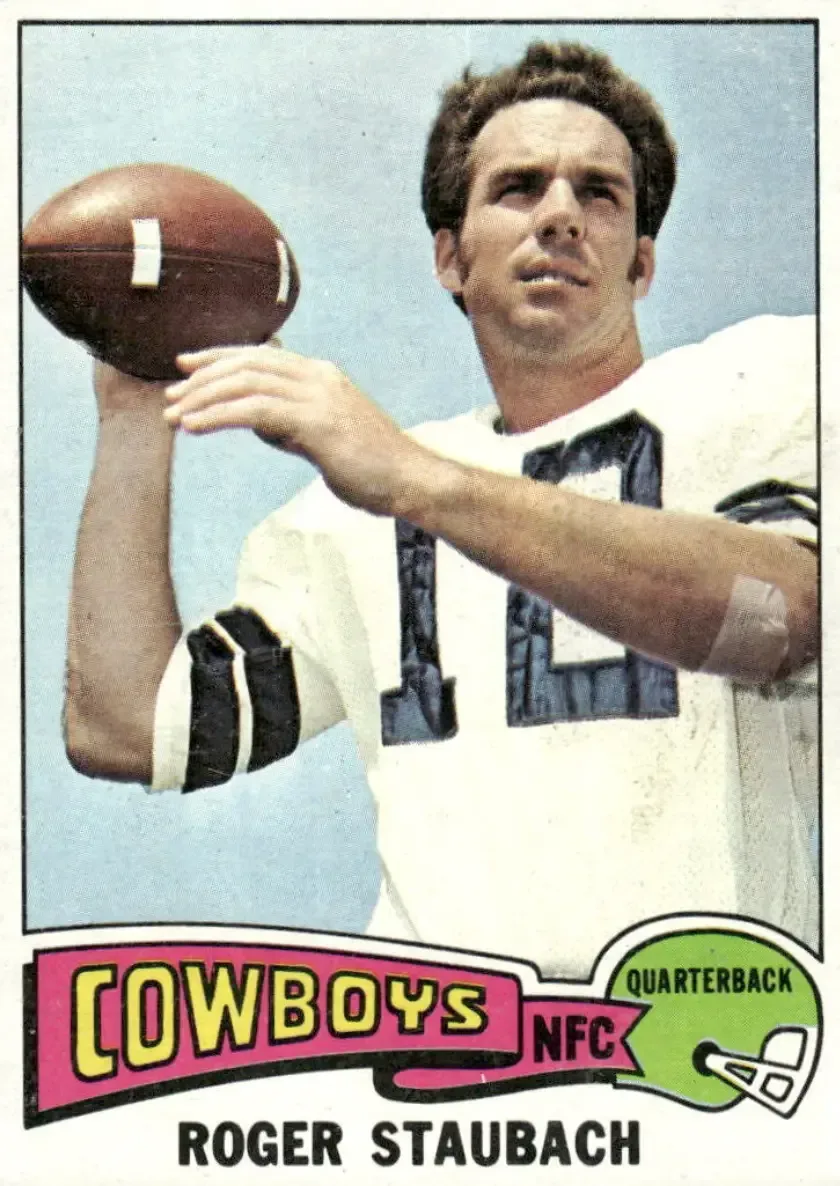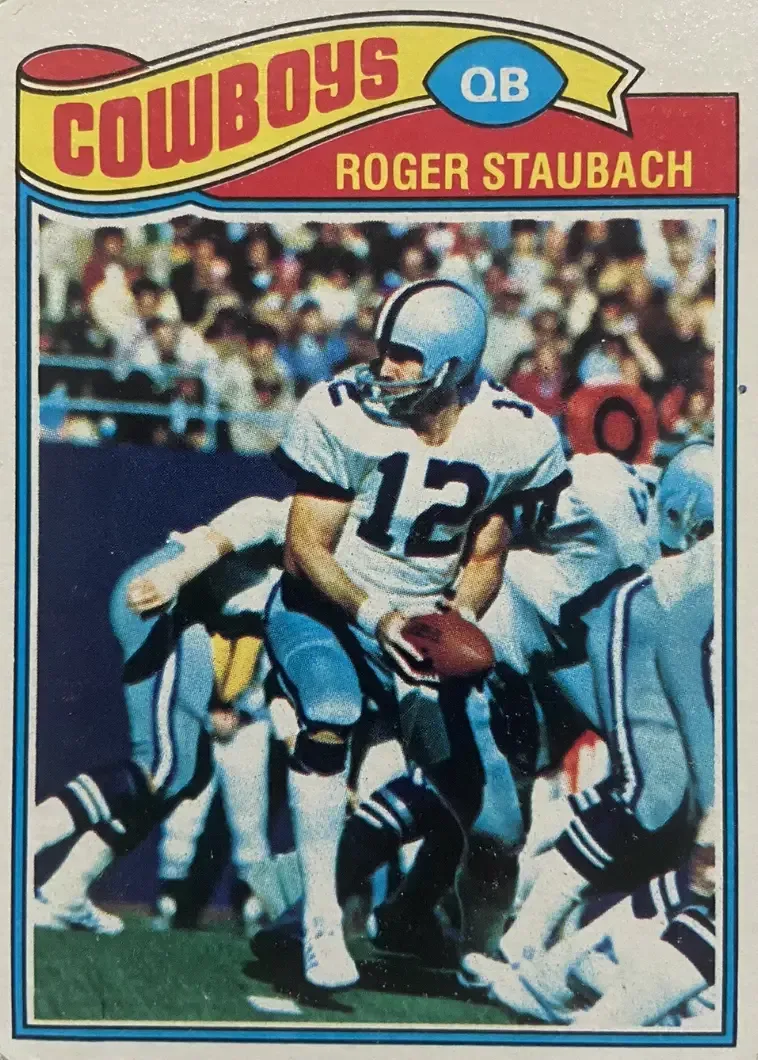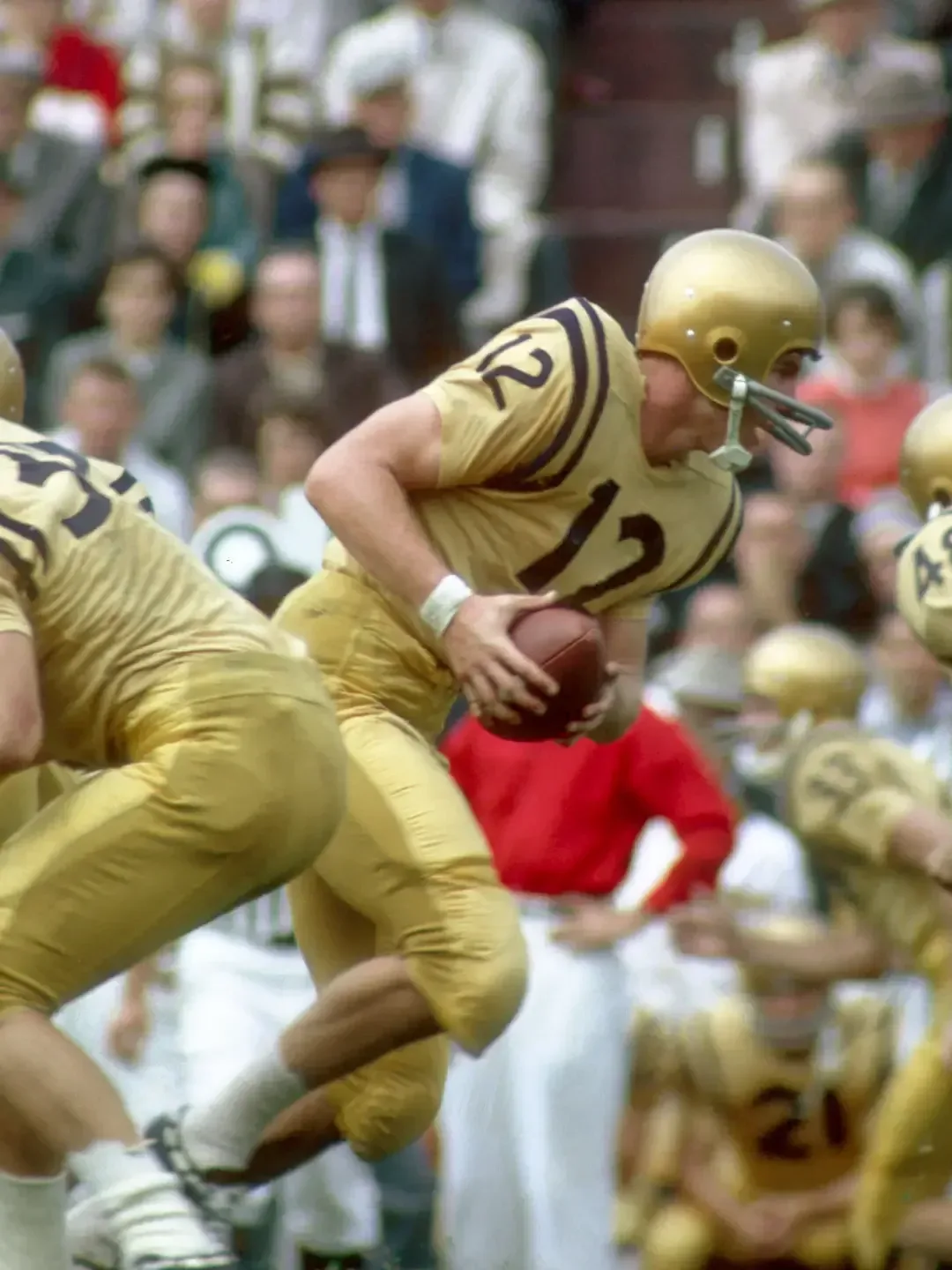
Roger Staubach remains one of the defining names of vintage football collecting, and recent attention around the Cowboys legend has only reinforced that standing. After Dak Prescott wore Staubach’s No. 12 before and after Dallas’ Week 2 game on September 20, 2026, the timing felt right for collectors to revisit the quarterback’s most important cardboard appearances from the 1970s.
Staubach’s legacy reaches far beyond hobby nostalgia. He won the Heisman Trophy at Navy in 1963, completed military service after being drafted by Dallas in 1964, then joined the Cowboys in 1969 and became one of the franchise’s most recognizable stars. He later led Dallas to two Super Bowl titles, and that combination of military service, championship success, and national name recognition helps explain why his best vintage cards still carry weight in the market.
For this OTIA Sports Top 3, the focus is on the strongest source-supported Roger Staubach vintage cards based on prominence, scarcity in top grades, and recorded sale levels. That puts the spotlight on three key Topps issues from 1972, 1974, and 1976.
Top 3 Roger Staubach Vintage Football Cards
Staubach does not have a deep run of early playing-days cards, which makes his most important issues stand out even more. His first widely recognized Cowboys-era card arrived in 1972, and high-grade examples across the decade have become serious chase pieces for football collectors who want Hall of Fame quarterbacks with franchise-level importance.
For more collector background, read 6 Iconic Walter Payton Football Cards That Still Define the Vintage Market.
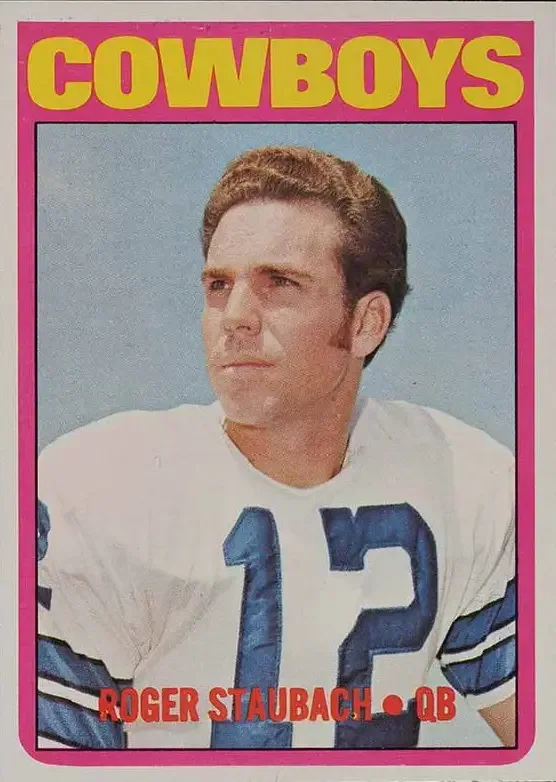
1. 1972 Topps Roger Staubach #200
The 1972 Topps Roger Staubach #200 is the clear centerpiece of any Staubach card conversation. It is widely treated as his rookie card by default because it was his first card issued after joining the Cowboys in 1969. In hobby terms, that gives it a special place even though his professional debut came earlier than the card’s release.
From a demand standpoint, this is the card that best captures the intersection of legacy and scarcity. Staubach is not just a Hall of Fame quarterback. He is one of the most celebrated players in Cowboys history, and his first key Topps appearance sits in one of the hobby’s most collected football sets of the era.
The sale data in the source material shows just how strong the market can be for high-grade examples. A PSA 9 sold for $25,676 on May 31, 2025 through Memory Lane Auction, an eye-catching result that separates this card from the rest of the field. The PSA 9 population was listed at 53, while the PSA 10 population stood at just 4.
For another perspective on this story, read Roger Staubach’s Five Key Vintage Football Cards, From 1972 to 1977.
There is also a note of a PSA 10 at $9,300 on May 12, 2023 through Heritage Auctions, but the same source also characterizes PSA 10 sales as extremely limited, with no readily available sale information beyond its rarity. What is not in dispute is the condition sensitivity at the top end. With only four PSA 10s noted, Gem Mint copies are exceptionally scarce.
Why does this card matter so much to collectors?
- It is Staubach’s first major Cowboys-era card.
- It carries rookie-card status in the hobby by default.
- It has elite demand among vintage football and Cowboys collectors.
- High-grade examples are genuinely difficult to find.
For collectors building a quarterback collection, a Hall of Fame run, or a Dallas Cowboys showcase, the 1972 Topps #200 is the card most likely to anchor the group.
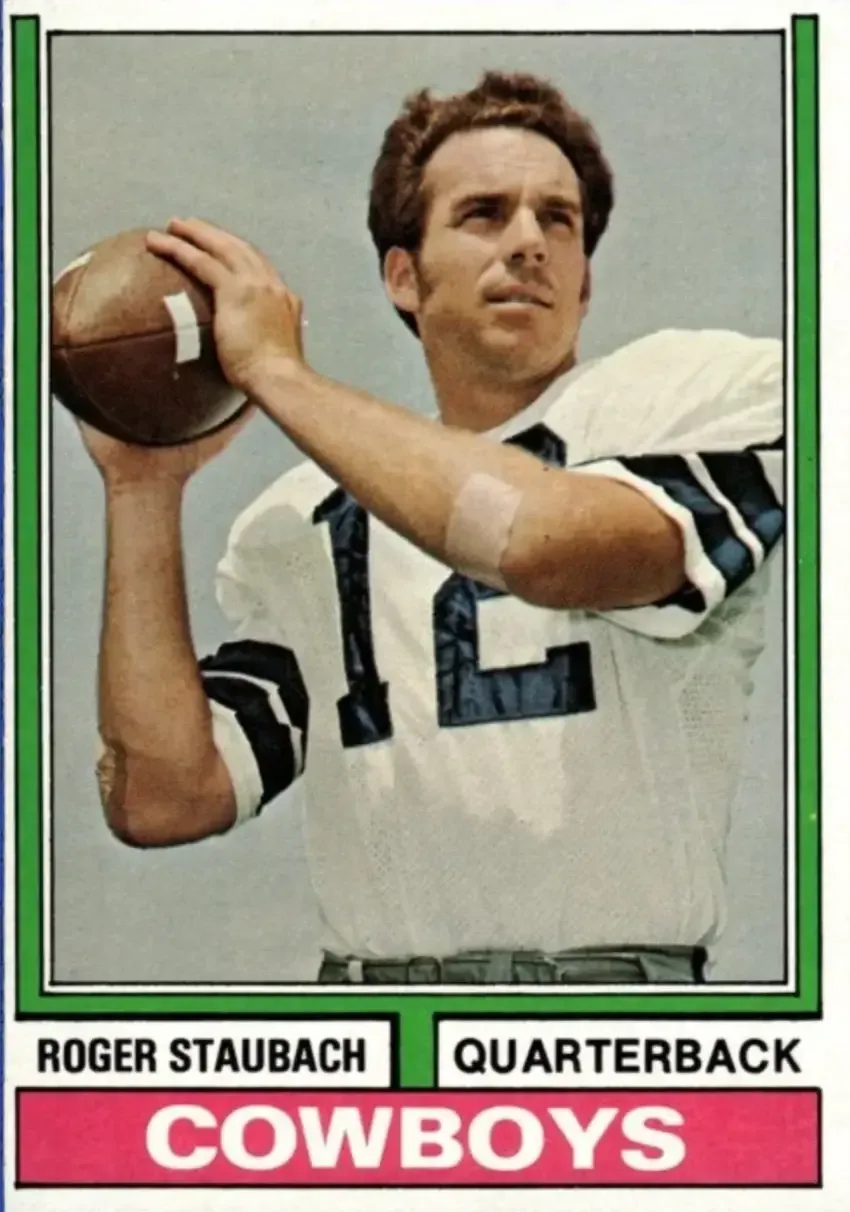
2. 1974 Topps Roger Staubach #500
The 1974 Topps Roger Staubach #500 ranks second in this Top 3 thanks to its combination of visual appeal, premium valuation in top grade, and extreme scarcity at the highest level. The card features Staubach framed by green goal posts as part of the design, giving it one of the more memorable visual layouts among his 1970s issues.
By 1974, Staubach was already firmly established as one of the NFL’s premier quarterbacks, and that career positioning adds importance to the card. This is not simply a follow-up issue riding on rookie-card appeal. It is a card from the middle of his prime, released while his on-field reputation was still growing.
The source details a PSA 10 sale of $9,300 on May 12, 2024 through Heritage Auctions. That result ties this card with the listed PSA 10 figure attached to the 1972 issue, and it underscores just how aggressive the market can be when an elite-grade copy surfaces. Even more telling is the PSA 10 population: only 4.
There is also evidence of a more accessible but still relevant market at the PSA 9 level. A PSA 9 sold for $733 on September 20, 2026 on eBay, with a PSA 9 population of 68. That gap between PSA 9 and PSA 10 pricing highlights a common reality in vintage football collecting: the top pop premium can be enormous when supply is that thin.
Collectors are drawn to this card for several reasons:
- It comes from Staubach’s established star years with Dallas.
- The PSA 10 population of 4 makes elite copies especially tough.
- The design is distinctive and easy to identify within his Topps run.
- It has shown the ability to reach four-figure and even premium four-figure prices depending on grade.
For collectors who want a serious Staubach card beyond the rookie conversation, the 1974 Topps #500 offers a strong blend of era significance and condition-driven scarcity.
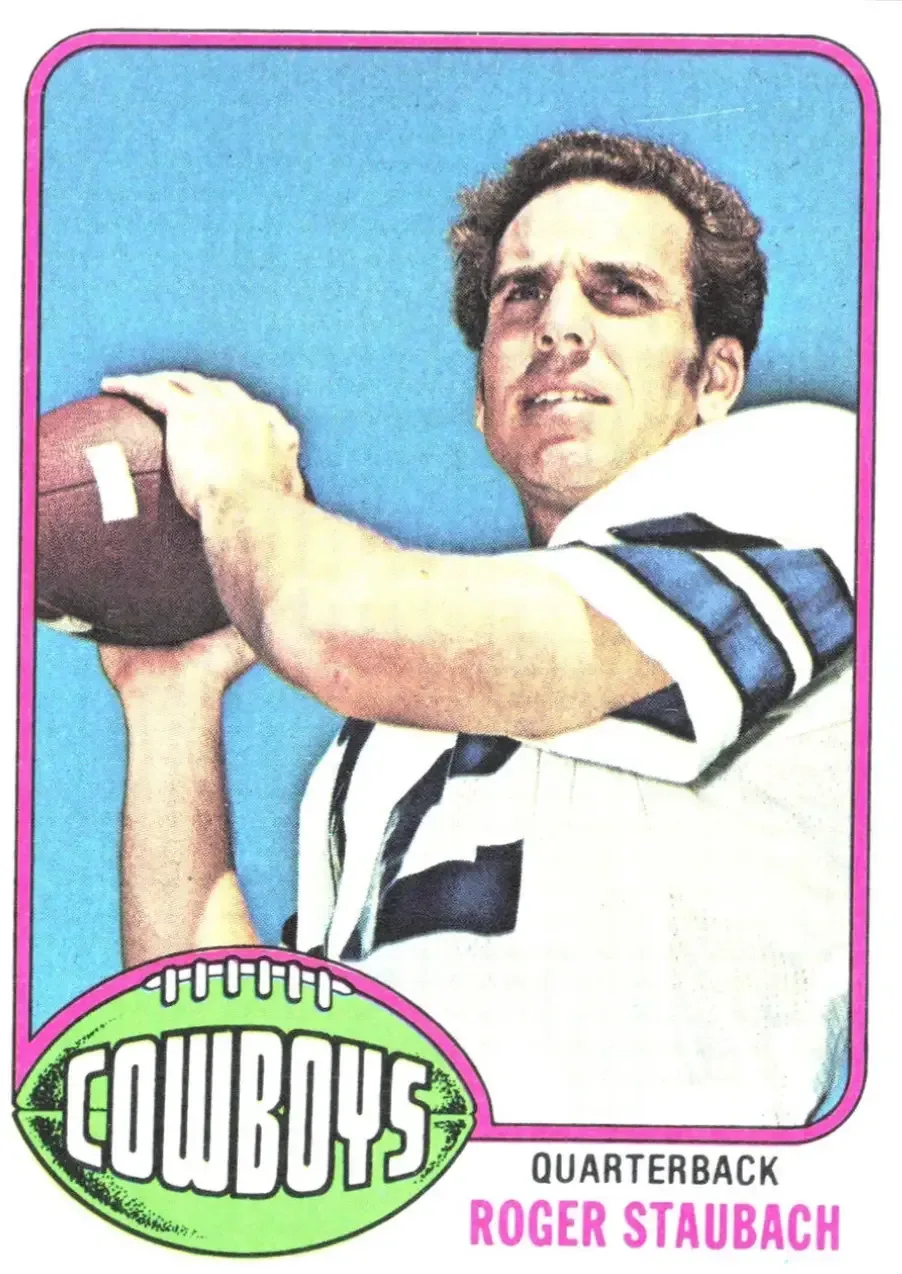
3. 1976 Topps Roger Staubach #395
The third spot belongs to the 1976 Topps Roger Staubach #395, a card that stands out for both its classic mid-1970s presentation and a strong recent high-grade sale. This issue brings a different visual energy than the earlier cards, with neon green and pink design elements that make it unmistakably tied to the decade.
That period styling has become part of the card’s appeal. Many collectors who pursue 1970s football sets appreciate bold color palettes and instantly recognizable designs, and the 1976 Topps release delivers that in a big way. Add in a Hall of Fame quarterback at the center, and the card has plenty going for it beyond basic checklist relevance.
The source lists a PSA 10 sale of $6,500 on September 16, 2026 through eBay. The total PSA 10 population was reported at 13. While that population is higher than the top-end scarcity seen with the 1972 and 1974 cards, it is still a very low number in practical collecting terms, especially for a player of Staubach’s stature.
Compared with the first two cards in this Top 3, the 1976 Topps issue can sometimes feel like a middle ground option. It is not the default rookie, and it is not quite as scarce in PSA 10 as the 1974 card. But the market evidence shows that collectors still place real value on pristine copies, and the design gives it an identity that stands apart in any Staubach lineup.
Its case for inclusion is straightforward:
- It recorded a notable PSA 10 sale at $6,500 in 2026.
- The PSA 10 population of 13 remains low for a major star card.
- The design is one of the most recognizable in Staubach’s vintage catalog.
- It offers collectors another premium 1970s Cowboys-era card without needing rookie-card framing.
For collectors who enjoy strong visual design as much as market history, the 1976 Topps #395 deserves its place in any serious discussion of Staubach’s best vintage cards.
Why Roger Staubach Cards Still Matter
Staubach’s hobby appeal comes from a rare mix of factors that continue to resonate across generations. He was a Heisman Trophy winner, a military veteran, a Super Bowl champion, and a face-of-the-franchise quarterback for one of the NFL’s most visible teams. That profile gives him crossover demand from vintage football collectors, Cowboys fans, player collectors, and buyers focused on Hall of Fame quarterbacks.
His card market also benefits from something that cannot be manufactured after the fact: a relatively compact run of key vintage issues. Because there are not endless flagship-era options to choose from, the most important Staubach cards tend to absorb the attention. When elite-grade copies appear, especially from the early and mid-1970s, they can command real competition.
That dynamic is especially clear in the population counts attached to these three cards. The 1972 Topps #200 and 1974 Topps #500 were each listed with only four PSA 10 examples, while the 1976 Topps #395 sat at 13. In a market where condition scarcity often drives price acceleration, those numbers help explain the gap between nice vintage copies and true trophy examples.
Collector Notes on the Top 3
- 1972 Topps #200: The key Staubach card and the one most collectors identify first. It carries the strongest rookie-level importance.
- 1974 Topps #500: A prime-era issue with one of the toughest PSA 10 populations in his run and a memorable design.
- 1976 Topps #395: A visually bold 1970s card with strong recent PSA 10 pricing and lasting set appeal.
Collectors looking to enter the Staubach market can take different paths depending on budget. Lower-grade examples of the 1972 issue offer historical importance, while high-grade 1974 and 1976 copies can be attractive for buyers who prioritize scarcity and visual presentation. At the top end, these three cards form the core of a premium Roger Staubach vintage card collection.
Photo Gallery