Pokémon TCG: 30th Celebration is scheduled for a worldwide launch on September 16, marking the first time the game has received a simultaneous global release on that scale. The anniversary product is attracting attention for several reasons, but one topic has quickly taken over collector conversations: reprints.
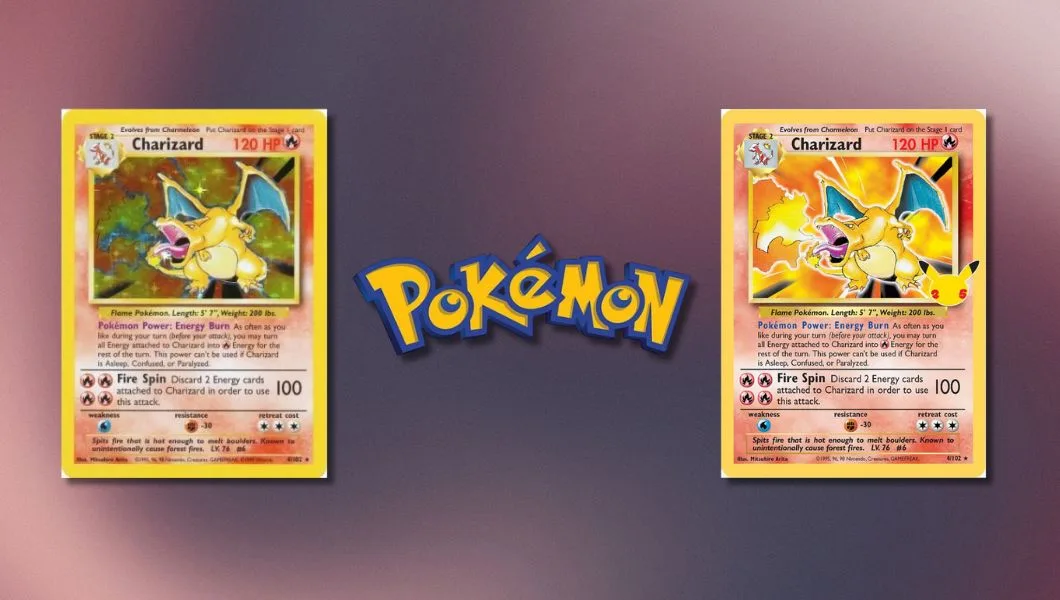
At the center of the release is a Classic Collection made up of 30 cards spanning Pokémon TCG history from the Base Set era through more modern releases. That kind of announcement tends to create instant anxiety among owners of older singles, especially when one of the confirmed names is the hobby’s most recognizable card, Base Set Charizard 4/102.
The usual fear is simple. If a famous card is reprinted, collectors assume the original will lose value. The actual picture is more complicated. Vintage cards do not move only because of artwork or character popularity. Scarcity, condition sensitivity, print era, and collector psychology all matter, and those variables are not impacted equally when a modern anniversary version enters the market.
Early sales activity around Pokémon 30th Celebration suggests that not every reprint should be treated the same. For iconic vintage cards like 1999 Charizard, the original still occupies a market lane that a modern release cannot easily replace. For later-era cards whose value is driven more by demand for the image or pairing than by true age scarcity, the risk profile looks different.
What Pokémon 30th Celebration Includes
The anniversary set is more than a nostalgia play, but nostalgia is clearly the headline feature. The Classic Collection is expected to contain 30 reprints, with two cards formally announced and the remaining cards tied to imagery shown on Pokémon’s Japanese 30th Celebration site earlier in the year. While not every card has been individually confirmed, that preview created a working list collectors have been using to gauge possible market impact.
Every card in the set is reported to have a Holofoil finish and anniversary branding, including Basic Energy cards. Packs also include one of 30 uniquely numbered Pikachu cards, giving sealed product another built-in chase element. On top of the reprint content, the product introduces a new Futuristic Rare treatment on Mewtwo ex and Mew ex.
That combination matters because it means the set is not relying only on old-card nostalgia. There are new chase cards, set-specific gimmicks, and pack-level incentives that should help the product stand on its own. For the secondary market, that is important. When a release has enough identity of its own, collectors often separate the reprints from the originals rather than treating them as direct substitutes.
Why Base Set Charizard Is a Different Kind of Asset
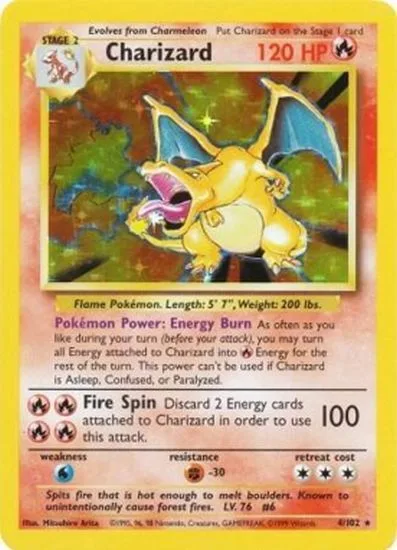
Base Set Charizard 4/102 remains one of the most recognizable trading cards ever printed. Illustrated by Mitsuhiro Arita, the Stage 2 Fire-type has long functioned as a symbol for the Pokémon hobby itself. Because of that reputation, any time Charizard is tied to a reprint release, market watchers immediately ask whether original copies are about to drop.
Recent sales do not point to a major collapse. Raw copies still vary widely by condition, which is typical for an older card known for edge wear, holo scratching, and surface issues. Lower-end copies have been changing hands in roughly the $230 to $300 range, while Near Mint raw examples have sold closer to $650 to $900.
Graded examples paint a cleaner picture. PSA 7 level copies have been around $765, PSA 8 examples around $1,330, and Gem Mint 10 copies remain in a completely different price tier at roughly $28,144. Those numbers have not shown a sharp reaction since the reprint reveal. Some softer movement has appeared in raw and middle-grade territory, but the top end looks stable, which is much more consistent with normal seasonal market drift than panic selling.
That stability makes sense. A 2026 anniversary release cannot create more 1999 copies, cannot erase first-era nostalgia, and cannot make well-preserved original Base Set holos easier to find. Vintage Charizard is expensive partly because it is famous, but also because authentic early copies in strong condition are genuinely scarce relative to demand. A reprint can echo the image. It cannot reproduce the original place in the hobby timeline.
What the 2021 Celebrations Charizard Already Taught the Market
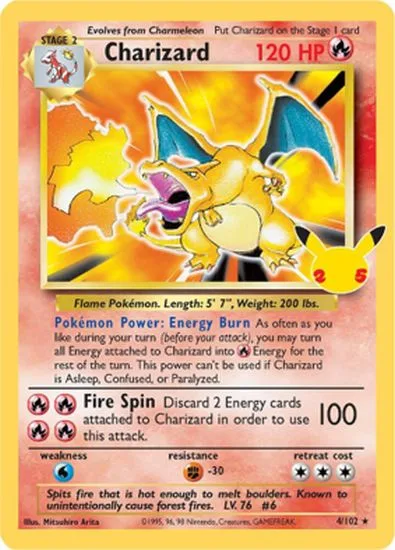
Collectors have a useful comparison point because Pokémon already ran a similar experiment with the 25th anniversary Celebrations set in 2021. That release also brought back Base Set Charizard 4/102 with anniversary branding. Enough time has passed since then to show whether a modern commemorative version can drain long-term value from the original.
So far, the answer appears to be no.
The Celebrations Classic Collection Charizard still carries meaningful value on its own. Raw copies have been selling around $175. Graded 9 examples have moved above $200, and graded 10 copies have landed closer to $300. Those are solid numbers for an anniversary reprint and show there is healthy demand for the commemorative version.
What matters even more is that the 2021 card never displaced the original 1999 release. Vintage Base Set Charizard continues to trade at a much higher level in comparable conditions. Buyers who want the actual Base Set card have continued to pay for it, while buyers who want an accessible anniversary callback have treated Celebrations as a separate option.
Part of that separation comes from presentation. The Celebrations reprint was designed as a recognizable homage rather than a one-for-one duplicate. Its Confetti Holofoil pattern and etched look make it easy to distinguish from the original. That visual distinction helped create two different collector tracks, which is why the anniversary version could succeed without seriously cannibalizing demand for the 1999 card.
Why Some Reprints Can Hurt More Than Others
The danger for collectors is assuming every reprint behaves like Base Set Charizard. Not all cards carry the same kind of value foundation. Some cards are expensive because they are old, difficult to find, and condition-sensitive. Others are expensive mainly because players and collectors love the artwork, the featured Pokémon, or the specific pairing on the card.
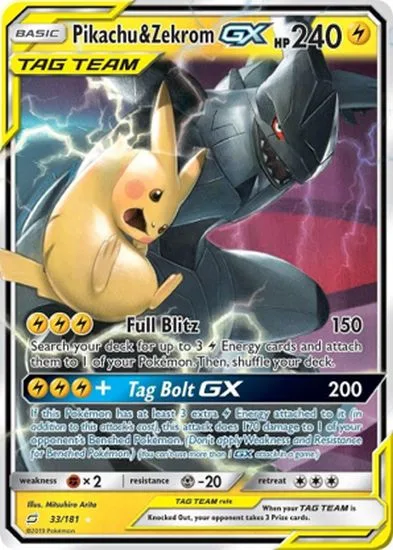
That difference becomes especially important when looking at Pikachu & Zekrom-GX 33/181 from Team Up. The 2019 Ultra Rare, also tied to Mitsuhiro Arita, has been trading in the mid-to-upper $30 range raw. It is a popular card with an important place in the TAG TEAM era, but it does not have the same hard-to-replicate scarcity story that supports Base Set Charizard.
When a later-era card gets a new foil-stamped anniversary version, part of the existing demand can migrate to the newer release. If collectors mostly want the art and character pairing, they may not care as much whether the cardboard came from 2019 or 2026. In those cases, the new version can split buyer attention and soften prices for the earlier print.
The exact treatment matters too. A visually distinct replica tends to coexist more comfortably with the original than a near-identical reprint does. That is why the English 30th Celebration version of Pikachu & Zekrom-GX has drawn more concern. In English, it is reported to be a straight reprint of the Team Up regular print with the anniversary logo doing most of the work to separate it from the original. Asian-language releases add a new set symbol and numbering, but English buyers are essentially getting the same card again with minimal differentiation.
For a modern-era card, that can be a meaningful issue. If two versions look almost the same and one is easier to pull from a major anniversary product, the older card may have a tougher time defending its price.
The Real Question Collectors Should Ask
The best way to evaluate a reprint is not to ask whether reprints are good or bad in general. The better question is what percentage of a card’s value comes from scarcity that cannot be recreated, and what percentage comes from pure demand for the image or characters.
For Base Set Charizard, scarcity and historic status do much of the heavy lifting. The card is nearly 30 years old, highly condition-sensitive, and culturally important beyond Pokémon alone. Reprinting the image does not change the finite supply of original Wizards of the Coast-era copies.
For more recent cards, the equation can flip. If a card is only a few years old and its value is mostly tied to broad fan appeal, then a modern reprint can create real pricing pressure. It gives buyers an alternate path to own the same visual experience, and in some cases that is enough to divide demand.
That distinction will likely shape how collectors react as more of the 30th Celebration Classic Collection becomes fully confirmed. Cards built on nostalgia for the exact original printing may remain resilient. Cards built on artwork and character popularity may face more competition from their anniversary counterparts.
Key Price Points and Card Data
Base Set Charizard 4/102
- Set: 1999 Base Set
- Card number: 4/102
- Rarity: Rare Holo
- Illustrator: Mitsuhiro Arita
- Raw lower-condition sales: about $230 to $300
- Raw Near Mint sales: about $650 to $900
- Grade 7 market level: about $765
- Grade 8 market level: about $1,330
- Grade 10 market level: about $28,144
Celebrations Charizard 4/102
- Set: 2021 Celebrations Classic Collection
- Card number: 4/102
- Rarity: Rare Holo
- Raw market level: about $175
- Grade 9 market level: above $200
- Grade 10 market level: around $300
- Key visual traits: Confetti Holofoil pattern and etched finish
Pikachu & Zekrom-GX 33/181
- Set: Team Up
- Card number: 33/181
- Rarity: Ultra Rare
- Illustrator: Mitsuhiro Arita
- Raw market level: mid-to-upper $30s
- Collector concern: English anniversary version is very close to the original print
Pokémon 30th Celebration Checklist Details Known So Far
- Release date: September 16
- Global note: first simultaneous worldwide release in Pokémon TCG history
- Classic Collection size: 30 reprints
- Timeline covered: Base Set through the modern era
- Confirmed headline reprint: Base Set Charizard 4/102
- Other cards: additional names have appeared in prior promotional animation but not all have been individually confirmed
- Card finish: Holofoil treatment across the set
- Branding: anniversary logo on every card, including Basic Energy
- Pack bonus: one of 30 uniquely numbered Pikachu cards in each pack
- New rarity debut: Futuristic Rare
- Known Futuristic Rare cards: Mewtwo ex and Mew ex
What to Watch After Release
The first few weeks after launch should be telling. If original Base Set Charizard prices remain steady while 30th Celebration copies establish their own separate range, that would reinforce the same pattern collectors saw with Celebrations in 2021. The high-end vintage market usually reacts more to condition rarity and elite collector demand than to the existence of a cheaper anniversary version.
The more interesting movement may come from later-era reprints, especially those with strong fan-favorite artwork and less ingrained scarcity. If Pokémon 30th Celebration includes several modern cards reproduced with only minor visual differences, the market may begin sorting those into a different category than vintage icons. In that environment, cards like Pikachu & Zekrom-GX become useful measuring sticks for how much reprints can redirect demand when the original is not protected by age and era prestige.
For now, early evidence points to a familiar rule: iconic vintage originals and anniversary reprints can coexist, but not every card has the same defenses. As more of the Classic Collection becomes fully revealed, the strongest signals will come from how buyers separate true era scarcity from simple affection for a card’s artwork, characters, and foil treatment.
Photo Gallery