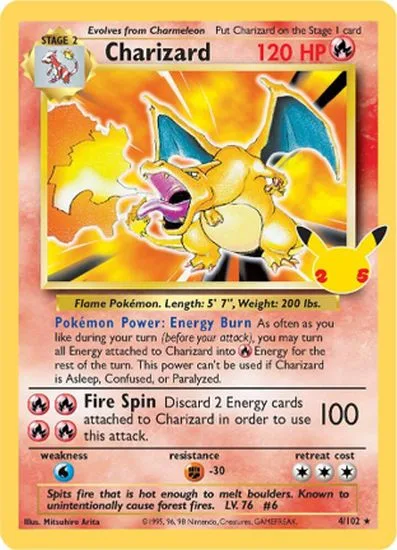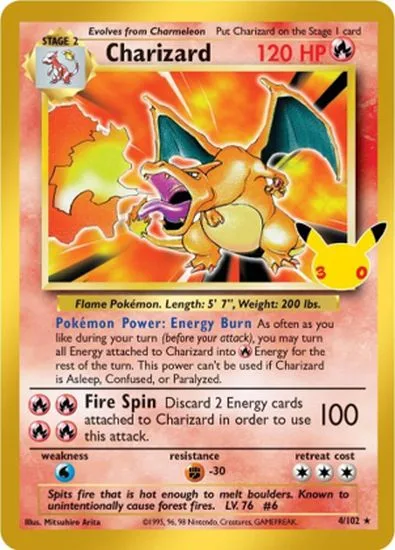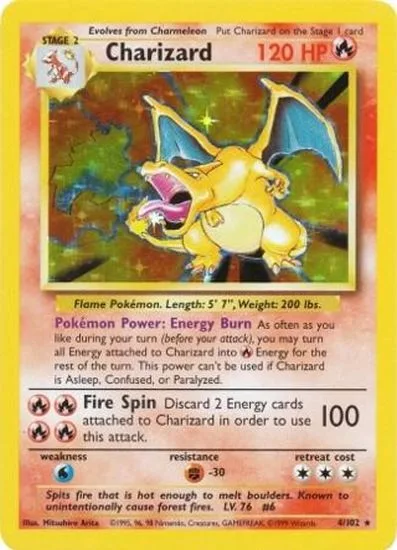
Pokémon TCG 30th Celebration arrives September 16, and one of its biggest talking points is easy to identify: Base Set Charizard is coming back in the Classic Collection with a Pikachu anniversary stamp and a new holofoil treatment. For collectors, that immediately creates a familiar debate. Is the fresh reprint the better place to put money, or does the original 1999 card still offer the stronger long-term case?
That question matters because these are not interchangeable buys, even if the artwork and character appeal overlap. One is a brand-new anniversary-era collectible entering the market with modern supply behind it. The other is one of the hobby’s most recognizable vintage cards, backed by a long history of demand, a shrinking pool of clean copies, and a price structure driven heavily by condition.
For anyone choosing between the two, the decision comes down to more than just liking Charizard. It comes down to supply, entry point, condition risk, and what kind of collector or investor mindset is driving the purchase.
What the two cards cost right now
The 1999 Base Set Charizard does not have one simple market price. Its value moves across a wide range because condition is everything on a card of this age. According to the available market snapshot, a worn copy with softer corners and visible holo wear can be found for under $250. A cleaner raw copy pushes beyond $500, while the middle of the market for a presentable example tends to sit near $400. Higher-grade slabbed copies rise sharply from there, and Mint examples are multi-thousand-dollar cards.
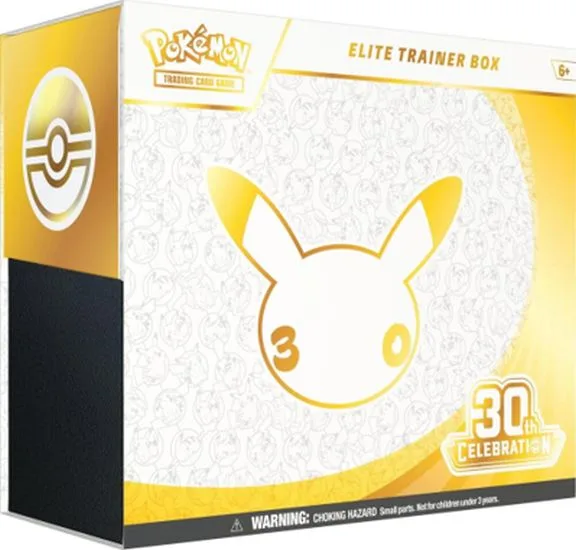
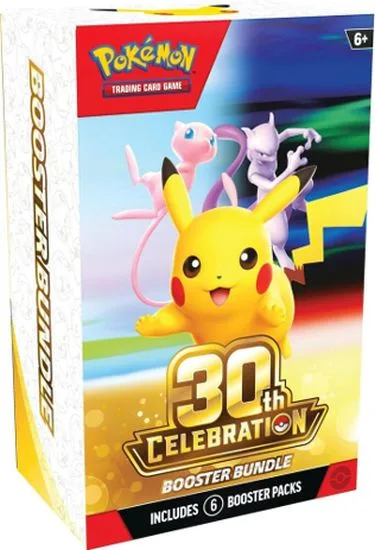
The 30th Celebration reprint does not have a true established single-card market yet because the product has not officially released. What is available is sealed pricing. Packs have been pre-selling around $17 for six all-foil cards, and six-pack boxes have been listed around $100. That gives collectors a rough idea of entry cost through sealed product, but not a settled buy-in price for the Charizard itself.
Since there is no finalized 30th Celebration Charizard market yet, the cleanest comparison point is the 25th anniversary Celebrations Charizard from 2021. That card used the same Mitsuhiro Arita artwork, the same collector number, and the same basic nostalgia pitch, with the anniversary identity added to separate it from the original.
Why the 2021 Celebrations Charizard matters here
Celebrations released on October 8, 2021, and its Classic Collection Charizard became the headline pull almost immediately. On paper, it had everything collectors typically chase. It featured the most famous Pokémon card artwork in the hobby, it was tied to an anniversary release, and it gave modern buyers a much more accessible way to own a version of the original Base Set icon.
But the market history of that card is a cautionary one for anybody expecting a straight-line climb from an anniversary reprint. For a large stretch of time, clean certified copies reportedly changed hands for under $100, with that soft range lasting from the middle of 2022 through the middle of 2025. In other words, one of the most recognizable cards in the hobby spent years delivering little price excitement after the initial release wave.
Only in 2026 did the Celebrations Charizard reportedly make a significant move, roughly doubling as 30th anniversary attention flooded the category. That late jump is important because it suggests the previous reprint did not steadily appreciate on its own scarcity or performance. Instead, it appears to have benefited from fresh anniversary hype surrounding the next major nostalgia cycle.
That does not make the 2021 version a failure, and it does not doom the 30th Celebration card either. It does, however, warn collectors about paying up during the most emotional part of the release window. Buying an anniversary reprint at launch often means buying during peak visibility, when excitement is easiest to find and when supply has not yet had time to fully hit the market.
The strongest case for buying the 30th Celebration reprint
The reprint has a lot going for it, especially for collectors who value simplicity and presentation.
First, the condition profile is dramatically easier. A newly pulled or freshly listed modern card gives buyers a much better shot at Near Mint quality. That removes some of the stress that comes with evaluating a decades-old holo from online photos. There is less concern about hidden surface wear, whitening that looks minor in scans but worse in hand, or spending several hundred dollars only to realize the card is less attractive than expected.
Second, the reprint lowers authenticity anxiety. Counterfeits of vintage Charizard are a real issue, and sophisticated fakes continue to challenge buyers. A modern anniversary card bought from sealed product or from reputable post-release listings is simply an easier transaction for many collectors.
Third, 30th Celebration itself appears built as a major collector event. The set is described as the first simultaneous worldwide release in the game’s history. Every card in the product has a foil finish, including Basic Energy. Each pack reportedly contains one of 30 Pikachus, and a new Futuristic Rare rarity is set to debut on Mewtwo ex and Mew ex. The Classic Collection reprints are also reportedly not Standard legal, which positions them more as display and collection pieces than tournament staples.
That matters because collector-focused products can leave a lasting impression even when they are heavily opened. If the holo treatment on the 30th Celebration Charizard lands well with fans, the card could become its own collectible lane rather than just a cheaper stand-in for the original. There is room in the Pokémon market for cards that are loved because they are beautiful, accessible, and tied to a major anniversary moment.
For binder collectors, this is where the reprint can easily win. If the goal is to own a crisp, eye-catching Charizard tied to the 30th anniversary of the game, the reprint offers a cleaner and more approachable path than chasing a vintage copy with visible wear.
Where the reprint faces its biggest challenge
The issue is supply. It was supply that kept the 2021 Celebrations Charizard from performing like many collectors expected for several years, and 30th Celebration appears positioned for another very large print footprint.
A simultaneous global release means the product is not just serving one regional audience at a time. It is launching into a worldwide collector base all at once. That is great for access, great for excitement, and potentially less great for short- to medium-term scarcity. If enough product reaches the market, singles can stay under pressure for a long time, no matter how iconic the featured card may be.
This is the central tension with modern anniversary cards. They check nearly every box people want as collectibles, but they are often produced in volumes that limit scarcity-driven growth. The more successful the release is at reaching collectors everywhere, the harder it can be for top chase cards to separate from the weight of supply.
That does not mean the 30th Celebration Charizard cannot gain value. It means buyers should be careful about assuming that a launch-week premium will hold just because the card is Charizard and the set is special. The history of the 2021 version suggests patience may matter more than excitement.
The case for the 1999 Base Set Charizard
The original Base Set Charizard still has the clearest long-term argument because its supply is fixed and its best copies become harder to find over time.
Base Set has been out of print for roughly a quarter century. Every surviving card has already passed through years of storage, handling, and varying care. Some lived in binders. Some spent time in backpacks. Some were shuffled around loose or rubber-banded with other cards long before the modern hobby treated them as high-end collectibles. As a result, attrition is not a theory here. It is the basic reality of vintage Pokémon supply.
That attrition is a major reason the original has maintained a durable floor. Even with fresh reprint news in circulation, the market for the 1999 Charizard reportedly has not shown the kind of collapse that some collectors fear whenever a famous vintage card gets revisited. The original remains the reference point. Every anniversary reprint exists because this card matters first.
There is also a substantial premium gap between the original and the 2021 reprint in higher grades. In Mint condition, the 1999 original reportedly commands roughly 16 times what the Celebrations version does. That does not automatically mean the gap closes or widens from here, but it does show how the market continues to distinguish sharply between true vintage scarcity and modern anniversary nostalgia.
Collectors are not only paying for artwork when they buy the original. They are paying for the historical place of the card, the age, the supply profile, and the fact that every later homage points back to it.
The risks attached to the original
The original is not the easy answer, because it comes with real friction.
Counterfeits are a serious concern, especially on one of the most recognizable cards in the hobby. Buyers who are not experienced with vintage Pokémon can make expensive mistakes. Surface wear on old holo cards is also difficult to judge from photos alone. A card that looks presentable in a listing can show scratching, print issues, edge wear, or gloss problems much more clearly in hand.
The cost is also meaningfully higher. The available snapshot suggests the money at stake for an original is roughly triple what a reprint may cost. That makes the margin for error much smaller. If a buyer misreads condition, overpays, or chooses a copy with less eye appeal than expected, the downside can be immediate.
This is why the original is usually the stronger pure supply story, but not always the more comfortable purchase. It asks more from the buyer. More cash, more knowledge, more patience, and more discipline.
Which choice makes more sense for a five-year hold?
If the question is framed strictly as a five-year hold between one 30th Celebration Charizard and one original 1999 Base Set Charizard, the original appears to carry the stronger case based on the available facts. A played 1999 copy in the roughly $300 to $450 range offers fixed supply, an established demand history, and a price floor shaped by genuine vintage scarcity rather than fresh-release enthusiasm.
The reprint has appeal, but much of that appeal is front-loaded. It should be easier to acquire in strong condition, more comfortable to buy raw, and more immediately satisfying as a display piece. Yet the same factors that make it widely desirable also point to broad availability. A release built for worldwide participation is not usually the cleanest setup for scarcity-driven growth right away.
That distinction is important. The smarter buy is not always the prettier buy, and the prettier buy is not always the stronger long-term hold. The 30th Celebration card may end up becoming a favorite modern Charizard for many collectors. That is a perfectly valid reason to want it. But based on the current information, the original still looks like the better bet for those prioritizing supply discipline over anniversary momentum.
What collectors should watch after release
Once 30th Celebration hits shelves, the next phase of the comparison will come from actual singles pricing and the speed at which supply enters the market. If the Charizard settles quickly and avoids the steep post-release drop often seen in heavily opened products, that would strengthen the reprint’s case. If singles flood marketplaces and pricing softens for months, the historical lesson from Celebrations will be hard to ignore.
Collectors should also watch how the market treats the set’s broader themes. The all-foil presentation, the one-of-30 Pikachu pack structure, and the Futuristic Rare debuts for Mewtwo ex and Mew ex could help define how much staying power 30th Celebration has as a sealed and singles product. If the set develops a strong identity beyond Charizard alone, some of its best cards may hold interest better than a simple reprint narrative would suggest.
For now, the split is fairly clear. Buy the 30th Celebration Charizard if the goal is to own a sharp-looking anniversary collectible with easier condition and authenticity math. Buy the 1999 Base Set Charizard if the goal is to anchor money in the version with true vintage scarcity and the longest-tested demand profile in the Pokémon card market.
Photo Gallery