The 2026 minor league season gave baseball card collectors plenty to track beyond box scores. Three shortstops in particular finished the year near the top of prospect rankings and each heads into the offseason with a different hobby outlook. Jesús Made, Franklin Arias, and Leo De Vries all strengthened their standing as premium names in the prospect market, but the way their card values could behave from here is far from identical.
For collectors, the key question is not just who played well. It is how performance, proximity to the majors, preseason expectations, and health now shape the next phase of each player’s card market. As the offseason begins, these three prospects sit in very different positions despite sharing elite talent and strong long-term appeal.
Jesús Made remains one of the hobby’s safest high-end prospect plays
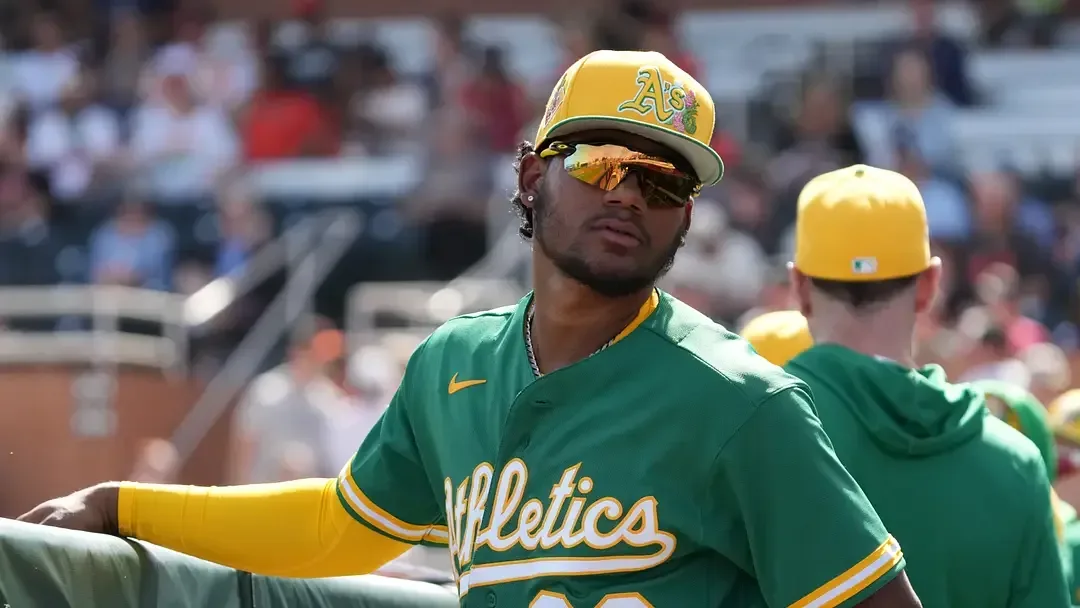
Jesús Made entered 2026 with enormous expectations and finished the season looking every bit like a player capable of carrying them. After opening the year as the consensus No. 2 prospect in baseball, he moved into the top spot once Konnor Griffin exhausted his rookie eligibility. That shift mattered in the hobby because it reinforced what collectors already believed: Made is not just a premium upside play, but one of the most established non-MLB names in the market.
What stands out about Made’s season is that he handled Double-A all year as one of the youngest players at the level and still continued to validate the tools-based hype. He did not need one overwhelming carrying trait to maintain his value. Instead, his broad skill set and advanced performance profile kept him squarely in the center of collector attention.
For more collector background, read Top 3 Sports Card Sales of the Week: Cooper Flagg, Dylan Harper and Shohei Ohtani Lead a Blockbuster Run.
That helps explain why his market did not experience a dramatic spike during the season. In many cases, a flat market can look underwhelming on the surface. For a prospect already priced near the top of the hobby, though, stability can be a sign of strength. Made came into the year with heavy demand already built into his key cards, so the market had less room for a surprise breakout than it did for lesser-priced peers. Meeting lofty expectations often preserves value rather than instantly multiplying it.
From a collector’s standpoint, that makes Made one of the more dependable elite prospect holds heading into the winter. He appears to have a sturdy floor because he already proved he could survive an aggressive assignment and remain one of the most complete young players in the minors. If anticipation builds around his path to the majors, there is still room for another climb, especially as debut speculation becomes more realistic.
The important hobby takeaway is that Made’s market strength is tied less to one hot stretch and more to sustained confidence. Collectors looking for a name with star-level prospect status, proven upper-minors performance, and fewer new doubts than most of his peers are still likely to keep Made near the top of their target list.
Franklin Arias may have posted the strongest hobby gain of the group
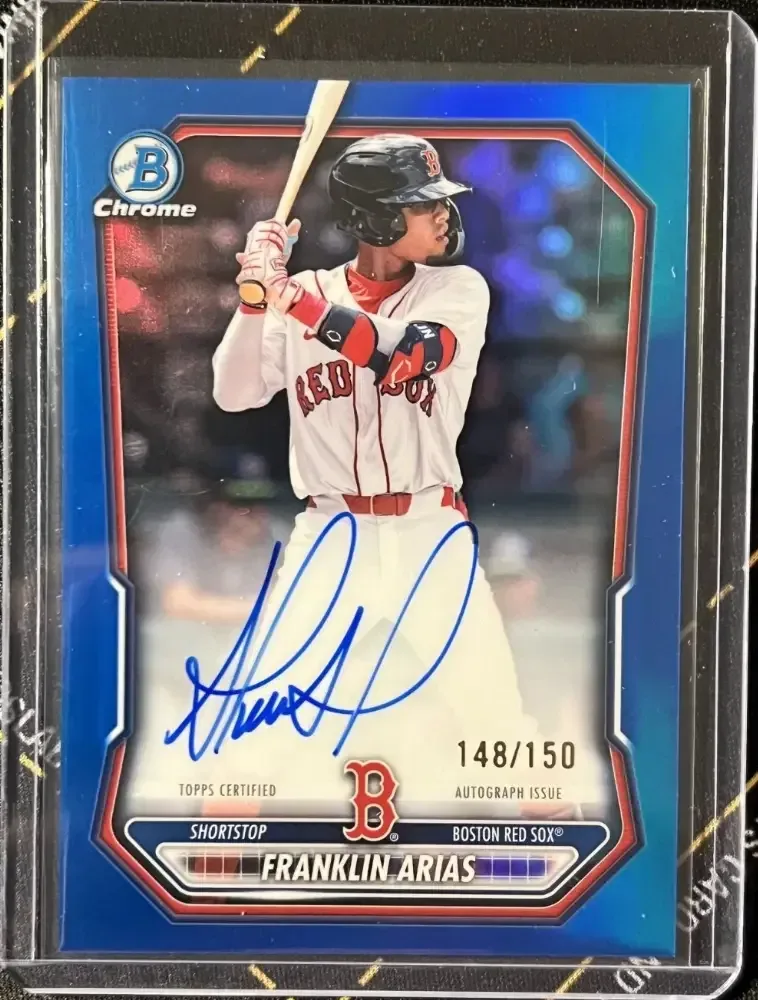
If Made represented validation at the top, Franklin Arias represented upward movement. Few prospects improved their hobby standing in 2026 as clearly as Arias did. He started the season as a well-regarded talent with a polished all-around reputation, but he carried real questions about how much impact he would generate offensively. By the end of the year, many of those questions had been answered in a way that collectors tend to reward quickly.
Arias finished the season with 25 home runs across Double-A and Triple-A, a notable power jump that changed the tone of his prospect profile. Just as important, that added thump did not come with a major compromise in contact ability. For evaluators and collectors alike, that kind of development can trigger a substantial market reaction because it expands the player’s ceiling without undermining the skills that made him attractive in the first place.
The rise in prospect status followed. Arias reportedly climbed from the middle of the top-100 range to No. 2 overall on Baseball America’s Top 100 list, one of the most dramatic jumps among elite names this season. In the hobby, ranking momentum and production momentum often work together, especially when they are attached to a premium position player with a relatively near-term major league path.
His cards reflected that momentum during the season. Bowman First Chrome autographs, one of the most watched prospect card categories in the baseball market, continued to gain ground as the year progressed. That is the type of hobby movement collectors watch closely because Bowman First autos often serve as the clearest benchmark for a prospect’s broader market health.
Arias now enters the offseason with a profile that looks much more complete than it did just months ago. The gap between his floor and ceiling appears smaller, and that usually strengthens buyer confidence. A player once viewed as a strong defender and contact hitter now carries more legitimate middle-of-the-order intrigue, which can support another pricing layer if collectors start projecting him as a high-impact regular rather than simply a safe everyday piece.
There is also the calendar factor. Arias appears close enough to the majors that early 2027 debut buzz could become a meaningful driver. In prospect collecting, the period just before a debut often produces another wave of attention, particularly for players who finished the prior season with momentum. If the offseason and spring build continue to point toward a quick arrival, Arias could remain one of the more active names in the market through the winter.
Leo De Vries still has elite upside, but the injury changes the equation
Leo De Vries entered 2026 with hobby momentum similar to Made’s. He was one of the most hyped young players in the minors and spent the season showing why. Like Made, he performed well in Double-A despite being one of the younger players at that level, an encouraging marker for a prospect whose appeal has long been tied to both talent and age-based upside.
On pure ability, De Vries did little to cool enthusiasm. The bigger story for collectors is what happened at the end of the season. His year was cut short by a labral tear in his right shoulder, and the injury is expected to keep him sidelined until May 2027. That timeline introduces uncertainty that does not exist with the other names in this group.
Injuries affect prospect markets in different ways depending on the player’s stature, age, and the point in the development curve when the issue occurs. For a top-tier name like De Vries, the market usually does not disappear. Instead, it becomes more selective and more sensitive to updates. Some collectors will treat the setback as a buying opportunity if prices soften. Others will wait for recovery news, spring reports, or signs that his timeline remains intact before stepping back in aggressively.
The shoulder injury is especially important because collectors tend to pay close attention to anything that could affect offensive projection, throwing ability, or future development rhythm. Even when a player’s long-term ceiling remains high, missed time can slow momentum in the hobby. A market built partly on anticipation can lose some of its urgency when the player is temporarily removed from the field.
That makes De Vries one of the more fascinating offseason watches in prospect collecting. The underlying talent that made him such a coveted name has not vanished, but his pricing environment now depends more heavily on health reports than production. Compared with Made’s stability and Arias’ rising momentum, De Vries carries the widest range of near-term outcomes.
Collectors who already hold his cards may find themselves monitoring every recovery update through the winter and into early 2027. Those looking to buy in may see a chance to acquire a premier talent at a more flexible entry point if uncertainty presses the market lower. Either way, his card market is likely to be driven less by what he did in 2026 and more by how confidently the hobby views his road back.
How collectors can read these three markets heading into the offseason
These three prospects highlight three different hobby patterns that show up regularly at the top of the baseball market.
Made represents the fully established elite prospect whose prices already reflect heavy confidence. That type of player can still rise, but the market often reacts more calmly because so much optimism is already priced in. Stability, in this case, is not weakness. It is evidence that collectors still see him as a premium long-term asset.
Arias represents the in-season riser who turned skill growth into hobby momentum. This is the profile that often gains the most new buyers because it combines production, ranking movement, and a refreshed belief in star upside. When a prospect adds a new offensive dimension without losing existing strengths, the hobby usually responds.
De Vries represents the elite talent whose market enters a more complicated stage because of injury. Collectors still know the upside, but timing becomes much more important. Health updates, return estimates, and confidence in the recovery process can move his cards as much as game performance once did.
That is why offseason prospect collecting is rarely just about who had the best stat line. It is about what the market believes comes next. Proximity to the majors, the confidence level in the tools, and the amount of risk still attached to the profile all matter. These three players each bring a different answer to those questions.
Key cards and market focus areas to monitor this winter
For many collectors, the most important cards to watch in these prospect markets are Bowman First Chrome autographs and other flagship early prospect issues. Those cards tend to act as the hobby’s clearest real-time indicator for top baseball prospects, especially once a player separates from the broader prospect pool and enters the upper tier.
Arias is the clearest example right now, with his Bowman First Chrome autos already showing in-season strength. If that demand continues through the offseason, it would reinforce the idea that collectors view his breakout as sustainable rather than temporary. Made’s comparable key cards may not move as dramatically week to week, but the absence of major slippage would continue to support the thesis that his market is built on durable confidence. For De Vries, any softening or rebound in flagship card prices will likely reflect the hobby’s comfort level with his recovery timeline.
The offseason can also create buying windows around prospect ranking updates, organizational chatter, and spring training expectations. In Made’s case, the focus will be whether his status at or near the top of the prospect world continues to harden. For Arias, attention will center on whether his power gains remain the defining story of his rise. For De Vries, collectors will be watching for the kind of medical and developmental clarity that helps restore momentum to elite injured prospects.
As the 2026 minor league season gives way to offseason evaluation, these three names remain firmly embedded in the upper end of the baseball card market. Made brings stability, Arias brings upward pressure, and De Vries brings high-end upside wrapped in more risk. That mix should keep all three in collector conversations well into 2027.
Photo Gallery