Johnny Bench remains one of the most important names in baseball memorabilia, and not just because of what he accomplished on the field. For many collectors, Bench represents a full era of Cincinnati Reds history, one tied to the dominance of the Big Red Machine, the atmosphere of Riverfront Stadium, and the kind of fandom that lasts a lifetime.
That staying power is easy to understand. Bench finished his Hall of Fame career with a .267 batting average, 2,048 hits, 369 home runs and 1,376 RBI. He made 14 All-Star teams, won two National League MVP awards, captured World Series MVP honors in 1976, earned NL Rookie of the Year recognition and collected 10 Gold Gloves. His No. 5 is retired by the Reds, he is honored in Cooperstown and Cincinnati, and his legacy still shapes the hobby decades after his playing days ended.
For collectors, though, the numbers are only part of the appeal. Bench is also forever linked to one of baseball’s great dynasties. As the cornerstone catcher of the 1970s Reds, he stood alongside Pete Rose, Joe Morgan, Tony Perez, George Foster, Dave Concepcion and Ken Griffey Sr. under manager Sparky Anderson. That combination of individual greatness and team history has kept Johnny Bench collectibles in demand across autographs, cards, display pieces and game-used memorabilia.
Two longtime Reds fans, Ted Rich and Debbie Ward, offer a clear picture of how deep that connection can run. Their collections differ in scale and focus, but both show how Bench collecting often becomes more than a hobby. It becomes a personal archive of baseball memories.
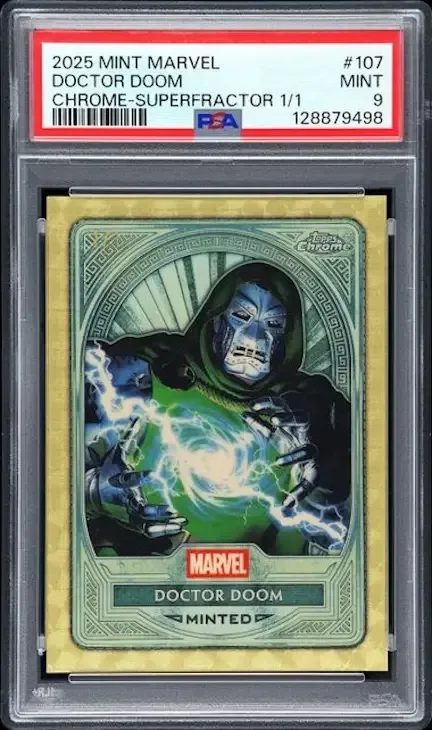
For more collector background, read Rob Gronkowski Brings Dr. Doom to NY Comic Con in eBay Live Crossover Push for Avengers: Doomsday.
Why Johnny Bench Still Resonates With Collectors
Bench’s place in the hobby is built on a rare mix of achievements. He was a superstar catcher, a franchise icon and a central figure on a championship club remembered as one of the best teams of its generation. That gives collectors multiple paths into the market.
Some chase his playing-era cards, especially key Topps issues and 1970s Reds material. Others focus on autographs, including signed baseballs, photos, bats and equipment. There is also strong interest in display-driven memorabilia such as bobbleheads, posters, commemorative items and team pieces tied to the Big Red Machine years.
Collectors who gravitate toward baseball history often appreciate that Bench is not simply a great player from the past. He is part of a broader Reds story that includes pennants, World Series runs and one of the most recognizable team identities in the sport. That gives his memorabilia emotional depth beyond a single player collection.
For another perspective on this story, read Johnny Bench Collectors Keep the Big Red Machine’s Story Alive, One Signed Piece at a Time.
How a Lifelong Johnny Bench Collection Can Begin
For Ted Rich, the connection to Johnny Bench goes back to early childhood. He traces his Reds fandom to around 1970, when a game against the Cubs turned into a defining memory. During that matchup, the player wearing No. 5 came to the plate and hit a home run, helping flip both the mood of the game and a young fan’s allegiance. From there, Reds baseball and Johnny Bench became constants.
That early fandom grew through live games at Riverfront Stadium, television broadcasts and late-night listening sessions on WLW radio. Rich also developed a broader connection to the Big Red Machine, eventually meeting several members of the team over the years. Even with that wider appreciation, Bench always remained the centerpiece.
Debbie Ward’s collecting journey began differently, but with just as much personal significance. Her first baseball game at Shea Stadium in the summer of 1973 led to an unexpected encounter with Johnny Bench’s parents. Carrying a Cincinnati Reds pennant, she was encouraged to approach them, and Bench’s father signed it. That moment helped launch a lifelong attachment to the Reds and to Bench in particular.
As an adult, Ward made a point of attending Reds games at Shea whenever possible. She later met Johnny Bench at Shea Stadium on August 28, 1981, and remained connected to milestone moments from his career. She was in attendance when the Mets honored him during his final season, held up a handmade tribute sign and later attended Johnny Bench Night at Riverfront Stadium on September 17, 1983. She and her mother also went to his Baseball Hall of Fame induction ceremony.
Those details help explain why Bench collections can take on such personal meaning. Many collectors are not simply buying artifacts. They are preserving moments attached to games, stadiums, family memories and milestones from baseball’s past.
Different Paths to Building a Bench Collection
Ward’s collection began with photographs and gradually expanded into a wider range of Bench-related pieces. In the pre-internet era, building that kind of collection required patience and persistence. She added items through mail order and eventually put together a run of Topps Johnny Bench cards covering every year he played. Her collection also includes Johnny Bench children’s books, along with pieces acquired through card shows in New York City.
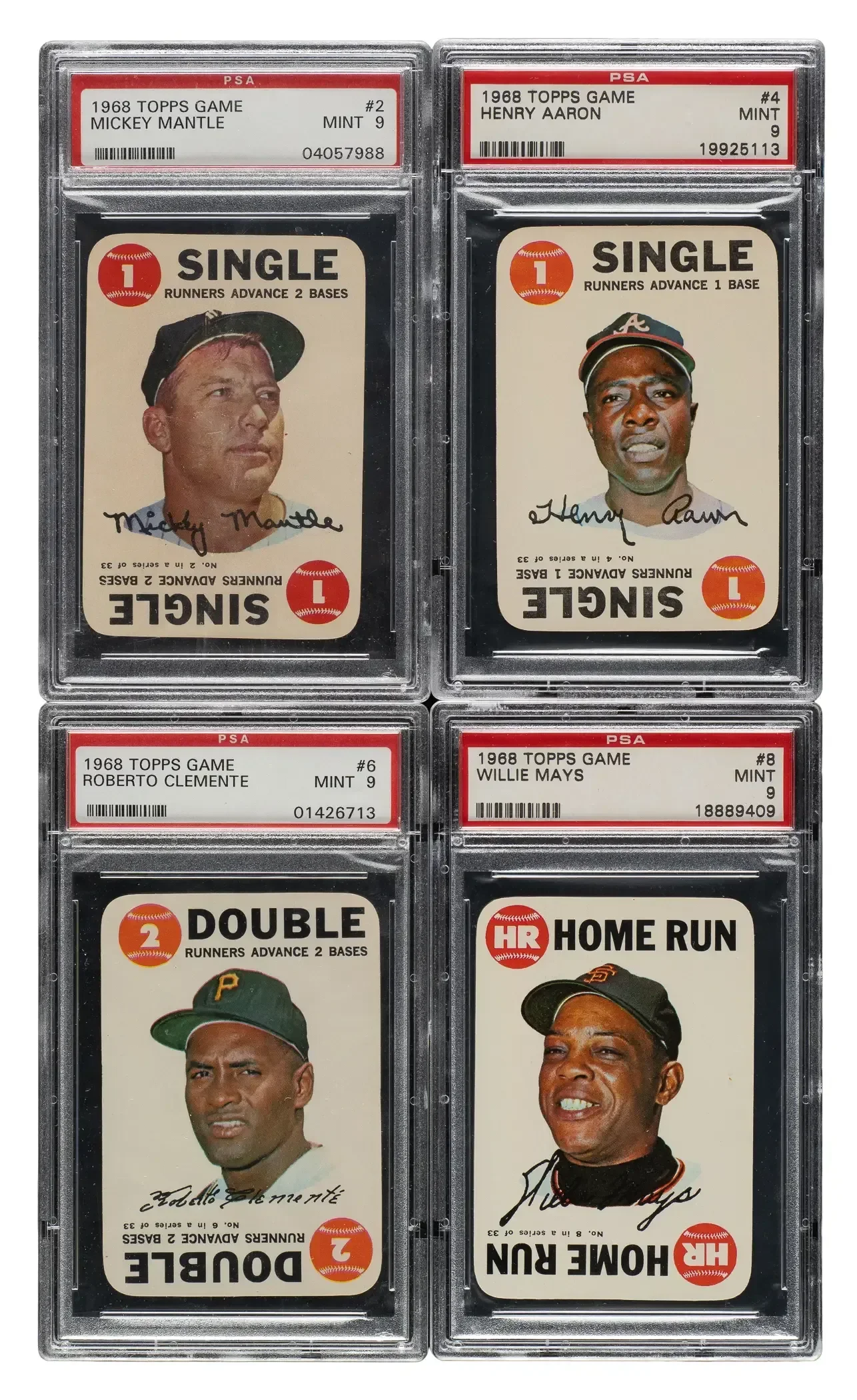
Rich took a more autograph-heavy route. In his younger collecting years, he owned a broad mix of classic baseball cards that included stars such as Mickey Mantle, Willie Mays and Hank Aaron, along with many other notable players from the 1960s, 1970s and 1980s. Over time, he narrowed his focus to Bench and the Big Red Machine.
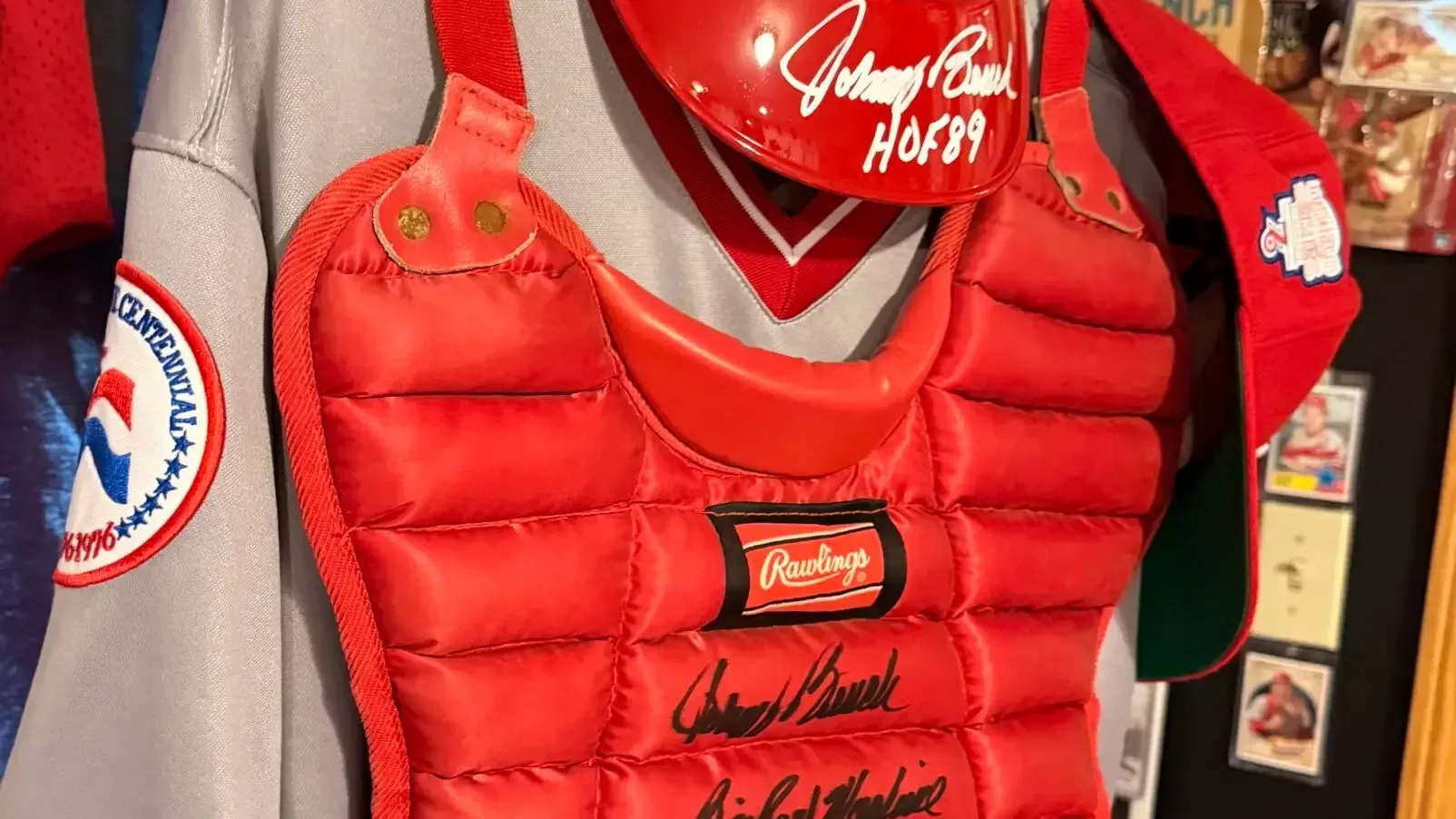
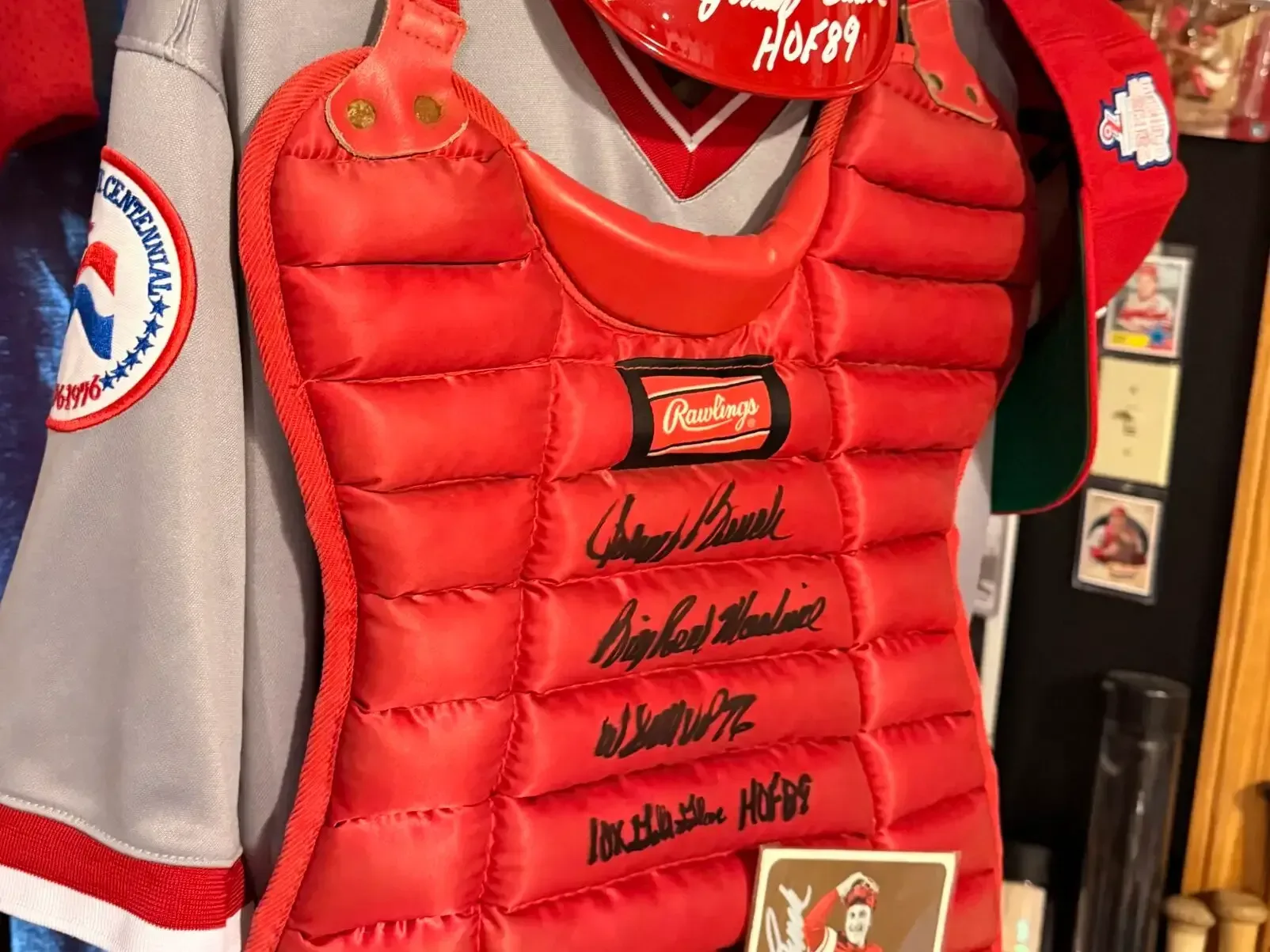
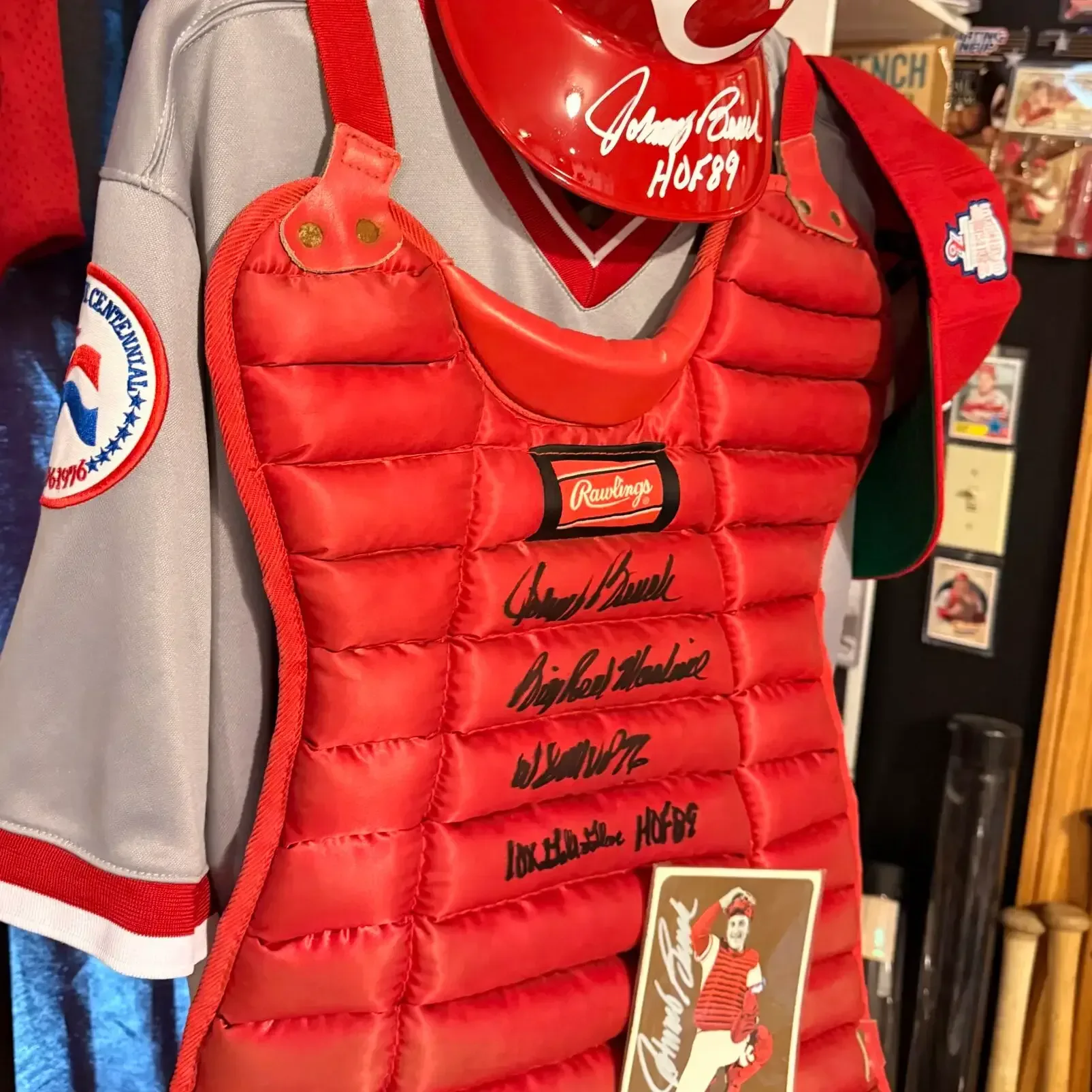
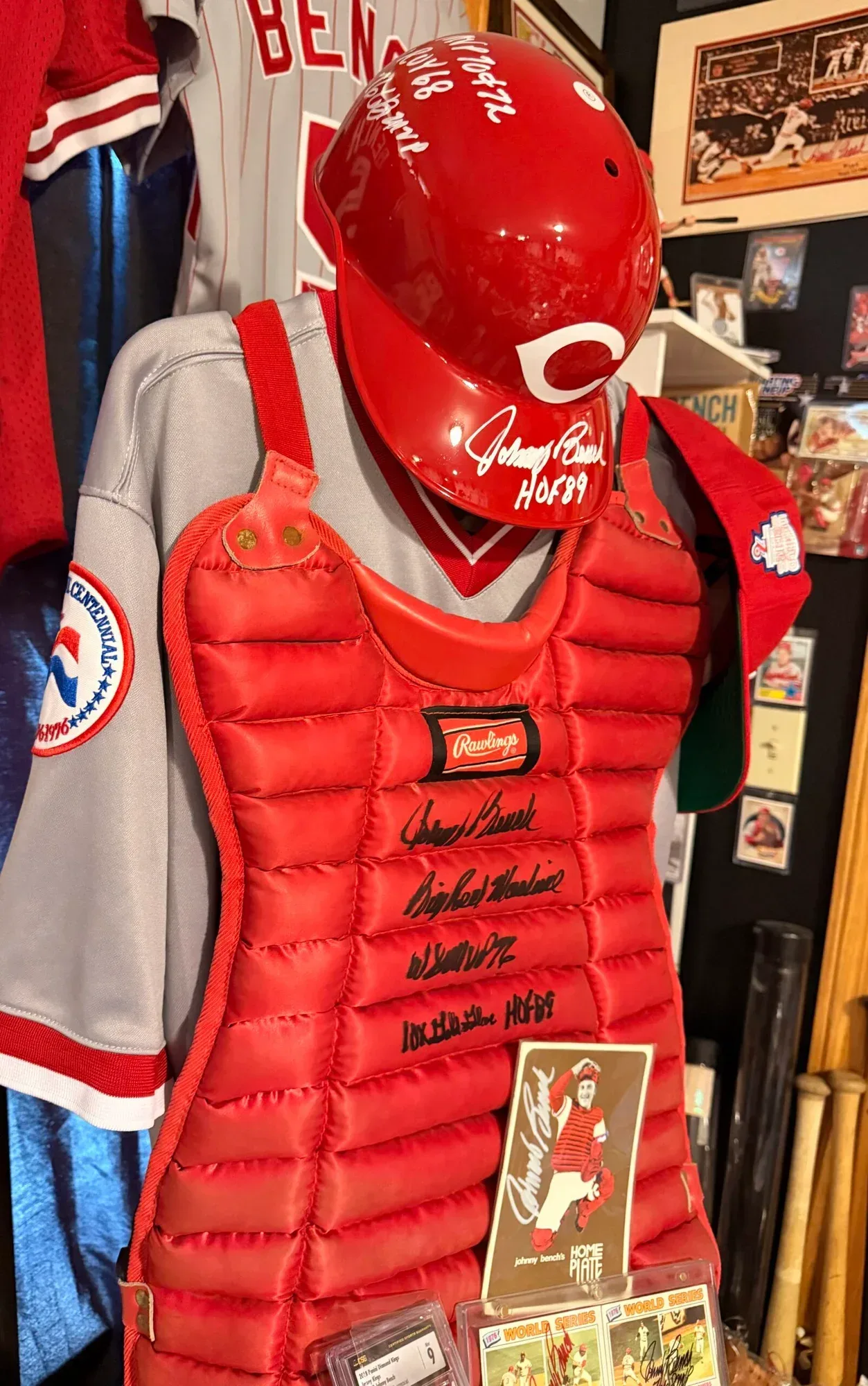
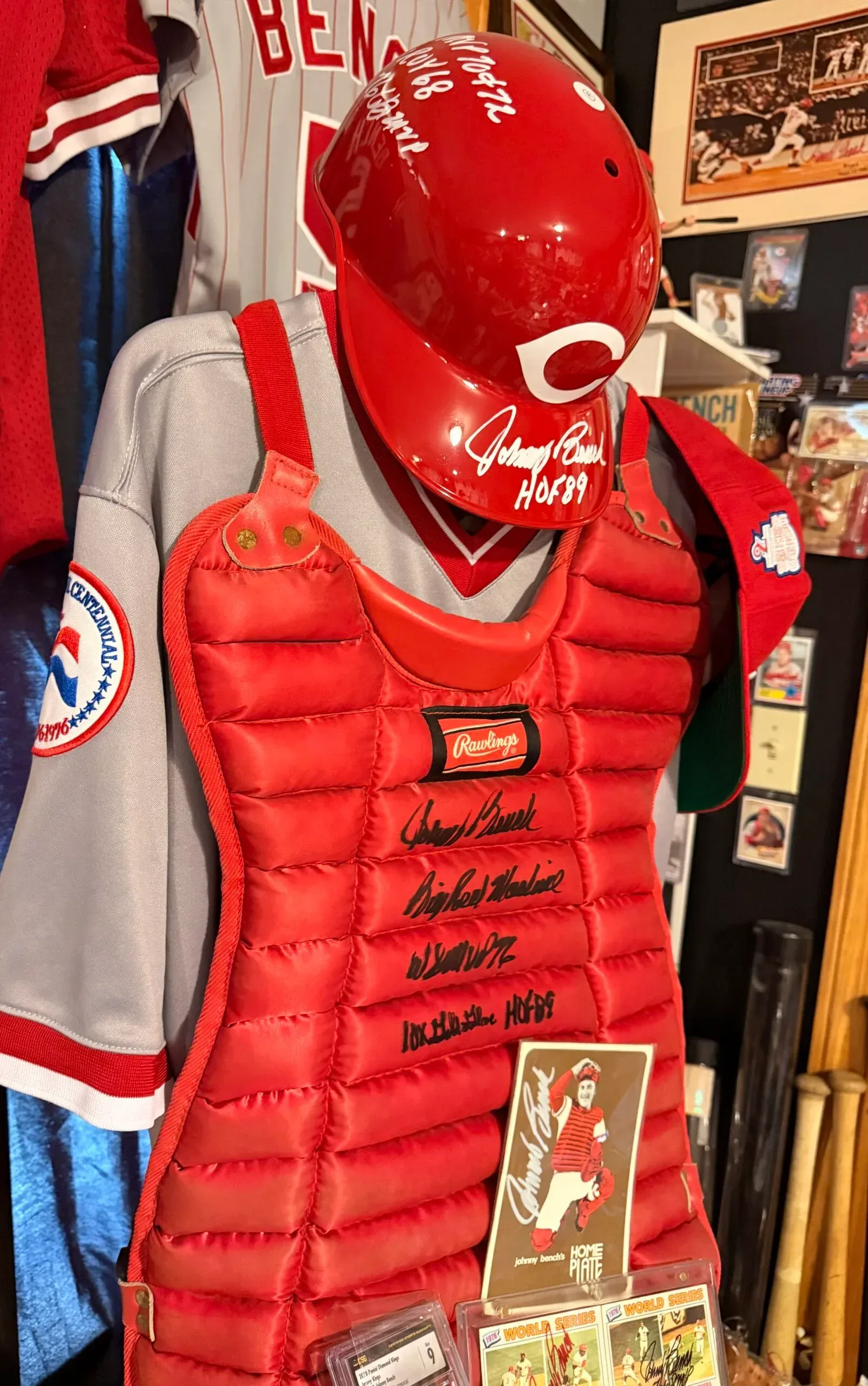
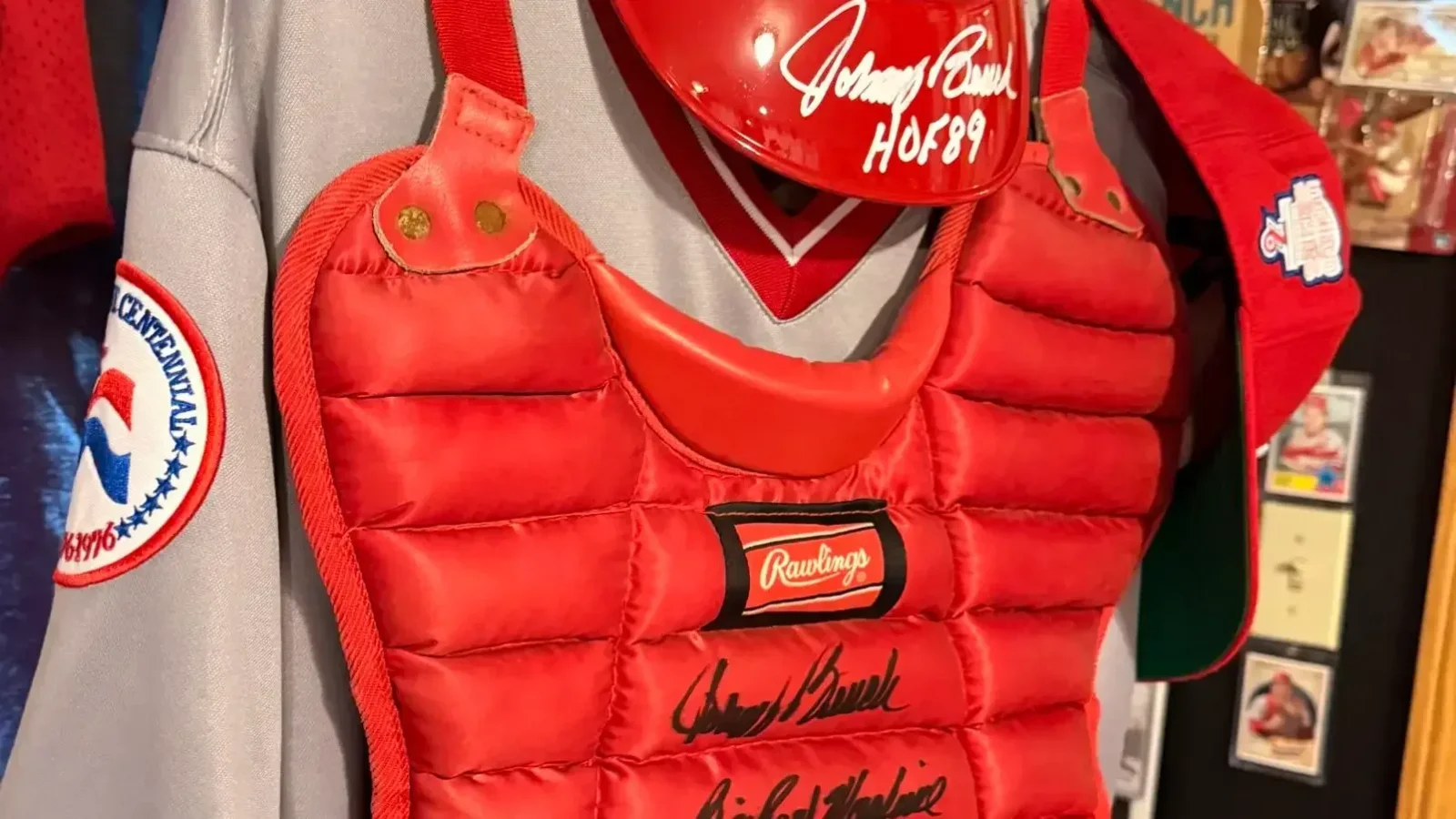
That specialization helped turn his collection into something much more expansive in Reds material. Trips to games often led to autographs, and many of those signatures came from Bench himself. Beyond signed cards and photos, Rich accumulated bats, gloves, batting gloves, baseballs, hats, helmets and catcher’s gear.
His collection also carries a deeper layer of meaning because of what he lost. After surviving a fire at Purdue University, Rich saw more than half of his boyhood collection destroyed. As people learned about what had happened, he received replacement items and opportunities to barter for memorabilia that would help him refocus on Johnny Bench and the Big Red Machine. What had once been a general vintage baseball collection evolved into a more concentrated and significant Reds archive.
That process eventually led to a remarkable figure: Rich estimates that he has nearly 555 signed Johnny Bench items alone.
Notable Johnny Bench Items That Stand Out
One of the most interesting parts of any player collection is seeing which pieces carry the most meaning. The answer is not always the most expensive item or the most difficult autograph. Often, it is the piece tied most directly to a memory.
For Ward, a favorite item is a Johnny Bench bobblehead given to her by friends for her 50th birthday. That personal connection gives the item a place of honor. She also treasures a Crush Cherry can received from a woman who had been seated next to her during Bench’s Hall of Fame induction, as well as a small decorative plate and a framed Johnny Bench poster sent from Cincinnati by a family connection.
For Rich, several items stand above the rest. Signed 1976 baseball cards are among his favorites, especially his preferred Johnny Bench example from that year. The 1976 season remains a defining one in Bench history thanks to the Reds’ championship run and his World Series MVP performance. Rich also points to a 1976 black World Series team bat that he won as a boy at the Reds 580 Shop and later had signed by Bench. Another highlight is a 1976 game-issue bat signed in red with inscriptions.
Those pieces show why the Bench market can be so compelling. Collectors are often chasing more than a signature. They want an item connected to a meaningful year, a remembered event or a tangible link to the Big Red Machine’s peak.
Checklist: Types of Johnny Bench Memorabilia Collectors Continue to Chase
- Playing-era cards: Topps cards from each season of Bench’s career remain foundational pieces for player collectors.
- Signed baseball cards: Autographed examples, especially from key 1970s seasons, are popular display and registry items.
- Autographed photos: Personal signings and in-person acquisitions remain important in long-held private collections.
- Signed baseballs: A staple of star-player collecting and one of the most approachable autograph formats.
- Game-issue bats: Bats connected to the 1970s Reds era carry strong appeal, particularly signed examples with inscriptions.
- Team souvenir bats: Commemorative bats tied to World Series teams or specific Reds retail outlets can have strong nostalgic value.
- Game-used catcher’s equipment: Catcher’s mitts, masks, chest protectors and related gear are among the most coveted Bench items.
- Bobbleheads and display pieces: These often become centerpiece items in player-focused rooms and offices.
- Posters, pennants and decorative memorabilia: Oversized display items help bring a Big Red Machine collection to life.
- Books and youth items: Children’s books and player-themed publications remain an overlooked but meaningful category.
The Ongoing Appeal of Signed and Game-Used Material
Autographs remain a major part of Johnny Bench collecting, but game-used material sits at the top of many want lists. That was true for both of these longtime collectors. Rich said a certified and authenticated signed game-used glove, bat or piece of catcher’s equipment would represent the ultimate addition to his collection. Ward’s most-wanted item is simpler but just as telling: one of Bench’s game-used catcher’s mitts.
That desire reflects Bench’s identity in baseball history. He was not just a hitter or a general star. He was a catcher, and arguably the most celebrated catcher of his era. Equipment associated with that role carries special significance. A mitt, mask or piece of protective gear does more than connect a collector to a player. It connects them to the position Bench helped define for generations of fans.
It also helps explain why provenance and authentication matter so much in this segment of the hobby. Signed and game-used Bench material can command serious interest, especially when there is confidence in its origin. Collectors who built their holdings in person often place sentimental value above any paperwork, but the marketplace tends to reward documented authenticity when these pieces change hands.
How Johnny Bench Collecting Preserves Baseball History
The enduring demand for Johnny Bench memorabilia says something larger about the hobby. Collecting at its best is not only about rarity, price or condition. It is also about preserving baseball stories in physical form.
Bench offers an ideal subject for that kind of collecting. His career spans individual excellence, franchise history and championship success. A collector can focus narrowly on his cards, or branch into Big Red Machine autographs, Reds stadium memories, Hall of Fame pieces and family keepsakes connected to specific games and moments.
That is exactly what makes long-running player collections so fascinating. They are part sports archive, part memory box and part historical record. A signed 1976 card, a pennant from Shea, a bobblehead gifted by friends or a long-sought catcher’s mitt can each tell a different chapter of the same baseball story.
For collectors who grew up with the Reds of the 1970s, Bench remains an anchor point. For newer hobbyists, his legacy offers an entryway into one of the richest team runs of the modern era. Either way, the market for his memorabilia continues to be driven by a powerful combination of greatness, nostalgia and personal connection.
What Many Collectors Are Still Looking For
Even advanced Johnny Bench collectors still have grails left to chase. In many cases, those targets are not just rare but highly specific. A signed game-used catcher’s mitt, a documented piece of game-used gear, a special-season bat from 1976 or an elusive signed card with ideal eye appeal can remain on the want list for years.
That is part of what keeps Bench collecting active. There is always another layer to pursue, whether it is upgrading a key autograph, adding a display piece with personal meaning or finding an item that better represents the Big Red Machine era. The chase continues because Bench’s hobby footprint is broad enough to support both casual fans and highly focused specialists.
Collectors drawn to baseball royalty still see Johnny Bench as one of the hobby’s defining names at catcher, and the best collections reflect that status through cards, autographs, souvenirs and equipment that keep the Big Red Machine era visible decades later.
Photo Gallery