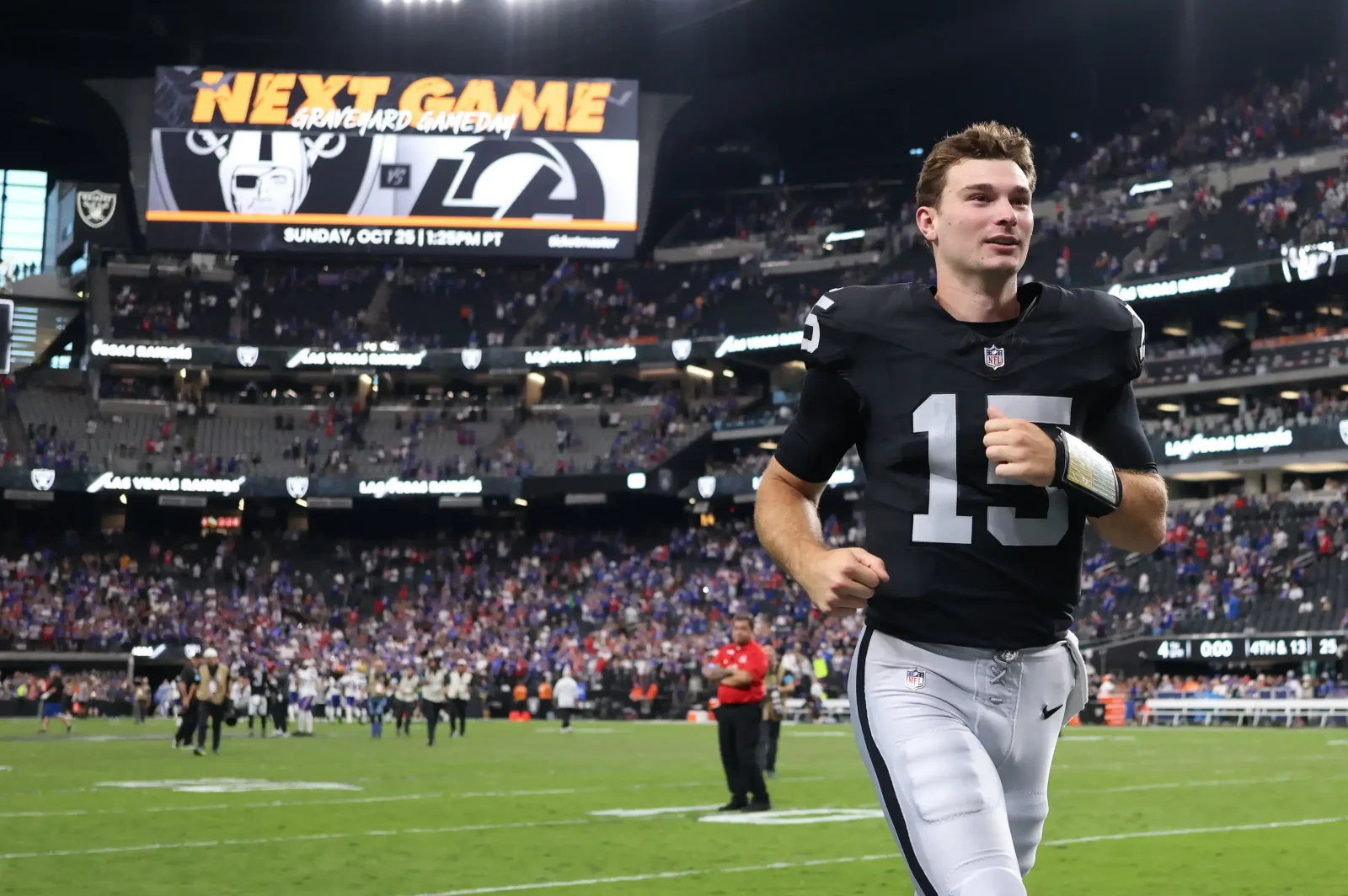
Joe Burrow is doing the kind of things that usually push a quarterback's card market higher. He sits fourth in passing yards, fourth in QBR, and first in passing touchdowns, while Cincinnati has moved to 5-2 and remains firmly in the AFC playoff picture. On the field, the arrow points up.
In the market, the story has been very different.
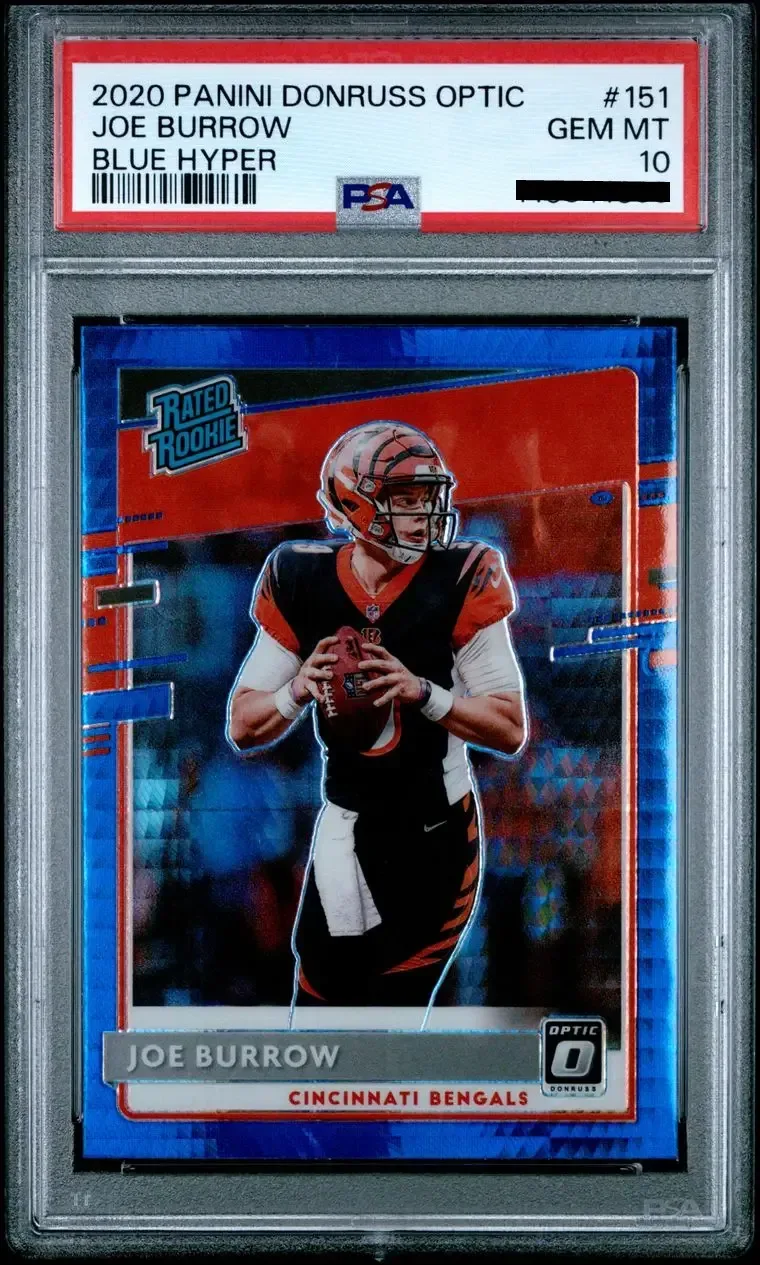
One of the more closely watched Burrow cards right now, the 2020 Donruss Optic Blue Hyper PSA 10, has been trending the wrong way even as his season strengthens. The disconnect has become hard to ignore for collectors who expected elite quarterback production, a winning record, and growing MVP chatter to translate into firmer prices.
Instead, Burrow's market has become one of the stranger case studies of the current football card season. Strong performance has not created a smooth rise. It has created a roller coaster.
For more collector background, read Week 8 NFL Card Market Movers: Lamar Jackson Injury Shakes Ravens, Trevor Lawrence Climbs, Joe Burrow Builds Steam.
Burrow's 2020 Optic Blue Hyper PSA 10 is under pressure
The headline number grabbing attention is a 30.8% drop for the 2020 Donruss Optic Blue Hyper PSA 10. That decline stands out because it comes at a time when Burrow's football resume this season looks stronger than many peers whose cards have shown better short-term momentum.
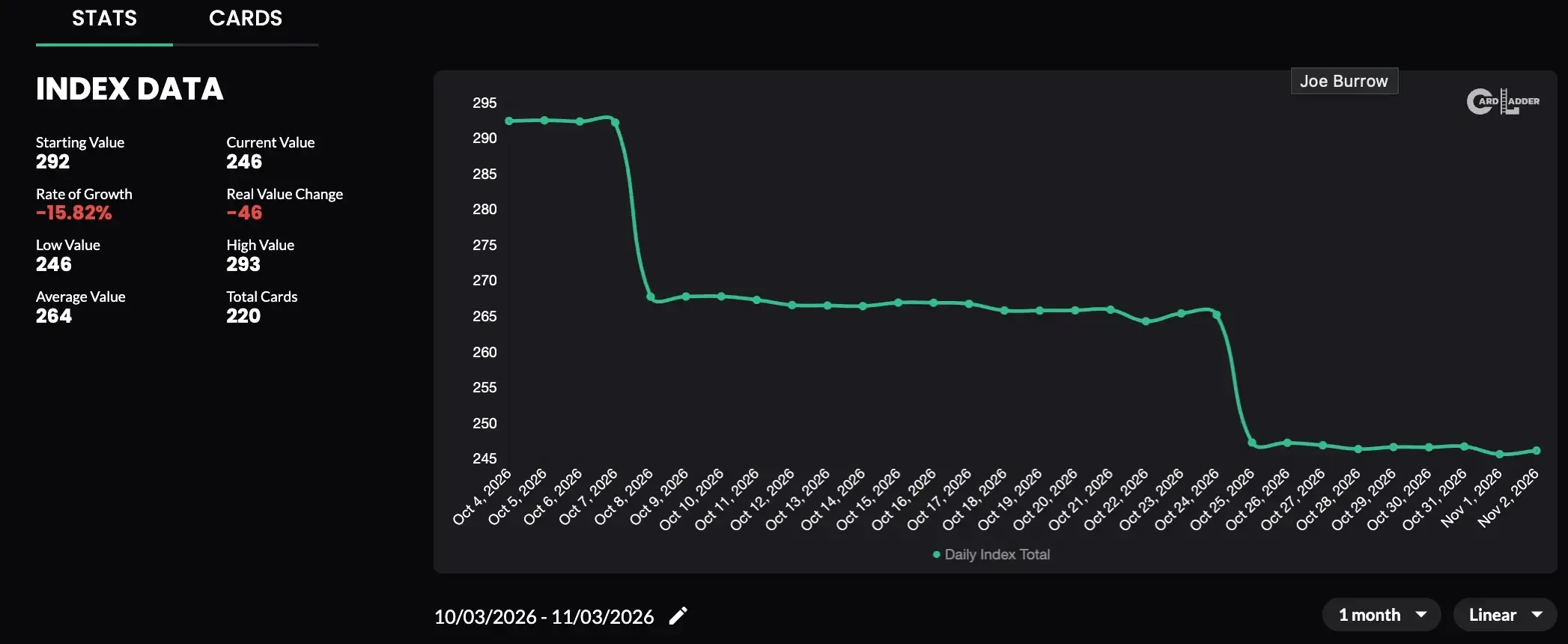
Over the last month, Burrow's broader market has also fallen 15.82%. For a player putting together an MVP-caliber campaign, that kind of pullback raises real questions about how the hobby is pricing short-term risk, recent expectations, and card-specific demand.
This is not a case of weak performance meeting weak prices. It is the opposite. The player is delivering. The card market is hesitating.
For another perspective on this story, read Joe Burrow Card Slump Tests Patience in SCN Challenge.
That split is part of what makes Burrow such a compelling watch right now. Collectors are not trying to figure out whether he belongs among the league's best quarterbacks this season. The more difficult question is why a flagship graded rookie parallel is not reflecting that status more cleanly.
The sales data shows a market with no rhythm
The recent sales history for the PSA 10 Blue Hyper helps explain why the card feels so unstable. The last 10 sales were reported at $125, $185, $182.50, $105, $150, $232.50, $163, $175, $182.50, and $249.
That is not a smooth chart. It is a market searching for conviction.
There is a clear spread between the low end and the upper end of that sales run, and that spread matters. Bargain-level transactions in the low-$100 range are existing right alongside sales that push toward $250. Earlier this year, there were also multiple sales above $250, which gives collectors a recent reference point for what the card can do when demand is stronger and bidding is more aggressive.
When a card trades in such a wide band, it becomes harder to pin down its true market value. One sale can make it look like a bargain. The next can make it look nearly recovered. That kind of inconsistency often creates hesitation among both buyers and sellers.
For buyers, the fear is paying near the top of the range only to watch the next sale land well below it. For sellers, the challenge is deciding whether to wait for a rebound or take a number that may feel too low relative to the player's current football value.
Why the market may be lagging the field
There is rarely one clean explanation for a market disconnect like this, but a few hobby dynamics are worth considering.
Quarterback pricing can get ahead of itself
High-end quarterback cards often move on future expectations as much as present production. If a player entered the season with premium pricing already built in, even excellent performance may not be enough to trigger a major run unless it exceeds what collectors had already projected.
That can leave a star like Burrow in a strange spot. Playing well may simply confirm expectations rather than create new buying urgency.
Collectors may be reacting to volatility across the football market
Football cards can shift quickly from week to week, especially when hobby attention jumps between MVP candidates, rookie risers, and playoff narratives. In that kind of environment, even established stars can lose momentum if buyers chase hotter short-term names.
The result is a market where a proven quarterback can post elite numbers and still get temporarily overshadowed by newer opportunities elsewhere.
Card-specific demand matters
Not every rookie card moves in lockstep. Even within Burrow's market, certain issues, parallels, and grades can behave differently. The 2020 Donruss Optic Blue Hyper PSA 10 has enough collector interest to stay relevant, but its recent sales suggest the buyer pool is being selective.
That does not necessarily mean conviction is gone. It may simply mean buyers want better entry points before re-engaging more aggressively.
Burrow's team situation supports a stronger hobby case
If the hobby is waiting for better reasons to buy Burrow, the football side continues to provide them.
Cincinnati is 5-2 and sits just a half-game behind Pittsburgh in the AFC North. The Bengals are not just surviving. They are positioned to stay in the middle of the playoff and division race.
There is also a broader conference angle that matters. Baltimore losing Lamar Jackson for the rest of the season reshapes both the division and the wild card picture. That development increases the spotlight on Cincinnati and gives Burrow an even clearer runway to stay at the center of the AFC conversation.
MVP markets also matter to collectors, even when they do not create immediate price spikes. Burrow currently sits third in MVP odds, and that kind of recognition keeps him in the hobby's premium quarterback tier. If Cincinnati keeps winning and his counting numbers remain near the top of the league, his cards will continue to attract attention whether or not prices react right away.
For longer-term collectors, that is often the key distinction. Short-term weakness does not always invalidate the bigger thesis on a player.
What the wider hobby landscape is showing
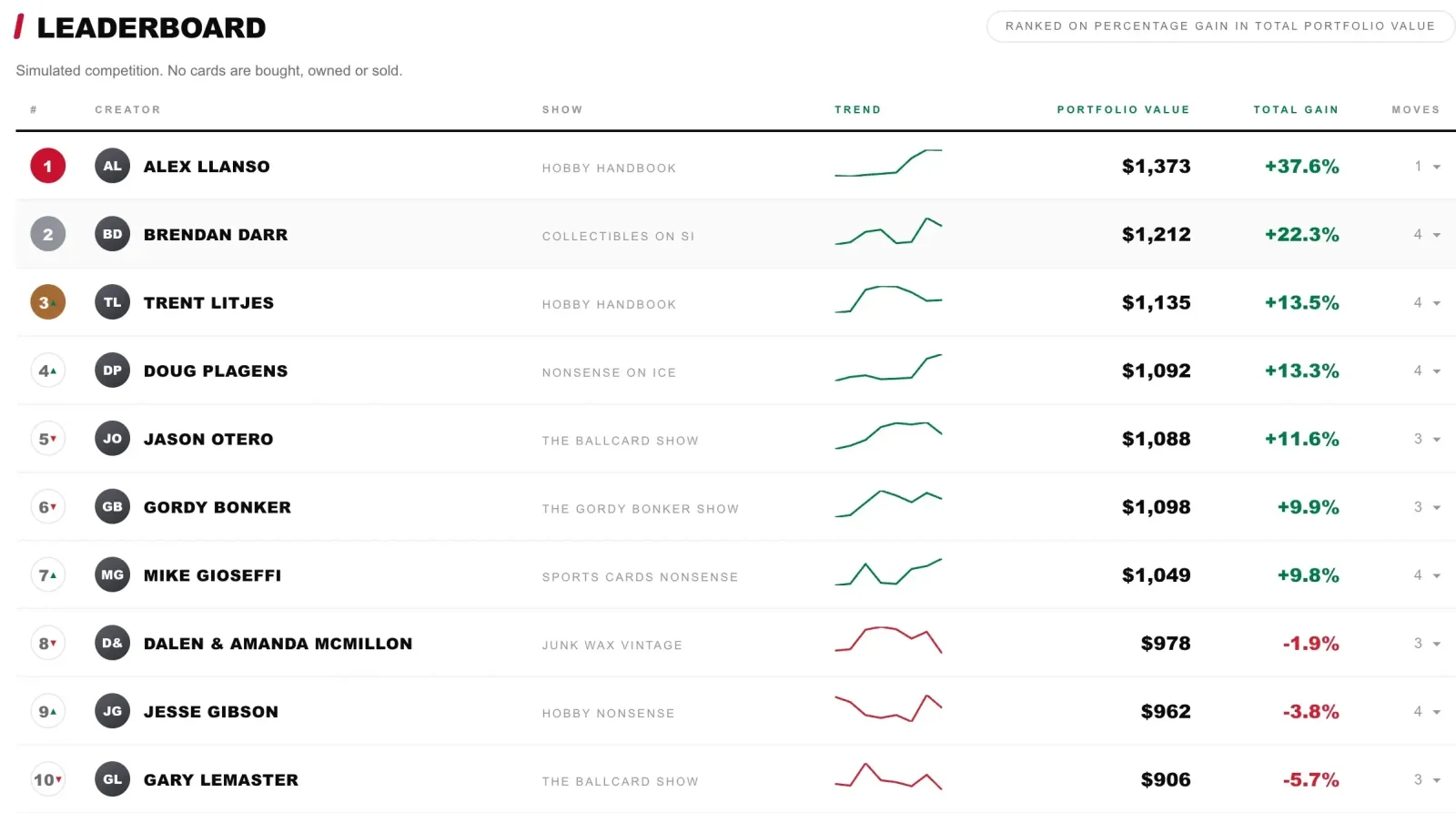
Burrow's soft pricing becomes even more interesting when compared to how other football cards have moved recently in a fantasy-style hobby portfolio competition that tracks card performance over the season.
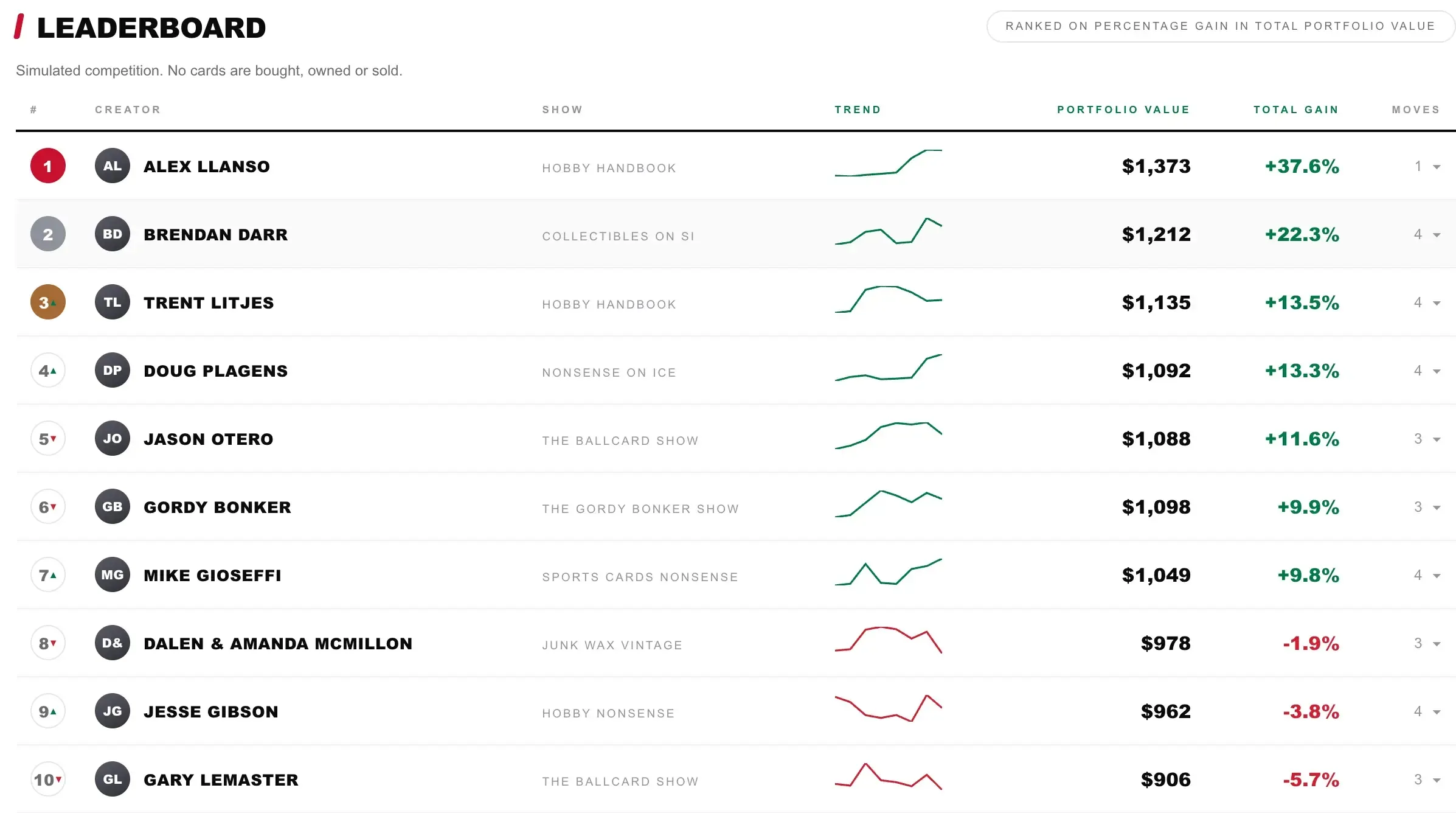
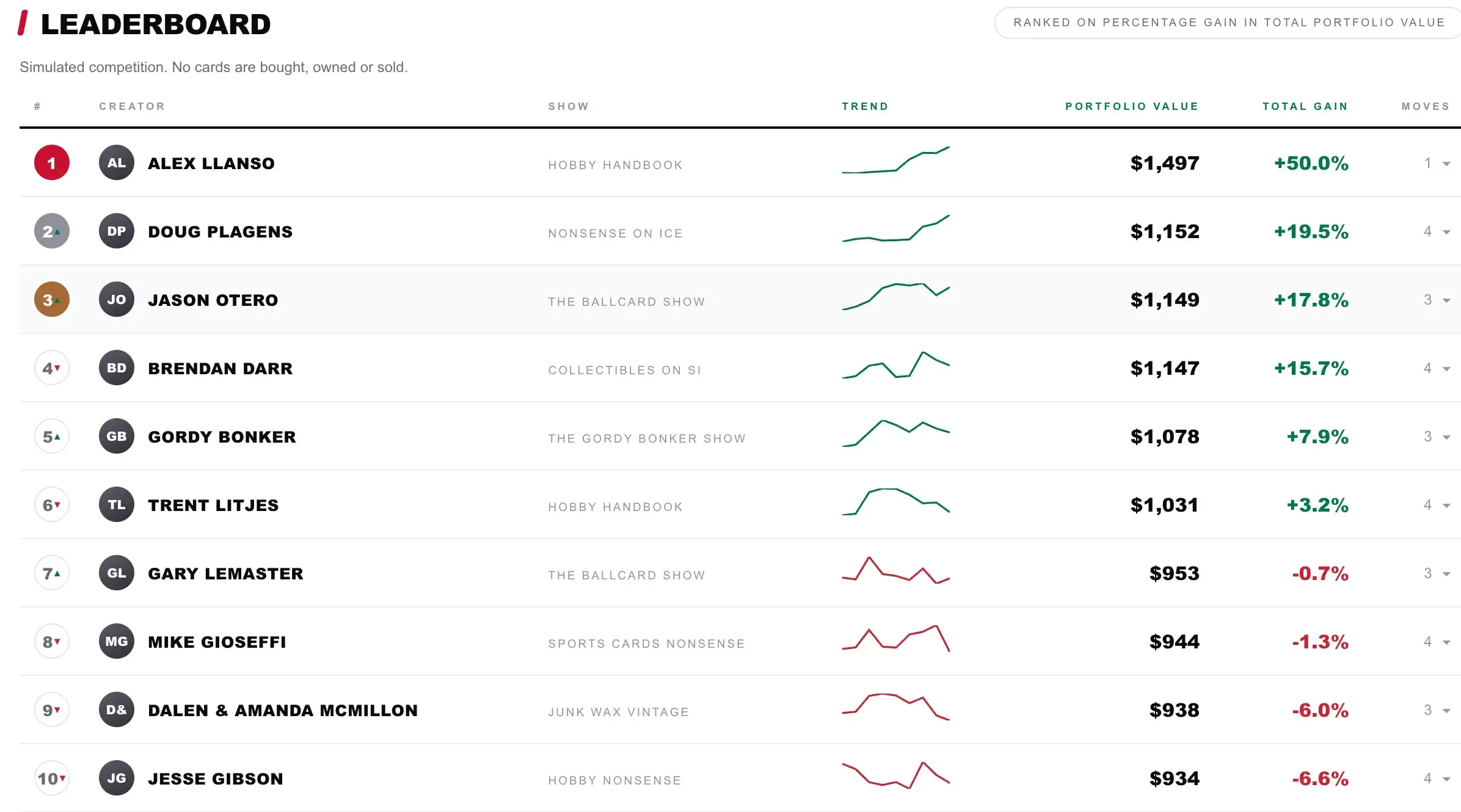
One of the biggest success stories has been Alex Llanso, who remains in first place after a series of timely moves. A major boost came from selling a 2025 Tyler Shough Gold Leather /50 PSA 10 before the market cooled, locking in a profit of more than 250%. That capital was then rolled into a Josh Allen Red White Blue Rookie Prizm, while gains tied to Brock Purdy's rise in MVP odds have also helped extend the lead.
Doug Plagens made one of the sharpest jumps in the standings thanks to a Sam Darnold rookie card that surged 83.7% in a single week. Jason Otero also continued to climb behind a 1997 Peyton Manning Metal Universe PSA 9 rookie card that is now up 297% on the season.
On the other side, Trent Litjes fell from third to sixth as weakness in a 2025 Tyler Shough Prizm Silver Auto and a 2023 Prizm Silver Auto of Bijan Robinson weighed on the portfolio.
That broader movement underscores an important point about today's football card market. Capital is moving quickly, but it is not always moving where on-field logic alone would suggest. Some cards are being rewarded for momentum, timing, and scarcity windows. Others, like Burrow's Blue Hyper PSA 10, are encountering resistance even with a strong football case behind them.
Is this a buying opportunity or a warning sign?
That depends on how a collector views market inefficiency.
The bullish argument is straightforward. Burrow is producing elite numbers, his team is winning, and his hobby profile remains strong. A card that has recently sold above $250 and now shows sales closer to the low-$100s or mid-$100s can look attractive if the belief is that the market is simply behind the player.
The cautious argument is just as simple. A falling market is still a falling market, and uneven sales can stay uneven longer than expected. If collectors are not willing to chase the card now, there is no guarantee that strong box scores alone will reverse the trend in the immediate future.
In many cases, the truth is somewhere in the middle. Cards like this can remain volatile until a major catalyst forces broader agreement. That catalyst could be a signature primetime win, a sustained MVP push, a playoff surge, or simply a stretch of stronger closing sales that rebuild confidence.
Until then, the Blue Hyper PSA 10 looks like a classic watch-list card: appealing enough to tempt value-minded buyers, but unsettled enough to keep the market from fully committing.
Collector takeaway on the 2020 Donruss Optic Blue Hyper PSA 10
The 2020 Donruss Optic Blue Hyper PSA 10 sits in a fascinating spot. It carries the appeal of a recognizable Burrow rookie parallel in a top grade, yet current sales show that buyers are still debating what the right level should be.
Collectors considering the card should pay close attention to the sale-to-sale spread rather than relying on a single comp. In a market this choppy, the difference between a smart buy and a frustrating one can come down to timing. Watching whether the card starts stacking more sales in the upper part of its recent range will be an important signal.
If Burrow keeps producing at an MVP level and Cincinnati stays near the top of the AFC race, the football case is unlikely to weaken. The bigger question is whether the card market decides it has drifted too far below that reality or whether it continues to make buyers wait for a cleaner rebound.
For now, the card remains one of the more intriguing NFL rookie-market storylines, with enough volatility to frustrate sellers and enough upside to keep bargain hunters interested every time another Blue Hyper PSA 10 hits the market.
Photo Gallery