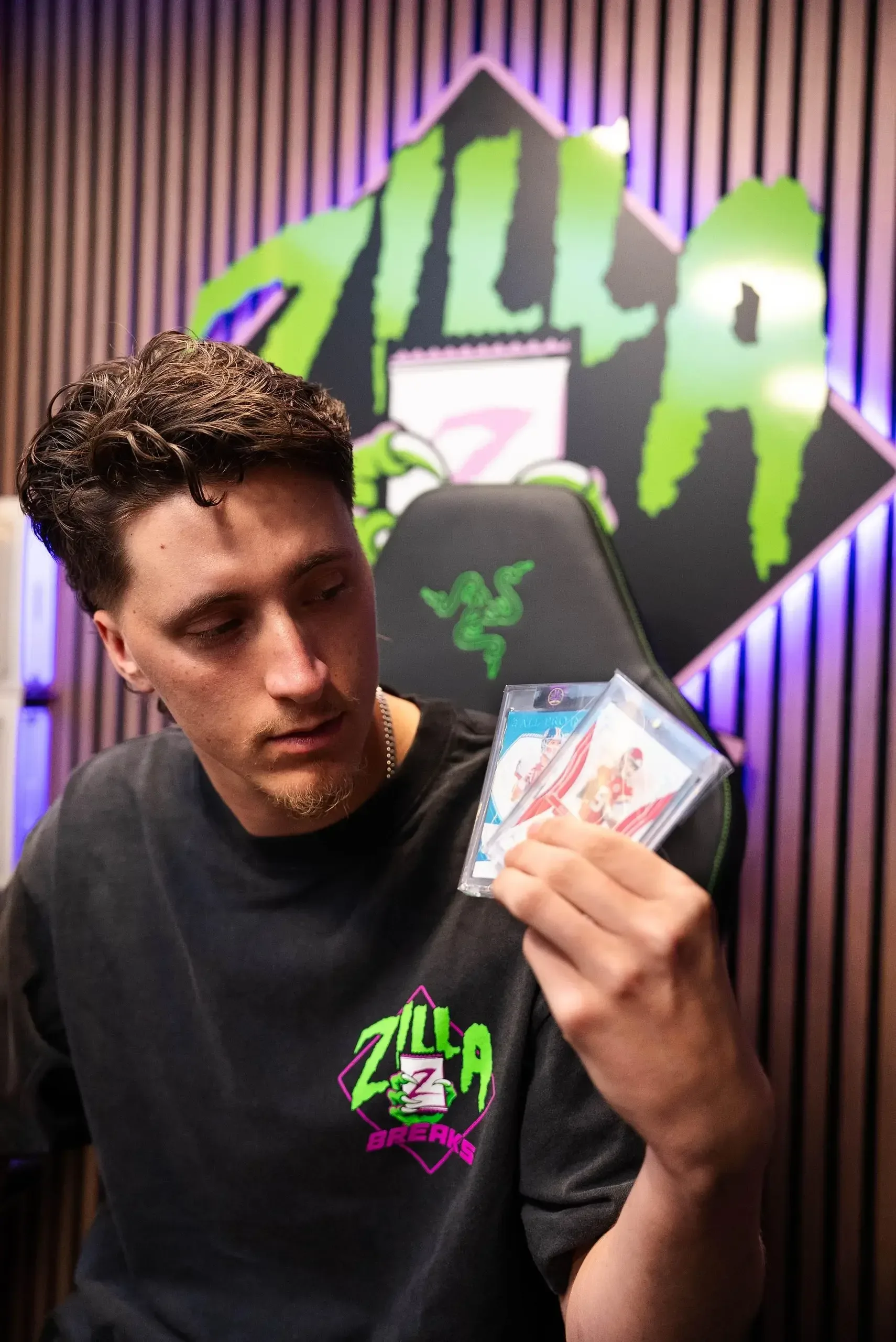
Blake Snell has spent years around sports cards, but his role in the hobby is now expanding in a much more public way. The two-time Cy Young Award winner has launched Zilla Breaks, a sports card breaking company built around live interaction, hobby entertainment, and a collector-first approach.
Snell's connection to cards dates back to roughly 2012, when he started collecting with his older brother. What began as a personal hobby eventually grew into a business idea as he became more active in the modern breaking scene. That progression helped shape Zilla Breaks, a project designed to blend Snell's long-standing interest in collecting with his comfort in front of a live audience.
The result is a breaker that is trying to stand out in a crowded market by leaning into personality, streaming experience, and a more relaxed experience for viewers who may want to watch, learn, or buy into a break.
How Blake Snell Went Deeper Into the Hobby
Snell's roots in collecting go back more than a decade, but his understanding of the hobby's current structure appears to have accelerated much more recently. A key turning point came after he discovered Whatnot a little more than a year before this latest update on Zilla Breaks. That opened the door to card breaking and introduced him to the pace, culture, and chase elements that drive much of today's sports card market.
For more collector background, read Francisco Lindor’s Roberto Clemente Award Win Puts Fresh Focus on His Biggest Sports Card Sales.
As he got more involved, Snell began learning more about what collectors target in breaks, which players draw the strongest demand, and how the live-buying environment works. Like many collectors who transition from casual participation to deeper involvement, he moved from simply enjoying cards to understanding the motivations behind hobby spending.
That learning process also changed how he looked at prospecting. Even with a professional baseball background, Snell indicated that identifying which young players the hobby should chase was not always a major focus for him. Earlier on, his approach was more organic, holding cards of younger players he pulled and seeing how their careers unfolded rather than aggressively researching prospect value.
That detail matters because it helps explain the tone of Zilla Breaks. This is not being framed as a purely analytical venture built on prospect spreadsheets and rapid flips. Instead, it comes across as a hobby business shaped by someone who enjoyed collecting first and then learned the business mechanics more seriously over time.
For another perspective on this story, read Blake Snell Wants Zilla Breaks to Feel Like a Show, Not Just a Card Opening.
Why Snell's Own Cards Offer a Different Perspective
One of the more interesting angles in Snell's hobby story is the way he views his own cards. In baseball collecting, pitchers often trail star position players in market value, even when they are elite performers on the field. Snell, as a top-level starting pitcher with major hardware, sits right in the middle of that conversation.
He has acknowledged that the pricing gap between hitters and pitchers does not fully make sense from his perspective, though he also understands part of the hobby logic. Position players are in the lineup every day, get more offensive counting stats, and generally have a broader highlight reel for collectors to latch onto. That visibility often turns into stronger card demand.
At the same time, the lower values attached to many pitcher cards create a strange benefit for a player who also collects. Snell has said that he likes being able to chase his own one-of-one cards at more approachable prices. That kind of comment offers a useful window into the market. It highlights how even accomplished pitchers can have premium cards that remain more attainable than comparable cards of star hitters.
There is also a limit to what he considers reasonable. Snell made it clear that when sellers inflate the asking price of one of his cards simply because they know he wants it, his interest can disappear quickly. That reaction lines up with a broader hobby frustration around opportunistic pricing, particularly when a buyer's identity is known. In a market driven by scarcity and emotion, collectors often draw their own line between a strong price and a forced one.
For hobby watchers, Snell's comments reinforce a long-running truth about baseball cards: player performance and card value do not always move in lockstep, especially when position-based demand enters the equation.
Zilla Breaks Is Built Around Streaming as Much as Breaking
Zilla Breaks is not positioned as just another breaker opening boxes on camera. A major part of its identity is tied to live streaming and audience engagement, which makes sense given Snell's background. He already has experience spending long stretches of time live with viewers, and that comfort level appears to be one of the foundation pieces behind the business.
That matters in the breaking industry because the best streams often become more than transactions. They become recurring content destinations where collectors return for personality, pace, trust, and the feeling of being part of a community. A breaker can have access to strong product, but if the stream experience is flat, retention becomes harder. Snell's ability to carry long live sessions gives Zilla Breaks an advantage in trying to build a real audience rather than just filling spots.
There is also a strategic difference in having a current professional athlete attached so directly to the stream itself. Athlete-backed hobby projects are not entirely new, but they have not been especially common in the breaking space in a way that feels hands-on. In this case, the appeal is not only the name recognition. It is also the fact that Snell appears to genuinely enjoy being involved in the hobby experience, talking cards, opening product, and interacting with viewers in real time.
That authenticity can be meaningful in a corner of the market where collectors often look for signs that a business is built by people who actually understand the culture and not just the margins.
The Business Side Behind the Company
Snell is not building Zilla Breaks alone. Co-founder Daveed Cohen has pointed to the mix of experience around the company as one reason it has gained traction quickly. The team includes people with sports, business, and finance backgrounds, giving the operation a broader base than a hobby startup fueled purely by enthusiasm.
That blend is especially important in a breaking market where operations matter. Beyond the live aspect, breakers have to manage product acquisition, audience growth, shipping, pricing strategy, and customer confidence. Companies that can balance entertainment with disciplined business structure tend to have a better chance of sticking around.
Cohen has also noted that Snell had already built other ventures under the Zilla name before moving into card breaking. That suggests Zilla Breaks is part of a larger personal brand framework rather than a one-off hobby experiment. For collectors, that can signal a longer runway and a stronger chance that the business is being developed with staying power in mind.
The company reportedly grew quickly in its first six months, which is notable given how competitive the breaking space has become. New entrants face pressure from established platforms, loyal breaker communities, and a customer base that can be highly selective about where it spends money. Fast growth does not guarantee long-term success, but it does indicate early traction.
Adapting Beyond Traditional Card Breaks
One of the clearest signs that Zilla Breaks is trying to operate with flexibility is its willingness to shift formats when audience demand changes. Rather than forcing only traditional card breaks, the company has also moved into memorabilia through Fanatics Under Wraps when standard breaks were not filling as quickly.
That pivot makes sense in the current hobby environment. Collectors do not always want the same format every night, and breaker success often depends on reading the room. If sealed wax prices rise, checklist strength softens, or break formats slow down, alternate products can help maintain energy on the stream.
Memorabilia breaks offer a different kind of excitement. The pacing is different, the hit structure is more concentrated, and the audience appeal can broaden beyond set chasers and prospect-focused collectors. For a company trying to build a show-like atmosphere, variety can be a major asset.
This adaptability also suggests that Zilla Breaks is paying attention to more than short-term product trends. It is trying to meet viewers where they are, whether that means cards, memorabilia, or other entertainment-driven formats that fit the live-streaming model.
Plans to Make the Stream Feel More Like a Show
Another notable detail is the company's stated interest in evolving the stream into something that feels more like a true show. Changes are reportedly being worked on for a rollout around December or January, with the goal of creating an experience that people can enjoy even if they are not actively buying into a break.
That idea could be important for long-term growth. The breaking market has a natural ceiling if every stream is built only around current buyers. The audience expands much more when a stream has entertainment value on its own. If viewers tune in for personality, hobby discussion, reactions, and community interaction, they may stay engaged even on nights when they are not spending.
In practical terms, that could mean a more polished format, stronger recurring segments, or a presentation style that gives the stream a clearer identity. The exact changes have not been fully detailed, but the direction is easy to understand. Zilla Breaks wants to be something viewers can watch as content, not just a purchase window.
That is a meaningful distinction in today's hobby media ecosystem, where livestreams increasingly compete not just with other breakers, but with YouTube shows, social clips, podcasts, and collector-driven entertainment across multiple platforms.
Collector Trust and Education Are Central Themes
Snell's comments about what he would like to see improved in the breaking industry offer a strong clue about the culture Zilla Breaks is trying to establish. He has emphasized the importance of giving back to the collecting community and helping people feel comfortable with the money they are spending.
That focus lands at a time when collector trust remains one of the defining issues in breaking. Buyers want transparency, fair treatment, and the sense that they are participating in a stream where pressure tactics are not driving every decision. They also want help understanding products, formats, and value, especially as hobby pricing grows more complex.
Zilla Breaks is aiming to position itself as a place where collectors can learn more, have fun, and make informed choices without feeling pushed into spending. That kind of approach will resonate with many hobby participants, particularly newer ones who may enjoy watching breaks but still feel uncertain about where and how to join in.
Education is not always the first thing associated with live breaking, but it can become a strong differentiator. A stream that explains product appeal, card significance, and hobby context can keep viewers engaged far more effectively than a stream built purely on urgency.
The Family Element Behind Zilla Breaks
Family has been part of Snell's collecting story from the beginning, and it remains part of Zilla Breaks today. His older brother helped introduce him to the hobby years ago, and his brother known as Boots Snell is also involved with the company as a breaker.
That family connection gives the business a more personal foundation. In an industry where many operations are defined by branding alone, a project that grew out of shared hobby interest can feel more grounded. It also reinforces the idea that Zilla Breaks is meant to be a community space rather than a detached commercial operation.
For collectors, that kind of backstory can matter. Hobby businesses often gain loyalty when people feel they know who is behind the camera and what drew them into cards in the first place.
What Zilla Breaks Could Mean for the Breaking Market
Snell's entry into breaking is notable not just because he is a star pitcher, but because it reflects how blurred the line between athlete, collector, and content creator has become. Athletes have always been part of the memorabilia world in one way or another, but active participation in hobby businesses can bring a different layer of credibility and visibility.
If Zilla Breaks continues to grow, it may encourage more athlete-led hobby ventures that are built around direct engagement rather than endorsements alone. It also raises the bar for what collectors might expect from live breakers, especially when it comes to personality, entertainment value, and transparency.
The company still has to prove itself over time like any other breaker, and the market remains crowded. But the ingredients behind Zilla Breaks are easy to identify: a genuine collecting background, live-streaming experience, a growing operational team, a willingness to adapt formats, and a stated emphasis on making collectors feel comfortable with how they spend.
For anyone tracking where the hobby is heading, Zilla Breaks is a venture worth watching as it develops its next phase and works toward a more show-driven live experience in the months ahead.
Photo Gallery