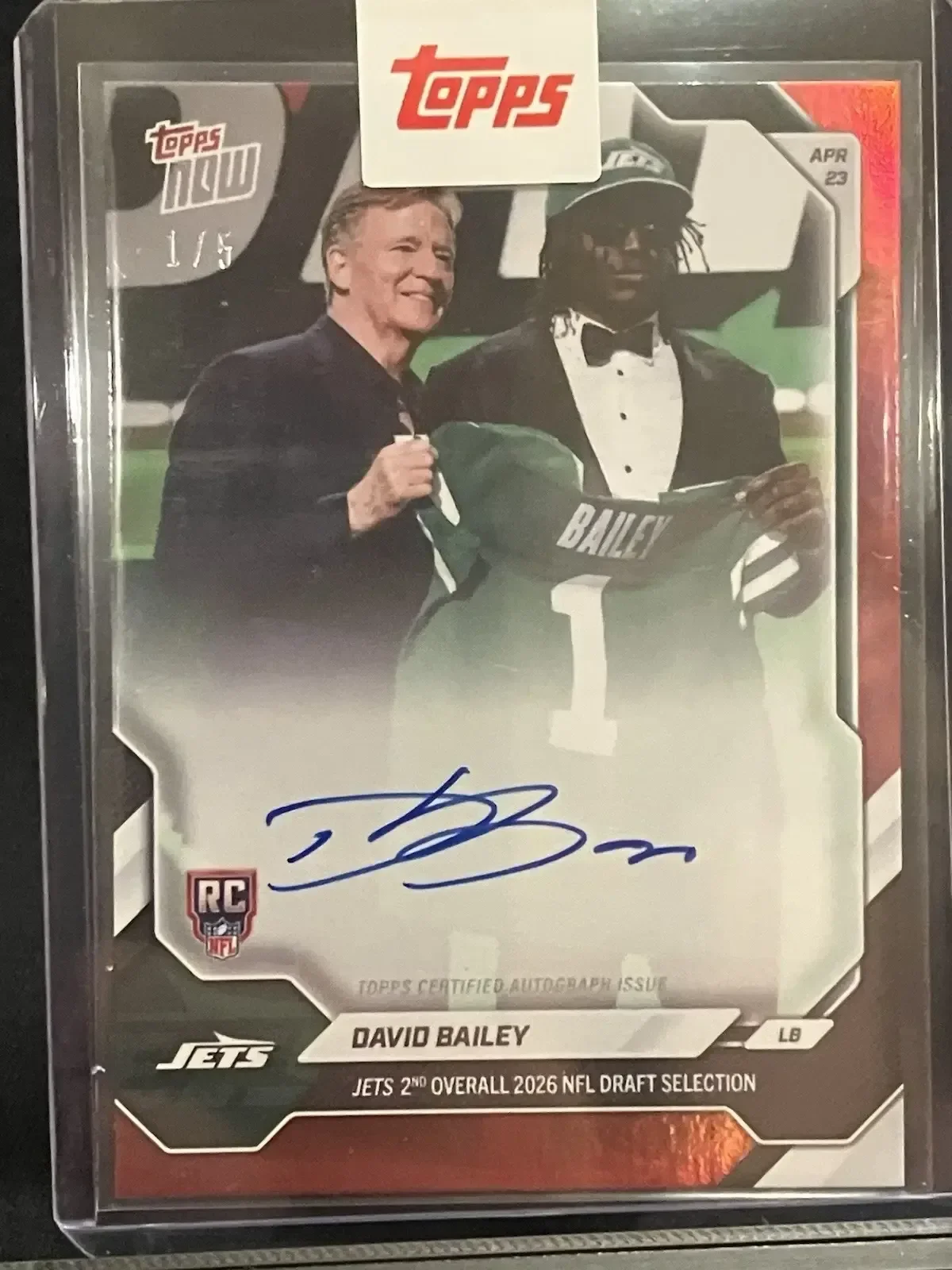
David Bailey had the bigger sack total through his first 10 NFL games, but Arvell Reese had the bigger rookie card sale. Reese’s signed and inscribed 2026 Topps Now Draft Day Superfractor sold for $7,500 in August. Bailey’s best reported sale was $1,600 for a 2026 Bowman Chrome Rose Gold Mojo autograph in October.
The Jets took Bailey second in the 2026 NFL Draft, and the Giants selected Reese fifth. Both emerged as Defensive Rookie of the Year contenders, but their top card sales illustrate a distinction collectors should keep in mind: the most expensive card for each player can show what buyers paid for a particular rarity without telling you what a typical rookie autograph is worth.
David Bailey Rookie Card Sales: Bowman Chrome Leads at $1,600
Bailey recorded 9.5 sacks in his first 10 NFL games, matching the starts of Von Miller and Derrick Thomas. Julius Peppers had 11 sacks over his first 10 games, and Reggie White had 10. Bailey spent three years at Stanford before playing his final college season at Texas Tech, then went to a Jets team still looking for its long-term answer at quarterback.
Bailey’s three highest reported sales span three different card formats: a Bowman Chrome parallel, a Topps rookie materials autograph and a Topps Now card commemorating his draft selection.
For more collector background, read Top 3 Tarik Skubal Card Sales After His $450 Million Mets Deal.
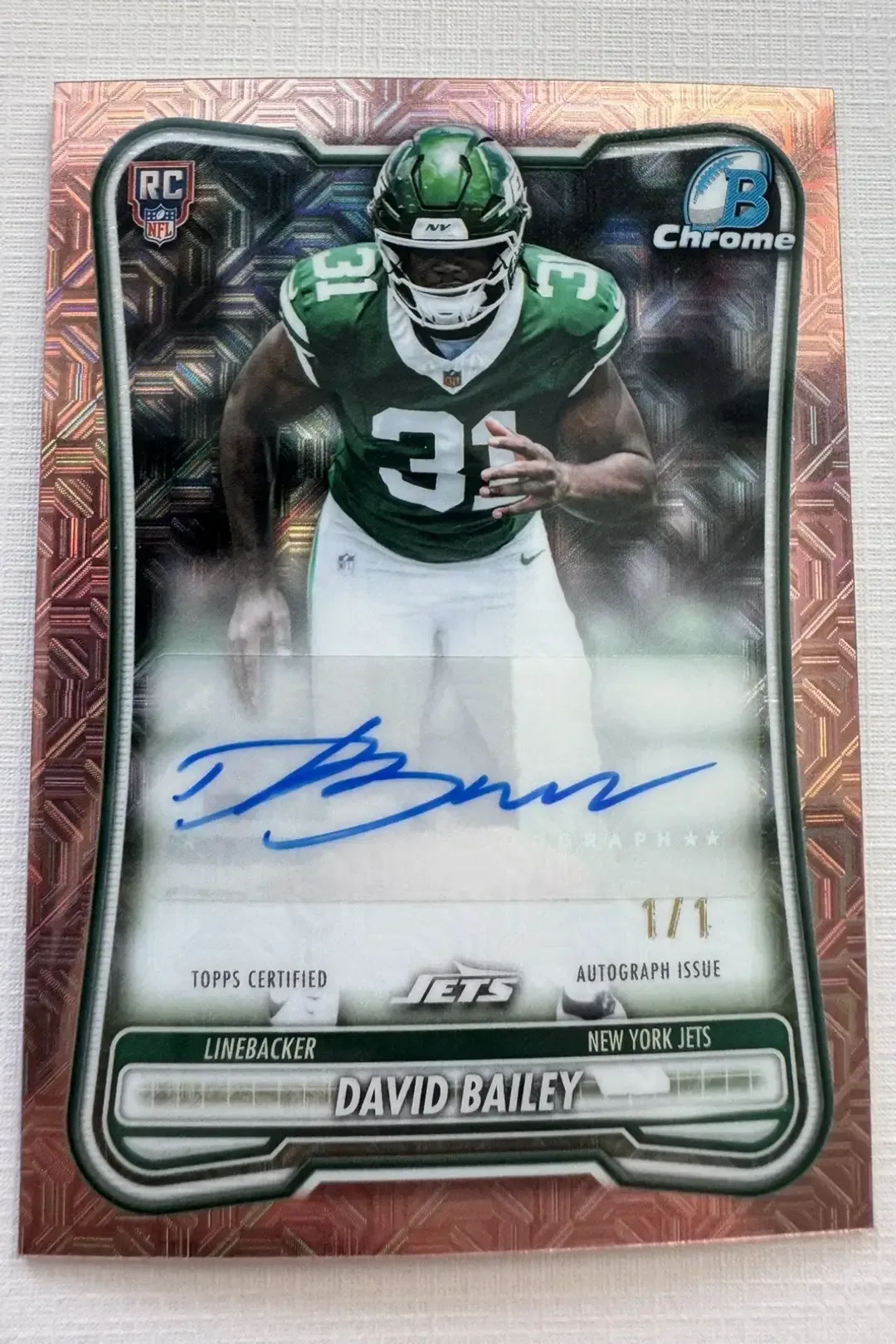
- 2026 Bowman Chrome David Bailey Auto Rose Gold Mojo 1/1: $1,600 on Oct. 17, 2026. The one-of-one carried Bailey’s highest reported sale.
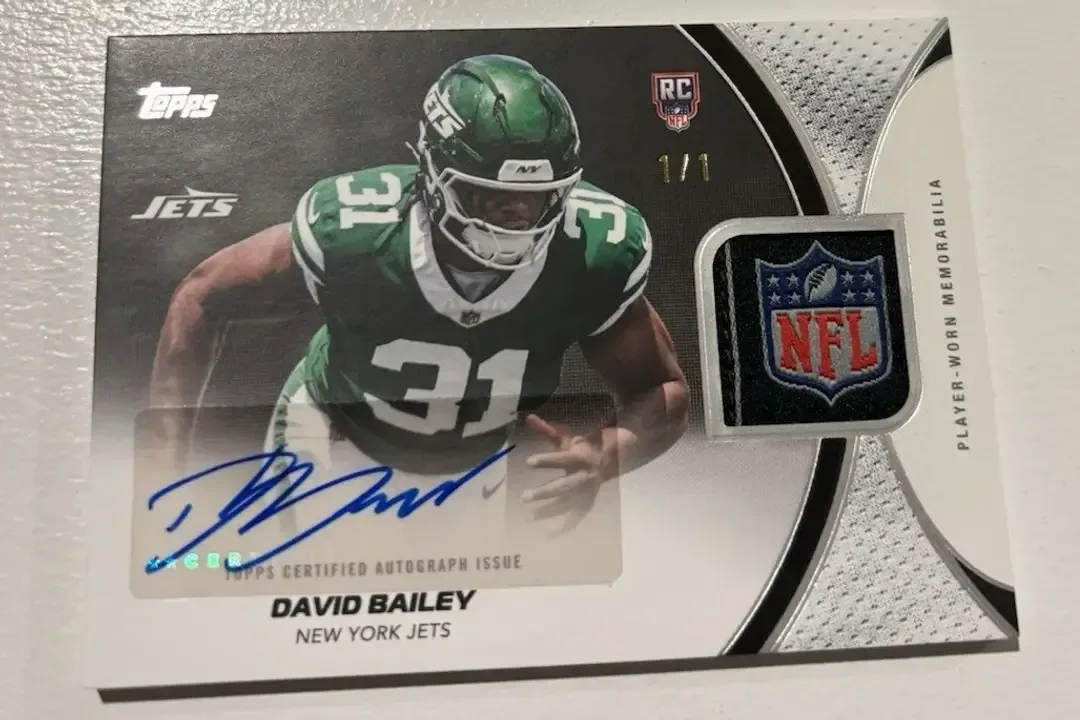
- 2026 Topps David Bailey Jets Rookie Materials Auto 1/1: $1,250 on Sept. 27, 2026. This one-of-one pairs Bailey’s signature with a patch.
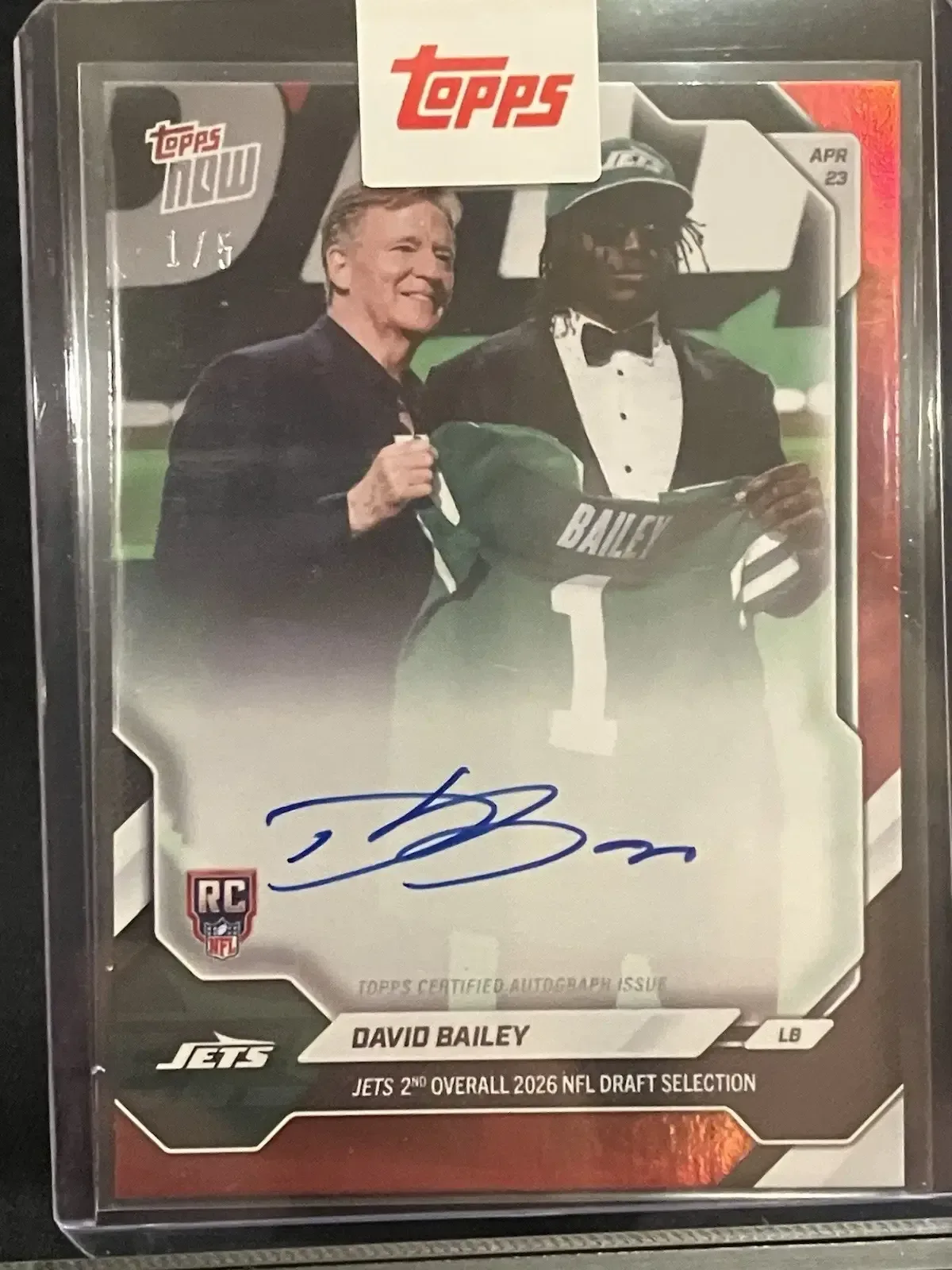
- 2026 NFL Topps Now David Bailey Red Foil Auto /5: $1,000 on Sept. 27, 2026. The signed draft-day card is numbered to five.
The two Sept. 27 sales offer a useful comparison. The one-of-one patch autograph brought $250 more than the Topps Now Red Foil, despite differences in both print run and card format. The Bowman Chrome sale came nearly three weeks later, so its higher price is a separate benchmark for that parallel, not evidence that the patch autograph itself had gained value.
Arvell Reese Rookie Card Sales: Draft Day Superfractor Sets the High
Reese posted 88 tackles and 4.5 sacks through his first 10 games with the Giants. His tackle total came close to the 112 he recorded across 38 college games at Ohio State, where he also finished with seven sacks. The Giants sat first in the NFC East at the time of the sales snapshot, while the Jets were third in the AFC East with three wins.
On the card side, two Reese Superfractors sold for at least $4,000. A Bowman Chrome autograph numbered to five also cleared that mark’s nearest benchmark, selling for $3,500 in November.
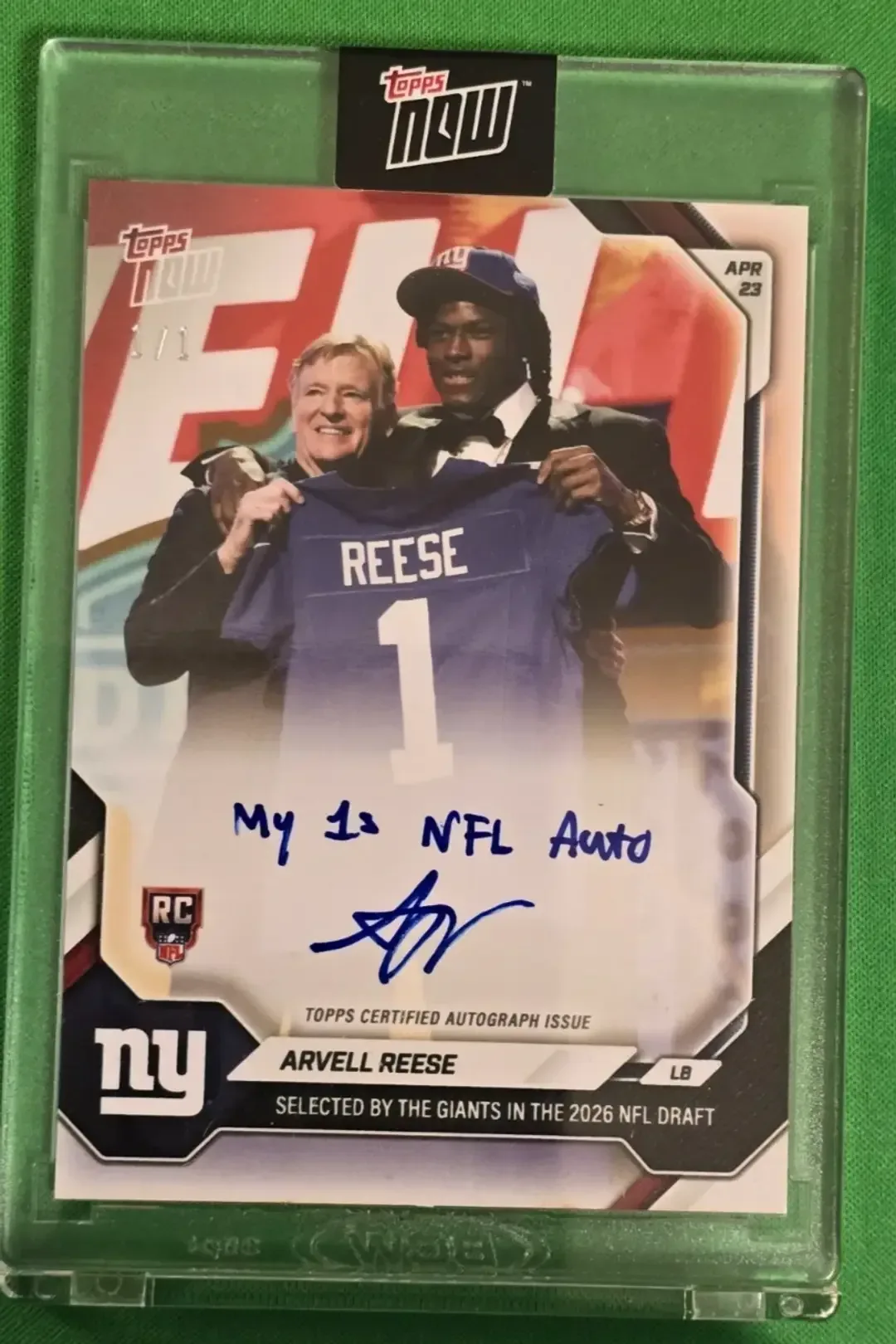
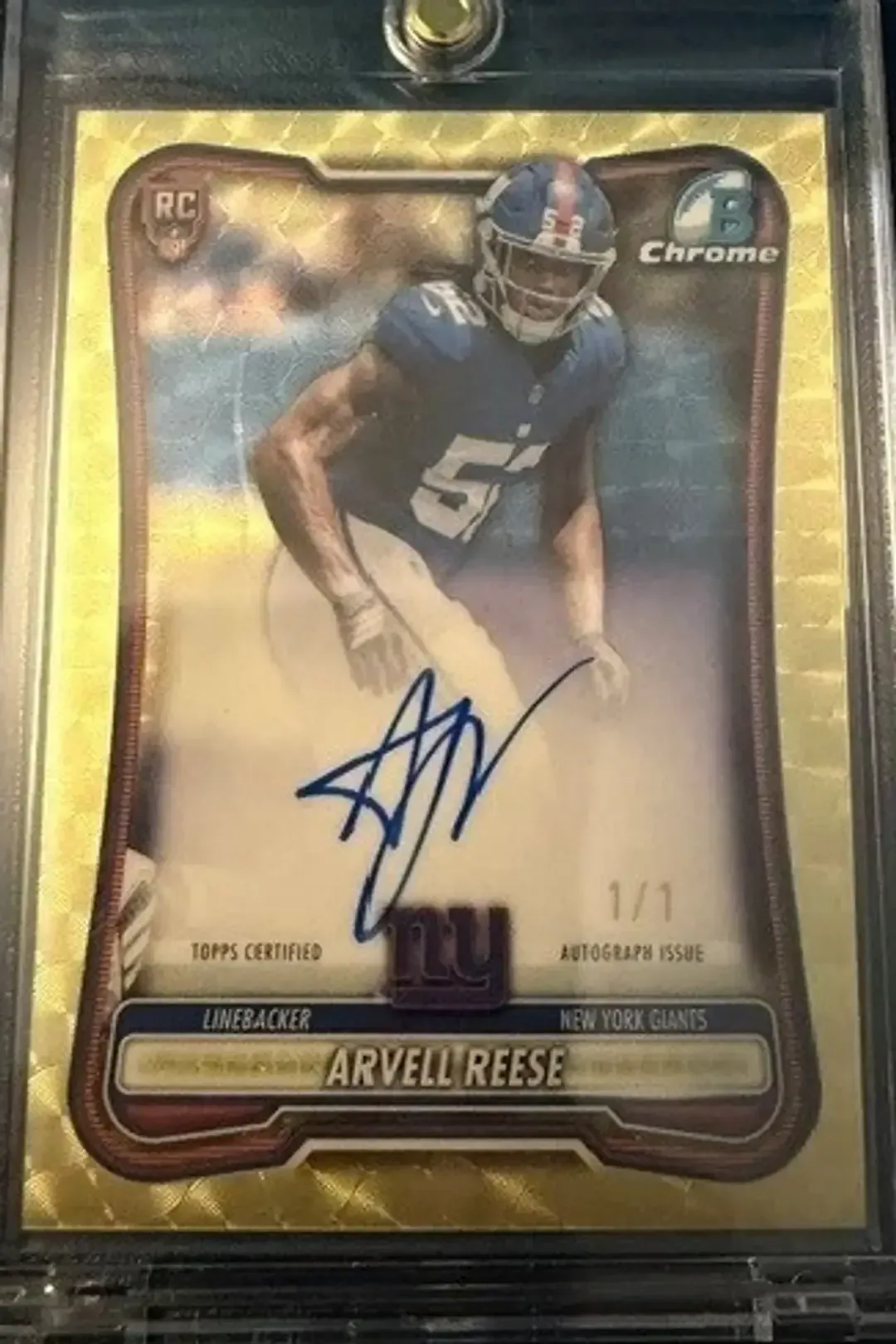
- 2026 NFL Topps Now Arvell Reese Draft Day Autographed Superfractor 1/1: $7,500 on Aug. 25, 2026. The card features both a signature and an inscription.
- 2026 Bowman Chrome Football Arvell Reese Auto Superfractor 1/1: $4,000 on Oct. 15, 2026. The signed Bowman Chrome one-of-one was Reese’s second-highest reported sale.
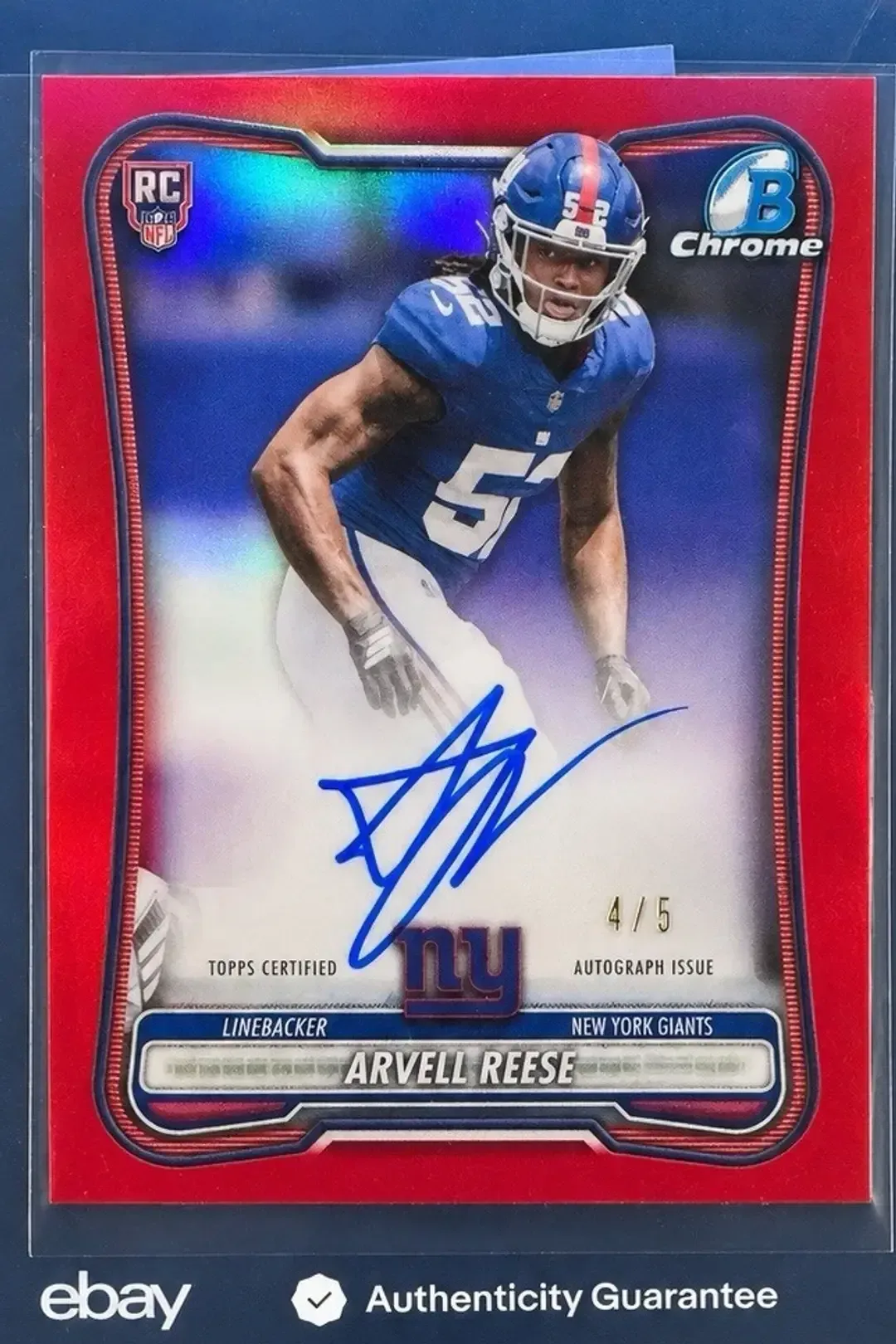
- 2026 Bowman Chrome Football Arvell Reese Rookie Auto True Red Refractor /5: $3,500 on Nov. 16, 2026. The Red Refractor sold for $500 less than the Bowman Chrome Superfractor about a month later.
The $7,500 Draft Day card and the $4,000 Bowman Chrome card are both Superfractors, but they are not interchangeable sales. They came from different products, sold nearly two months apart, and the Topps Now card carries an inscription. The gap between those prices does not, on its own, establish that Reese’s market fell between August and October.
What the Bailey and Reese Sales Tell Collectors
Reese’s highest reported sale was nearly 4.7 times Bailey’s, and each of Reese’s three listed cards sold for more than Bailey’s $1,600 Rose Gold Mojo. The closest side-by-side comparison in this group comes from October: Reese’s Bowman Chrome Superfractor sold for $4,000 on Oct. 15, and Bailey’s Bowman Chrome Rose Gold Mojo sold for $1,600 on Oct. 17. Both are signed one-of-ones from Bowman Chrome, but the parallel differs, so the $2,400 gap is not a pure measure of demand for one player over the other.
For collectors tracking cards numbered to five, the $3,500 Reese True Red and the $1,000 Bailey Red Foil are useful starting points for their respective issues. They share a print run, not a product: Reese’s is a Bowman Chrome Refractor, while Bailey’s is a Topps Now draft-day card. A sale of another copy of either exact parallel would provide a cleaner price comparison than matching the two cards by serial numbering alone.
Photo Gallery