2026 Topps Museum Collection Baseball is shaping up to be one of the hobby’s premium MLB releases once again, with early preview images pointing to the kind of high-end autograph and relic content collectors expect from the brand. Museum Collection has built its reputation on visually strong designs, game-used material, and low-numbered signatures, and the first cards shown for the 2026 product suggest that formula is staying intact.
For collectors who track the upper end of the annual baseball card calendar, Museum Collection usually lands in the conversation quickly because of its mix of star power, premium memorabilia concepts, and display-worthy patch autos. With pre-orders about to open, attention is already shifting toward the biggest hits and what buyers can reasonably expect from sealed boxes.
2026 Topps Museum Collection Baseball Pre-Order Details
Pre-orders for 2026 Topps Museum Collection Baseball are scheduled to open on the Topps website on Tuesday, September 8 at 2 PM EST. Official box pricing had not been announced with the early preview, but expectations are that it will sit in the high-end range collectors associate with this product line.
Based on the prior year’s release, a pre-order price somewhere between $500 and $700 is a reasonable expectation. That range reflects both the premium configuration of Museum Collection and the kind of hit-driven appeal the product typically delivers. Strong demand from last year’s edition could also keep interest elevated once the buying window opens.
For more collector background, read 2026 Topps Chrome Team Samurai Japan Baseball Collection Checklist, Autographs and Release Details.
Collectors considering a pre-order will likely be weighing familiar questions: how quickly the product sells through, whether the checklist depth matches the price point, and how much of the value is concentrated in a relatively small group of marquee autographs and memorabilia cards. Early previews do not answer every one of those questions, but they do make it clear that Topps is leaning into the type of premium chase content that has defined Museum Collection for years.
What Defines Museum Collection in the Baseball Card Market
Museum Collection is not built around volume. It is built around centerpiece cards. The brand’s annual appeal comes from combining on-card or hard-signed autographs, premium relic windows, and polished designs that emphasize presentation as much as rarity. In a baseball market crowded with chromium finishes, rainbow parallels, and prospect-first products, Museum usually stands out by going in a different direction.
That difference matters for collectors who prefer fewer cards with a stronger premium feel. Rather than relying on mass quantity, Museum Collection tends to focus attention on cards that are designed to feel important the moment they are pulled. Multi-color patches, game-used elements, and limited print runs are central to that identity.
The early 2026 previews fit that pattern closely. Instead of teasing broad checklist quantity, the initial cards shown are built around premium memorabilia and signature combinations, the exact areas where Museum Collection tends to generate the most hobby excitement.
Autographed Bat Relics Lead the Early Chase Conversation
Among the first notable chase elements previewed for 2026 Topps Museum Collection Baseball are Autographed Bat Relics. These cards are especially appealing because they pair a player signature with a piece of game-used lumber, creating a format that feels different from the more common jersey or patch autograph structure.
Bat relic cards have long had a distinct place in baseball collecting because the material itself connects directly to the act of hitting. When that relic is upgraded with an autograph and framed within a premium product like Museum Collection, it becomes the kind of card that can define a break or anchor a personal collection.
One of the cards shown ahead of release is a Roman Anthony Autographed Bat Relic. The previewed example is a one-of-one, immediately placing it among the rarest cards expected in the product. The one-of-one status also sends a clear message about the scarcity level Topps is targeting for at least part of this insert lineup.
Roman Anthony already carries significant collector interest, so a one-of-one signed bat relic in a premium release checks several important hobby boxes at once: prospect and young-star appeal, unusual memorabilia type, strong visual presentation, and extreme rarity. Even if most collectors never see one in person, cards like that help establish the ceiling of the product.
Patch Autographs Bring Legendary Appeal
Museum Collection has also previewed patch autograph content tied to baseball history, and one of the standout early examples comes from the 3000 Hit Club subset. Derek Jeter is among the names shown for that part of the product, giving the release a high-profile legend chase to balance the younger names and active stars.
The concept is simple but effective: pair a game-used patch with an autograph for players who reached one of baseball’s most respected statistical milestones. The 3,000-hit mark carries built-in prestige, and that historical significance tends to translate well into premium card formats. By using the 3000 Hit Club theme, Topps adds a layer of narrative to the memorabilia and autograph pairing rather than presenting it as just another relic signature insert.
Jeter’s inclusion is particularly notable because collectors across multiple generations remain active on his cards. In high-end baseball products, cards that connect star power with an established hobby legacy often become some of the safest long-term focal points in the release. A Derek Jeter 3000 Hit Club Patch Autograph has the profile of a card that can draw attention whether it surfaces in a personal break, a live auction, or a major show display case.
For Museum Collection as a brand, that kind of card matters. Premium products are usually judged not only by their rookie content, but also by whether they include legends in formats worthy of the price point. The 3000 Hit Club patch autograph concept checks that box cleanly.
Triple Relic Autographs Add Scarcity and Visual Impact
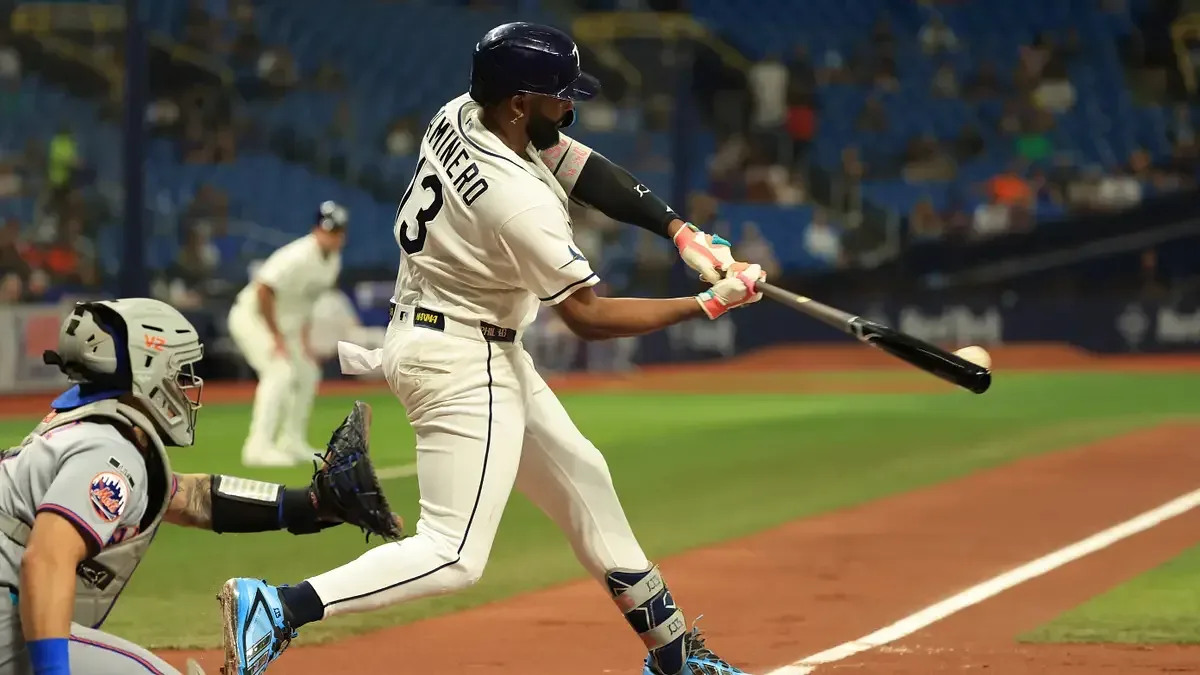
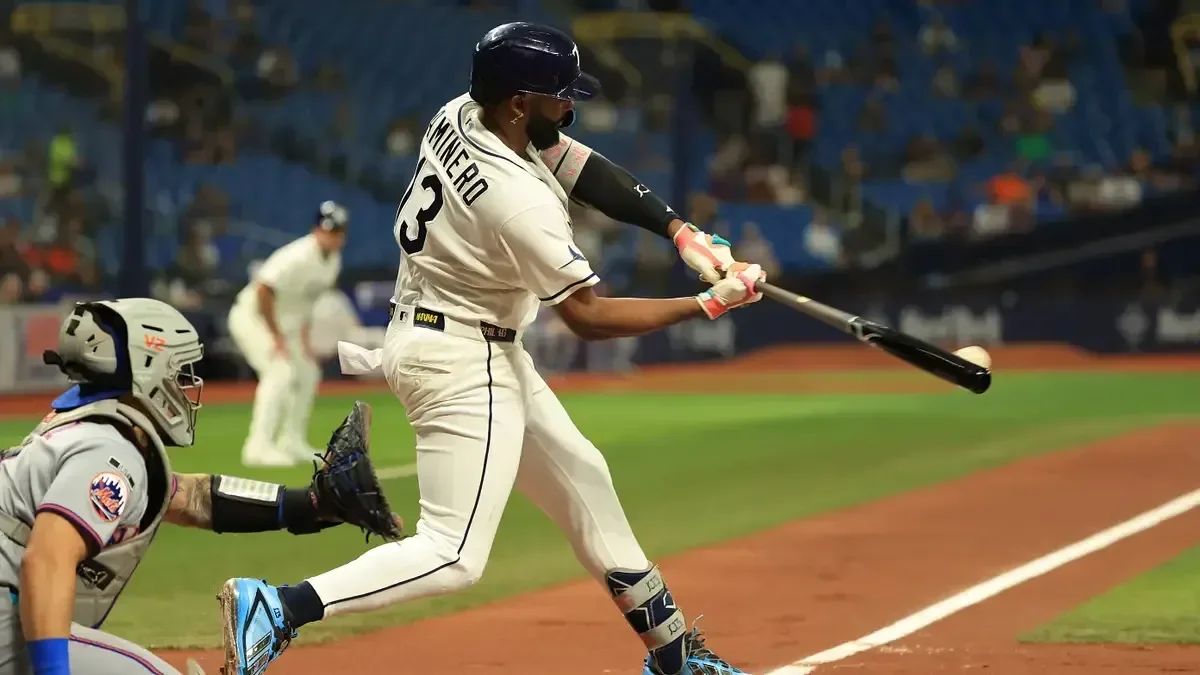
Another early previewed chase format is the Triple Relic Autograph, with Junior Caminero highlighted as one of the players in the set. As the name suggests, these cards combine three relic pieces with a signature, creating a larger memorabilia presentation than the standard single-window format.
Triple relic autograph cards tend to perform well visually because they give designers more space to work with color breaks, patch texture, and layout balance. They also carry natural premium appeal simply because three memorabilia pieces on one card feel more substantial than a single swatch. In a product like Museum Collection, where presentation is a major part of the selling point, that matters.
The previewed Junior Caminero Triple Relic Autograph is numbered to 20 copies, reinforcing the limited nature of these cards. That print run keeps the card firmly in the rare-hit category while still allowing enough copies to make it one of the more realistic major chases in the set compared to a true one-of-one.
Caminero’s strong season gives that card added relevance in the current market. When a player is performing at a high level and appears in a low-numbered premium autograph relic format, interest can escalate quickly. Collectors who chase active stars often gravitate toward this specific combination because it offers both short-term market energy and long-term collection appeal if the player continues to build his résumé.
Early Previewed Chase Cards to Know
While a full product breakdown was not part of the early reveal, several cards and subsets already stand out as headline-worthy names for 2026 Topps Museum Collection Baseball:
- Roman Anthony Autographed Bat Relic – previewed as a one-of-one card featuring a signed piece of game-used bat.
- Derek Jeter 3000 Hit Club Patch Autograph – a legend-focused patch auto tied to one of baseball’s elite career milestones.
- Junior Caminero Triple Relic Autograph – previewed with three relic windows, an autograph, and numbering to 20 copies.
- Mike Trout Momentous Materials Patch Autograph – another premium memorabilia autograph example shown in early product imagery.
That group alone gives a strong indication of the product’s direction. It spans established all-time greats, current stars, and high-interest younger names, all presented through premium memorabilia-driven formats.
Why These Early Cards Matter for Collectors
First-look chase cards do more than generate hype. They often reveal how a product intends to position itself in the market. In this case, the message is clear: 2026 Topps Museum Collection Baseball is leaning hard into premium autograph relic combinations rather than trying to win with quantity or novelty alone.
That focus has implications for both wax buyers and singles collectors. Box buyers will be looking at the possibility of landing one of these showcase-style cards as the core justification for a premium sealed price. Singles collectors, meanwhile, may end up targeting specific subsets like Autographed Bat Relics or 3000 Hit Club Patch Autographs without taking on the cost and risk of opening boxes.
Products in this tier are rarely judged by base-card breadth. They are judged by the strength of the chase list, the clarity of the premium identity, and whether the biggest cards look worthy of their market position. From what has been shown so far, Museum Collection appears to be staying in that lane.
What to Watch as More 2026 Museum Collection Information Arrives
The biggest unanswered question remains the full checklist and official box format details. Collectors will want to see how deep the autograph and relic pools run, which rookies and stars are included beyond the first few names shown, and how many parallel or serial-numbered variations appear across the main hit categories.
Pricing will also be a key watch point. If pre-orders land near the upper end of the expected range, hobby reaction may depend heavily on whether Topps reveals enough additional heavyweight names and formats to support that number. If the product enters closer to the middle of the projected range, demand could accelerate quickly given Museum Collection’s established profile and the popularity of last year’s release.
For now, the early signs point to a familiar formula: premium baseball cards built around standout autographs, strong memorabilia presentation, and limited-count chase pieces. Collectors planning to buy in should keep an eye on the Topps pre-order window at 2 PM EST on September 8, especially if the first preview cards are the kind of centerpiece hits they want to chase.
Photo Gallery