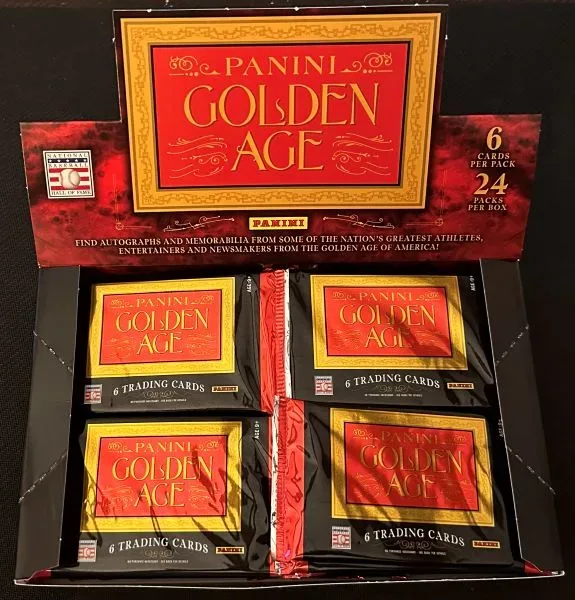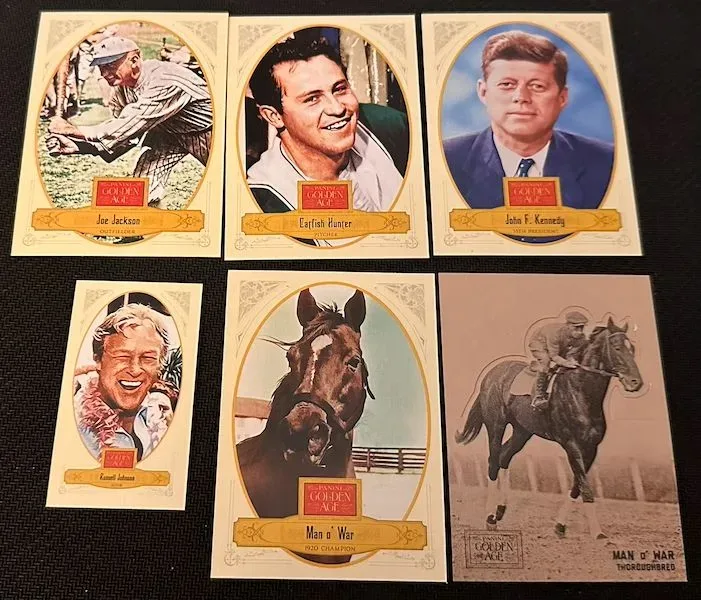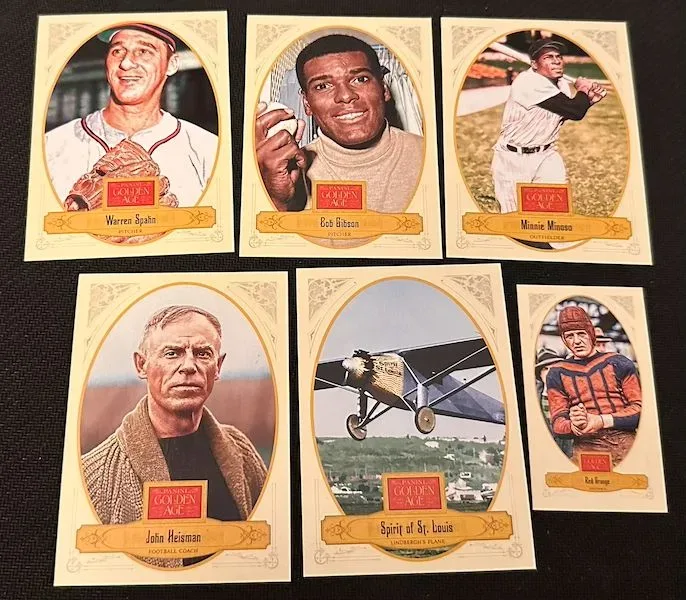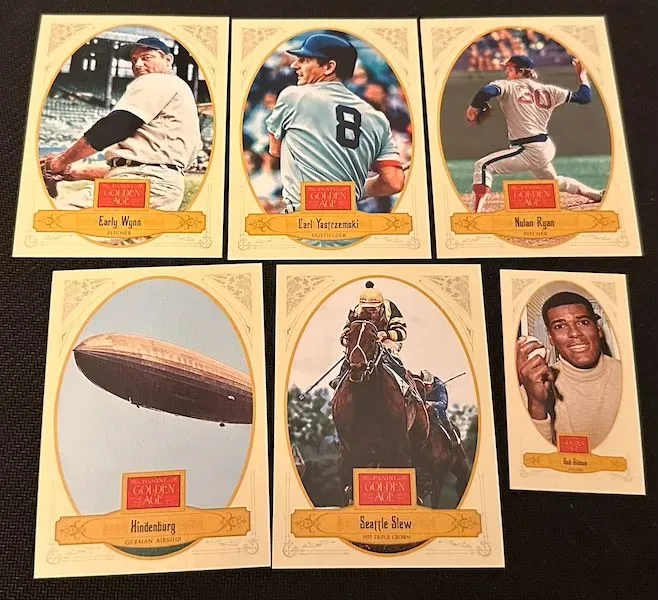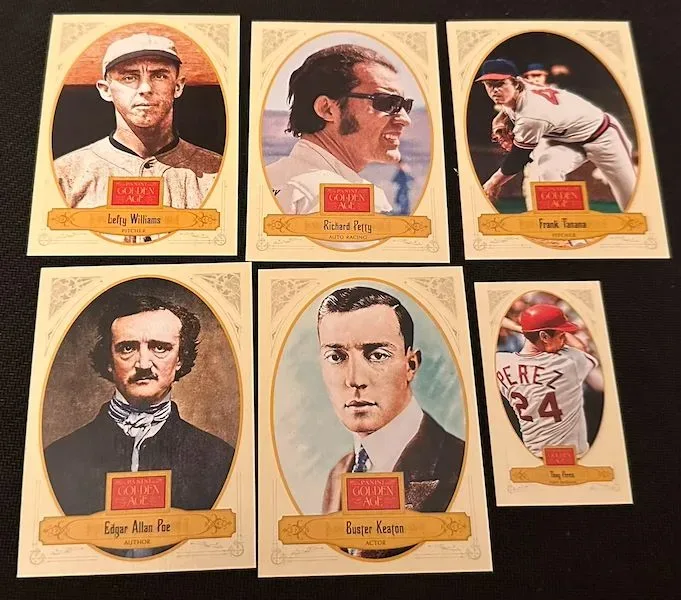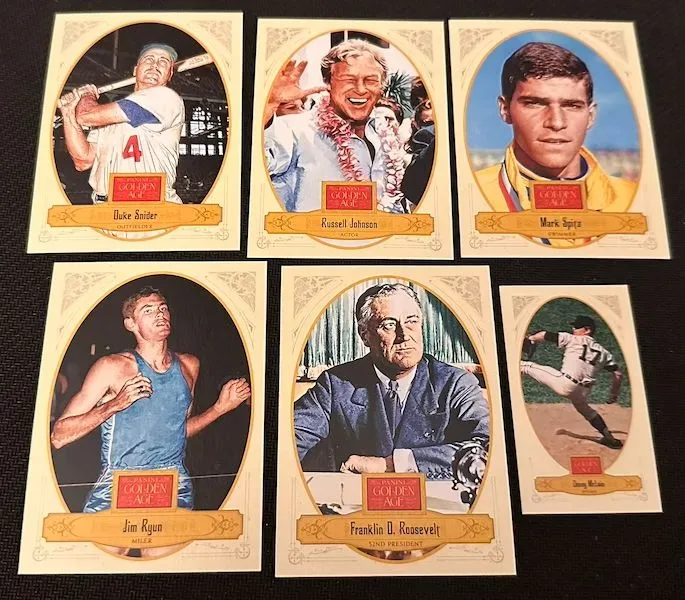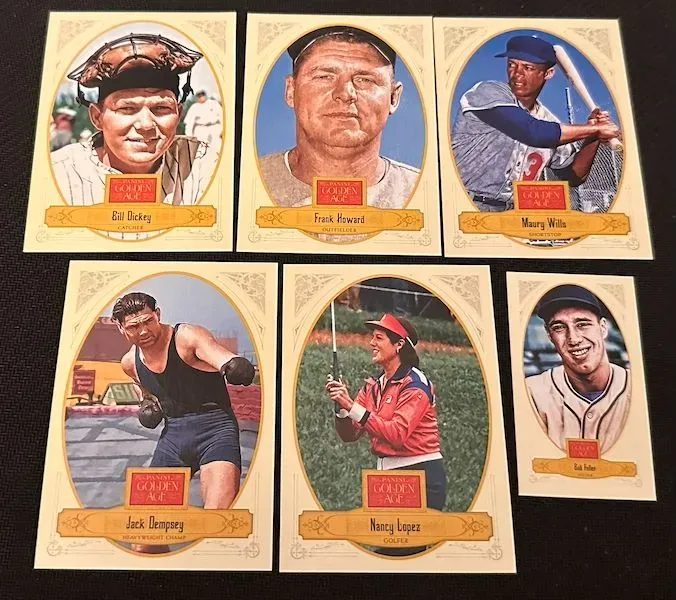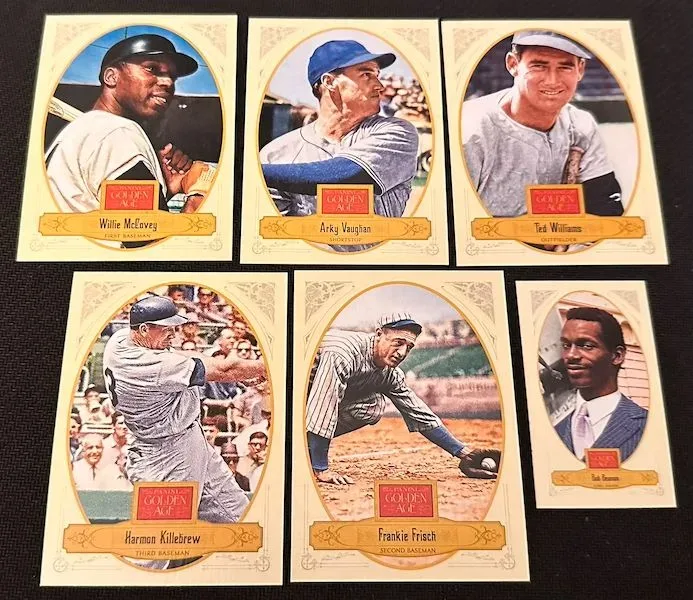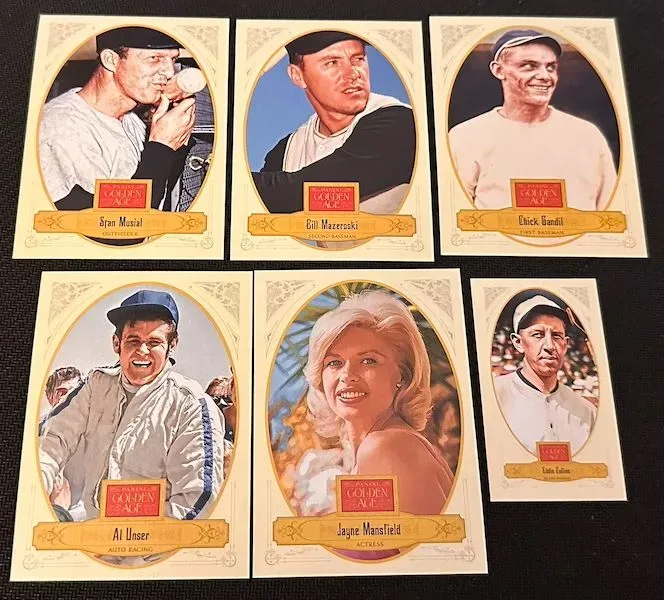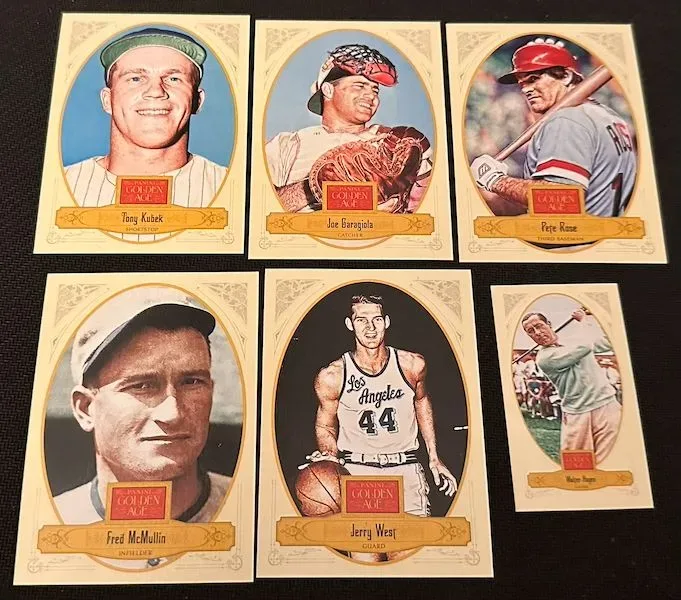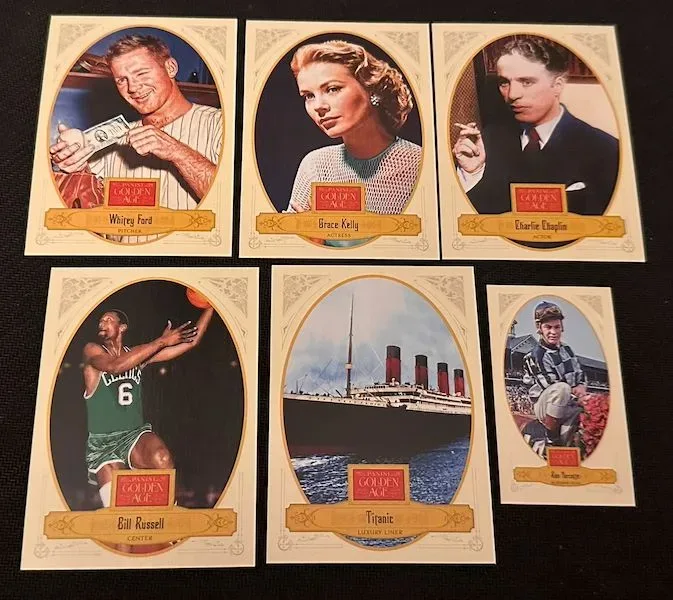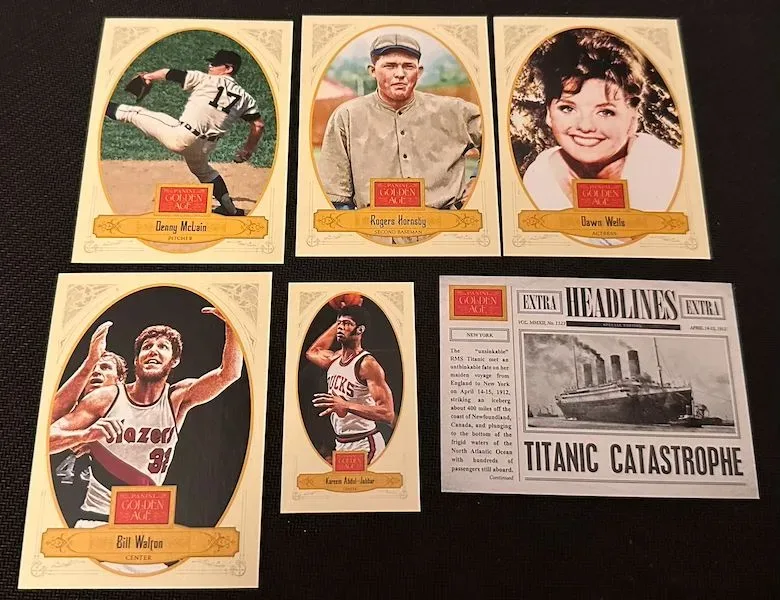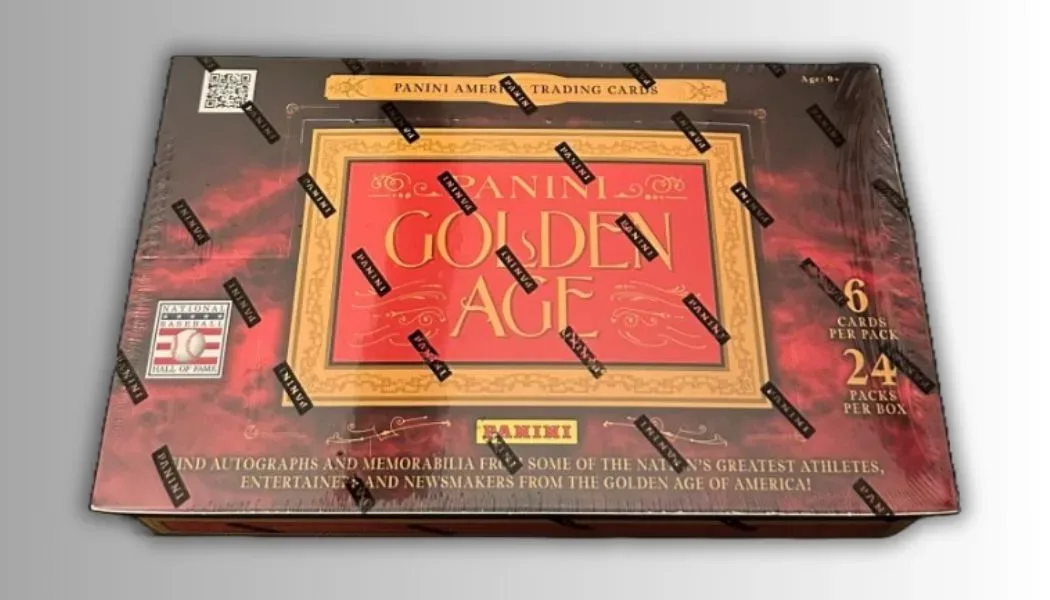
2012 Panini Golden Age Baseball remains one of the more distinctive early-2010s hobby releases, combining baseball legends with a wide mix of athletes, entertainers, historical figures and unusual non-sports subjects. Built around a vintage-inspired design and a broad checklist, the product offers a very different kind of break from a standard MLB-focused box.
The set has 146 base cards and leans heavily into an old-time portrait aesthetic. Even though it carries a baseball label, the checklist stretches far beyond the diamond. Collectors can pull names tied to baseball, football, basketball, auto racing, boxing, golf, horse racing, politics, film and pop culture, with cards ranging from Ty Cobb and Jackie Robinson to Edgar Allan Poe, Theodore Roosevelt and even Titanic.
That eclectic mix is the main appeal. For collectors who enjoy sets with an Allen & Ginter-style personality, Golden Age delivers the same kind of unpredictable pack flow. One pack might bring Hall of Famers, another might pivot to movie stars or historical headlines, and the next could land a hit or a mini parallel with a tougher back variation.
What Makes 2012 Panini Golden Age Stand Out
The release ran for only three years from 2012 through 2014, which gives the line a more compact place in Panini's baseball history. The 2012 edition is especially memorable because of how confidently it embraces a cross-category identity. It is not trying to be a traditional flagship baseball product. Instead, it is built for collectors who appreciate personality, variety and a little weirdness in the best possible way.
For more collector background, read 2026 Panini Par Three LIV Golf Details, Box Format, Inserts and Early Checklist Notes.
The card design supports that theme. Base cards carry a classic, formal portrait look that fits both deadball-era stars and non-sports figures surprisingly well. Because the product is unlicensed, photo selection matters, and this set generally does a solid job minimizing the visual impact of missing MLB logos. The result is a release that still feels polished more than a decade later.
Mini cards add another layer of chase appeal. These parallels come with six different back designs:
- Broad Leaf Blue
- Broad Leaf Brown
- Croft’s Candy Blue
- Croft’s Candy Red
- Ty Cobb backs
- Black 1/1s
That parallel structure gives box breaks a steady stream of variation without overwhelming the core set. For collectors who like building mini runs or chasing back variations, Golden Age offers a lot to sort through.
Box Configuration and Key Pulls
A standard hobby box includes 24 packs with six cards per pack. In this break, the box was opened at an $89 buy-in, which puts it firmly in the conversation as a lower-cost rip compared to many modern products.
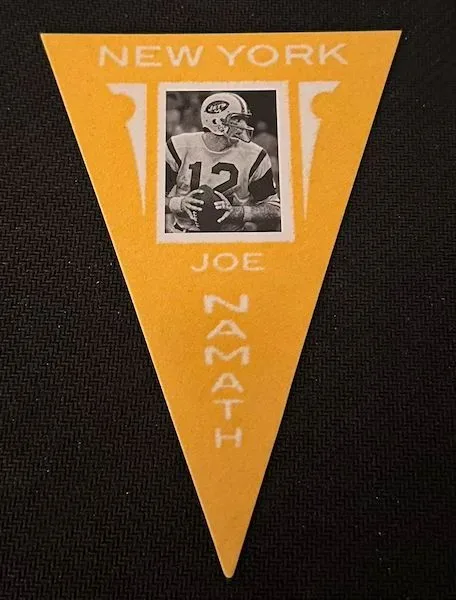
The box topper was a Joe Namath Ferguson Bakery Pennants Yellow card, an early sign that this product was going to branch far outside baseball. That kind of inclusion captures the set’s identity immediately. It is a baseball-branded release, but not a baseball-only experience.
The two biggest hits from the box were a Mickey Lolich Historic Signatures autograph and a Rod Carew Museum Age relic. Those are strong names for a product in this price range, especially with Carew representing one of the hobby’s most respected Hall of Fame bats and Lolich bringing notable World Series pedigree.
There was also a Steve Cauthen Newark Evening World Supplement insert, which landed at stated pack odds of 1:24, and multiple themed inserts from the Headline and Batter Up sets. Those pulls help the box feel busy in a good way, giving collectors more than just base cards and a single hit to focus on.
Pack-by-Pack Themes From the Break
The break showed exactly why Golden Age remains such an entertaining product to open. The box moved rapidly between sports eras and subject matter, creating a rhythm that never felt repetitive.
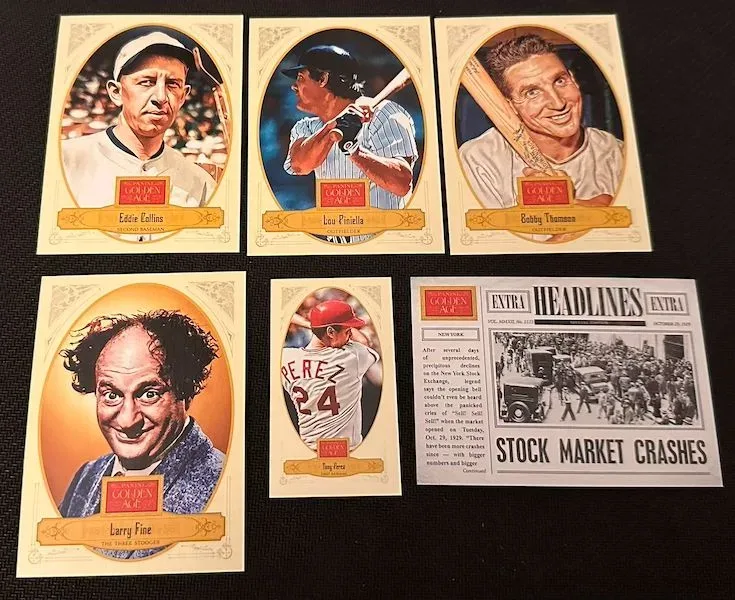
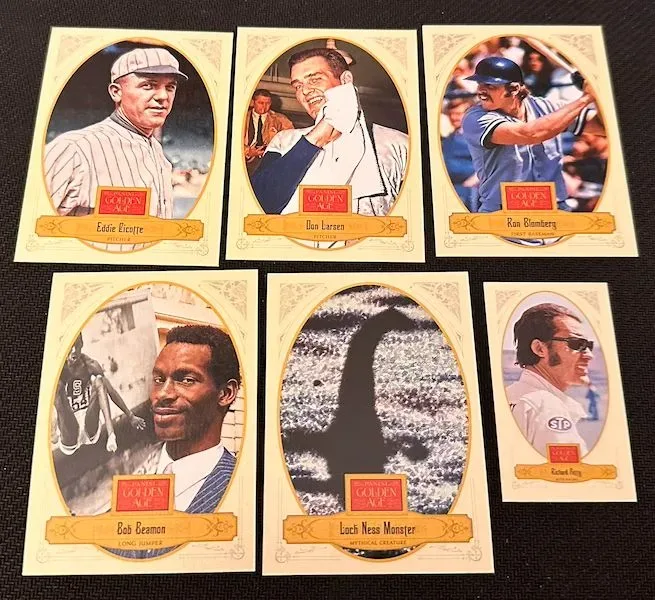
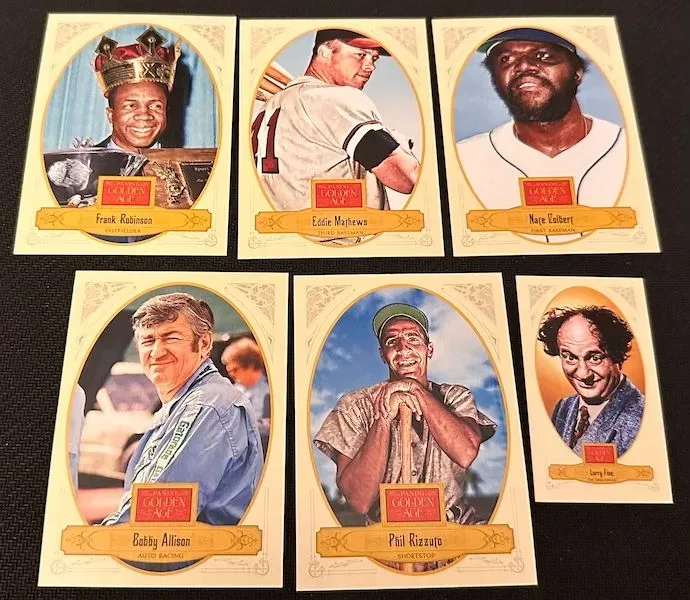
Early packs mixed baseball names like Eddie Collins, Lou Piniella, Bobby Thomson and Tony Perez with non-sports personalities such as Larry Fine. Another pack followed with Eddie Cicotte, Don Larsen and Ron Blomberg alongside Bob Beamon and the Loch Ness Monster, which is a sentence that could only make sense in a set like this.
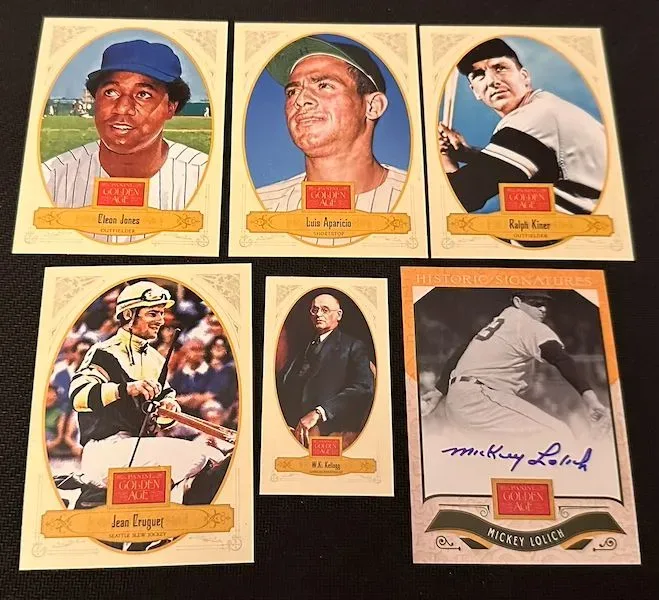
The first autograph arrived in Pack 3, where Mickey Lolich’s Historic Signatures card headlined a group that also included Cleon Jones, Luis Aparicio, Ralph Kiner, Jean Cruguet and a W.K. Kellogg mini. That combination perfectly sums up the Golden Age format. Baseball stars sit next to horse racing figures, business pioneers and short-print style mini content without feeling out of place.
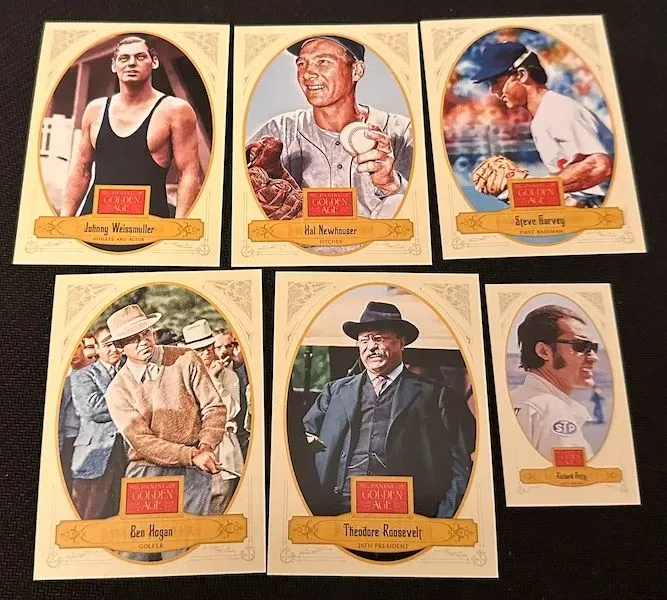
Pack 4 added another variation with a Richard Petty mini carrying a Croft’s Candy Red back. Later packs produced more mini-back diversity, including Denny McLain with a Croft’s Candy Blue back and Bob Beamon with a Broad Leaf Brown back. Those details matter for collectors who enjoy the chase element inside otherwise affordable wax.
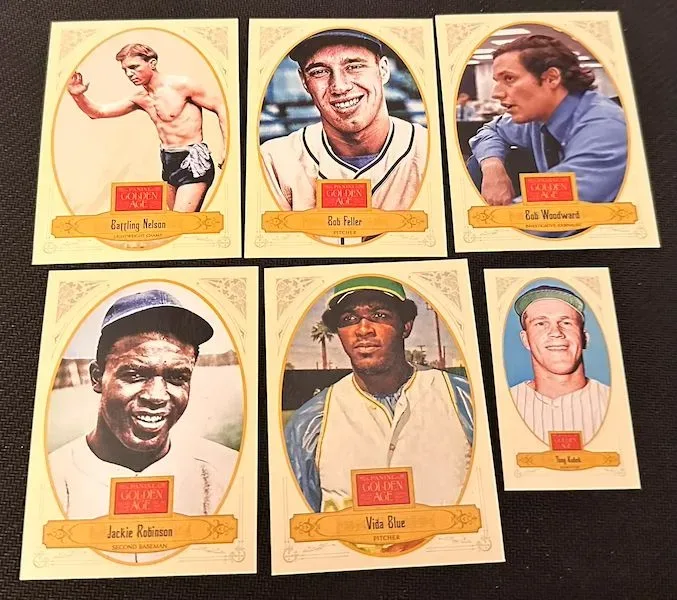
Baseball legends appeared throughout the break. Bob Feller, Jackie Robinson, Joe Jackson, Catfish Hunter, Warren Spahn, Bob Gibson, Nolan Ryan, Carl Yastrzemski, Ted Williams, Harmon Killebrew, Stan Musial, Pete Rose, Whitey Ford, Rogers Hornsby, Johnny Bench, Joe DiMaggio, Jimmie Foxx and Tom Seaver all surfaced. For a baseball collector, there is enough star power in the main checklist to keep the product grounded, even with all the non-sports detours.
Those detours are a huge part of the fun. Packs also featured John F. Kennedy, Franklin D. Roosevelt, Dwight D. Eisenhower, Charlie Chaplin, Grace Kelly, Jayne Mansfield, Ava Gardner, Rudolph Valentino, Duke Ellington and Dawn Wells. The set does not just sprinkle in a few novelty cards. It fully commits to a museum-like spread of subjects.
Notable Inserts and Odds in the Box
Several insert types showed up during the break, and they help define how Golden Age boxes open.
- Headline inserts at 1:12 packs, including Stock Market Crashes and Titanic Headlines
- Batter Up inserts at 1:12 packs, including Man o’ War Batter Up and Walter Hagen Batter Up
- Newark Evening World Supplement at 1:24 packs, represented here by Steve Cauthen
- Historic Signatures autographs, including Mickey Lolich
- Museum Age relics, including Rod Carew
These inserts continue the product’s all-purpose historical theme. Rather than sticking to baseball-only sub-brands, the checklist expands into headline events, sports beyond baseball and classic Americana. That variety gives even lower-end insert pulls a sense of charm.
The Headline cards are especially on-brand for Golden Age, leaning into major moments and cultural touchstones. Titanic Headlines is a perfect example, as Titanic is one of the more memorable non-sports inclusions in the set. Museum Age relics take that same concept further, with the checklist known to include relics tied not only to athletes but also to figures and items such as Secretariat and Titanic.
One especially eye-catching detail tied to the relic checklist is the existence of Titanic memorabilia cards, which stand out as some of the more unusual hits from the era. That kind of material is part of what separates Golden Age from more conventional baseball products.
Memorable Names and Unexpected Subjects
The checklist is full of combinations that make this product easy to remember. A collector can pull Theodore Roosevelt in one pack and Red Grange in the next. The Three Stooges appear on four base cards in the set, including one card for each individual and one group card. Horse racing icons such as Secretariat, Man o’ War, Citation, Seattle Slew, Penny Chenery, Jean Cruguet, Ron Turcotte and Steve Cauthen are all part of the experience as well.
That horse racing presence deserves mention because it fits Golden Age particularly well. The visual style of the set complements the sport’s historical atmosphere, and it gives collectors something they rarely see in mainstream baseball card products. The same goes for names like Jack Dempsey, John Heisman, Mark Spitz, Jim Ryun, Bill Walton, Kareem Abdul-Jabbar, Ben Hogan, Nancy Lopez, Walter Hagen, Al Unser, Bobby Allison and Richard Petty.
The product also includes educational-style card backs, which matter more here than in a standard sports release. Because the checklist spans so many different categories, the information on the reverse side adds real value to the collecting experience. A mixed-subject set works best when it teaches as well as entertains, and Golden Age benefits from that extra layer.
Checklist Snapshot From This Box
This break produced a strong cross-section of what the set offers. Among the more notable pulls and appearances were:
- Box topper: Joe Namath Ferguson Bakery Pennants Yellow
- Autograph: Mickey Lolich Historic Signatures
- Relic: Rod Carew Museum Age
- Supplement insert: Steve Cauthen Newark Evening World Supplement
- Headline inserts: Stock Market Crashes, Titanic Headlines
- Batter Up inserts: Man o’ War, Walter Hagen
- Mini back variations: Richard Petty Croft’s Candy Red, Tony Perez Croft’s Candy Red, Denny McLain Croft’s Candy Blue, Bob Beamon Broad Leaf Brown
- Base stars and legends: Ty Cobb, Jackie Robinson, Bob Gibson, Nolan Ryan, Ted Williams, Stan Musial, Joe DiMaggio, Tom Seaver, Johnny Bench, Jimmie Foxx
- Non-sports and crossover names: Edgar Allan Poe, Theodore Roosevelt, John F. Kennedy, Charlie Chaplin, Grace Kelly, The Three Stooges, Titanic, Loch Ness Monster
That is a broad and entertaining spread from a single box, especially at a lower price point. There is enough baseball prestige to satisfy traditional collectors, but the box never feels locked into one lane.
Collector Appeal in Today’s Market
For collectors shopping older wax, 2012 Panini Golden Age Baseball occupies a useful niche. It is not a prospect-driven release, and it does not depend on chromium shine or serial-number overload. Instead, the appeal comes from subject diversity, vintage presentation and the possibility of landing unusual memorabilia or autograph content.
It also works well for collectors who want a break that is simply fun. Modern wax often centers on chasing one or two big rookie names. Golden Age offers a different reward structure. The excitement comes from discovery, from seeing which legend, celebrity, president, racehorse or oddball subject turns up next.
The set can also attract player collectors. Even without licensing, the checklist is loaded with all-time greats, and mini parallels give those collectors more ways to chase favorite names. For autograph and relic collectors, Historic Signatures and Museum Age provide recognizable names with a more old-school presentation than many products from the same period.
Why This Box Format Still Works
Affordable boxes need enough variety to keep a rip interesting from the first pack to the last. This one checks that box. The break delivered a signature, a relic, a box topper, insert variety, multiple mini backs and a long list of iconic names from many different fields. That is a healthy amount of content from 24 six-card packs.
Golden Age is also one of those products that rewards collectors who enjoy sorting after the break. The mini backs, crossover names, themed inserts and historical references give the box life beyond the initial rip. It is not just a product to open quickly and move on from. It invites a second look through the stack.
For collectors seeking something outside the usual baseball-card formula, 2012 Panini Golden Age Baseball still holds up as a lively and distinctive break. With a 146-card base set, six mini-back designs, autograph and relic content, and a checklist that can jump from Ty Cobb to Titanic without losing its identity, it remains a memorable option in the secondary wax market.
Photo Gallery