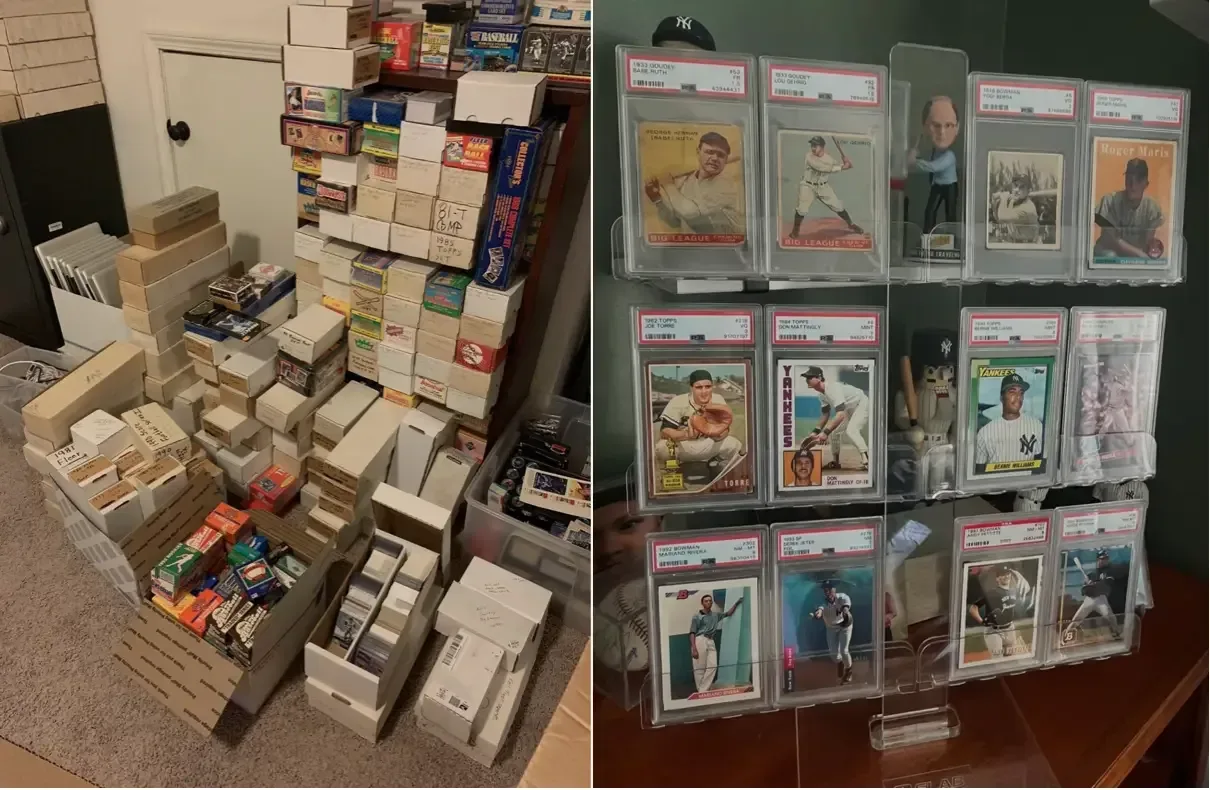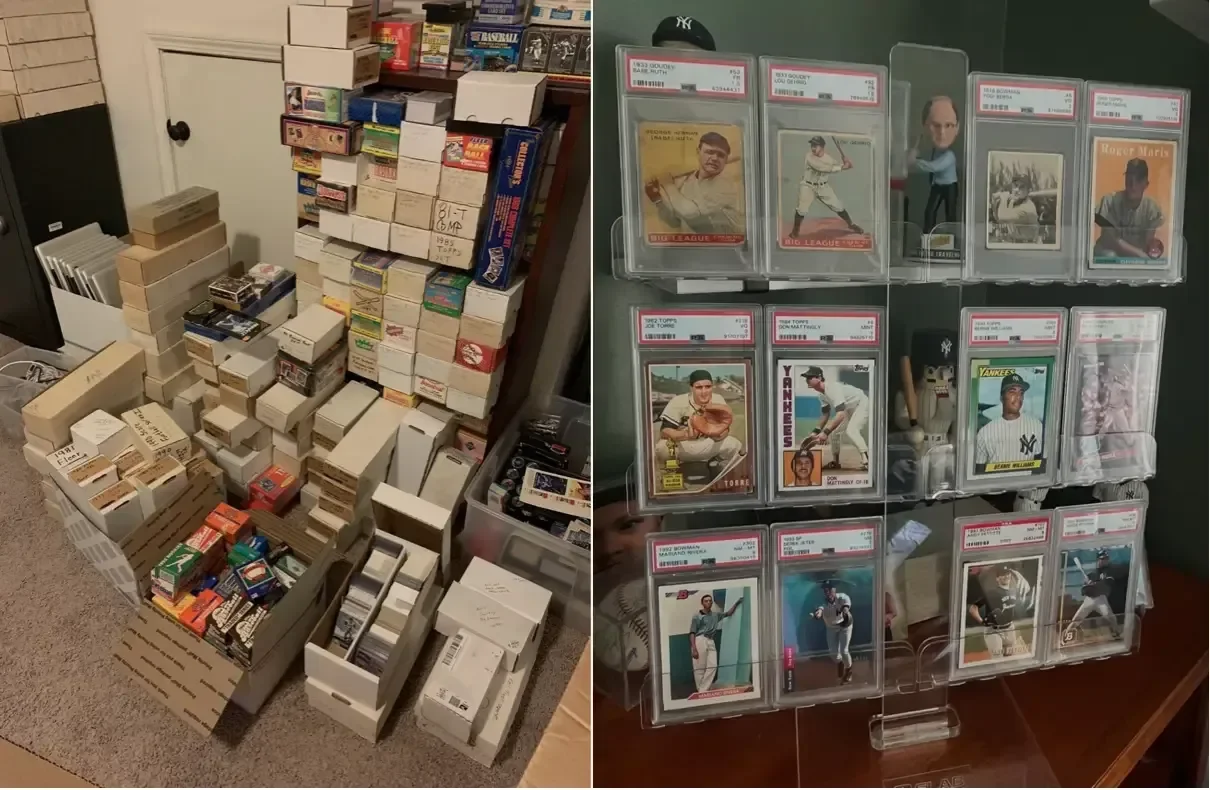
Plenty of collectors are moving away from giant accumulations and toward tighter, more intentional collections. One popular way to do that is by targeting cornerstone rookie cards instead of stockpiling volume. If the goal is to own one defining baseball rookie card from each decade, the result is a hobby roadmap that runs from pre-war rarities to ultra-modern grails.
The cards below represent the standout rookie card from each decade beginning with the 1910s, based on a mix of historical importance, scarcity, demand, and reported market value. Because values can swing dramatically by grade, recent prices in multiple grades are included when available. Each decade also includes a notable rookie card that has recently traded for less than $1,000, giving budget-minded collectors a realistic chase target from the same era.
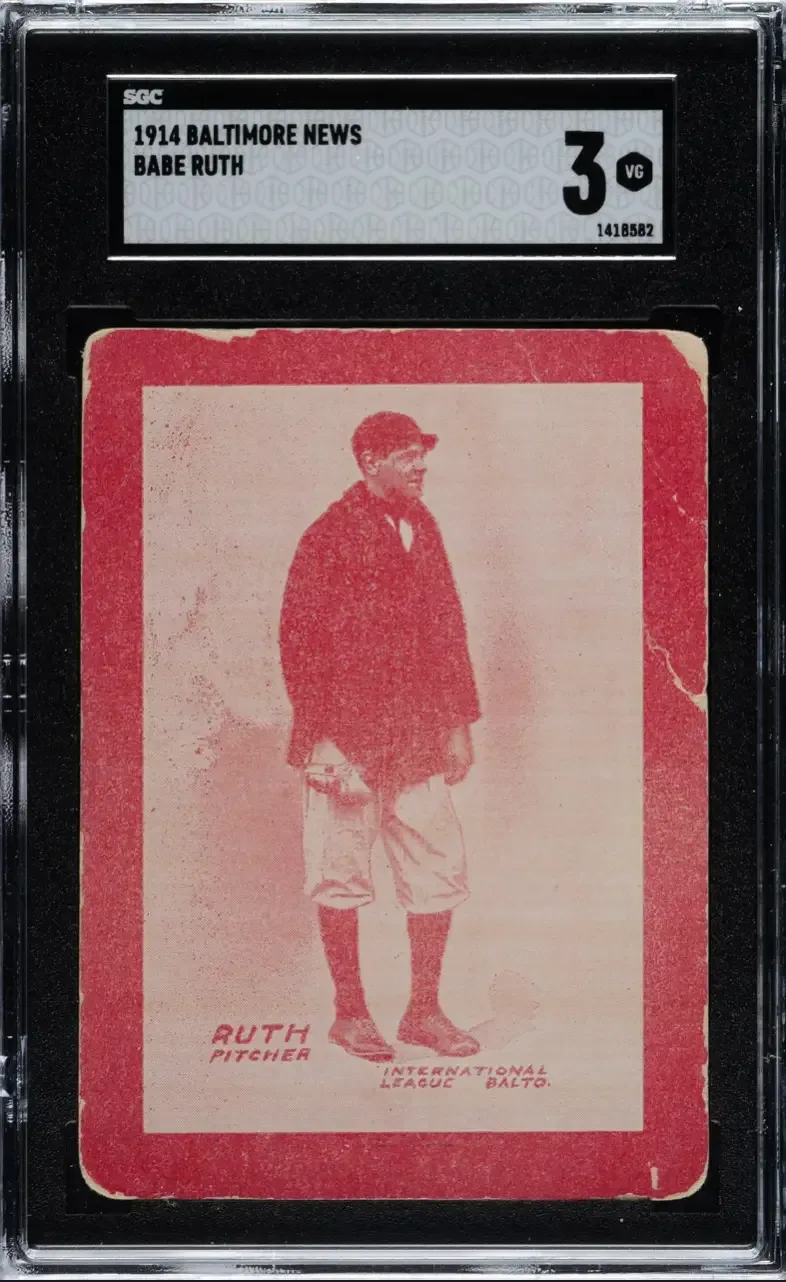
1910s: 1914 Baltimore News Babe Ruth Rookie Card
The 1914 Baltimore News Babe Ruth rookie stands at the top of the 1910s and, for many collectors, near the top of the entire baseball card hobby. It pictures Ruth as a 19-year-old minor league pitcher in the Baltimore Orioles organization before he became the sport’s most famous slugger. That early-career image, combined with extreme scarcity, is what gives the card its legendary status.
A reported SGC 3 example brought $4 million, and that same card had previously sold for $7.2 million in 2023. The total population sits at just 9, a number that helps explain why even low-grade examples command extraordinary prices. The card was issued as a promotional piece by the Baltimore News, and its existence was not widely known in the hobby until the 1980s, adding another layer to its mystique.
For more collector background, read Three Topps Pre-Orders to Watch on October 5: Bowman U Best Football, Cosmic Chrome Baseball and Inception Football.
What makes this Ruth so compelling is that it captures him before the full mythology was built. Collectors are not just buying a rookie card here. They are buying one of the earliest tangible links to baseball’s most iconic figure, and one that almost never surfaces.
Budget alternative: 1909-11 T206 Tris Speaker PSA 1, around $770.
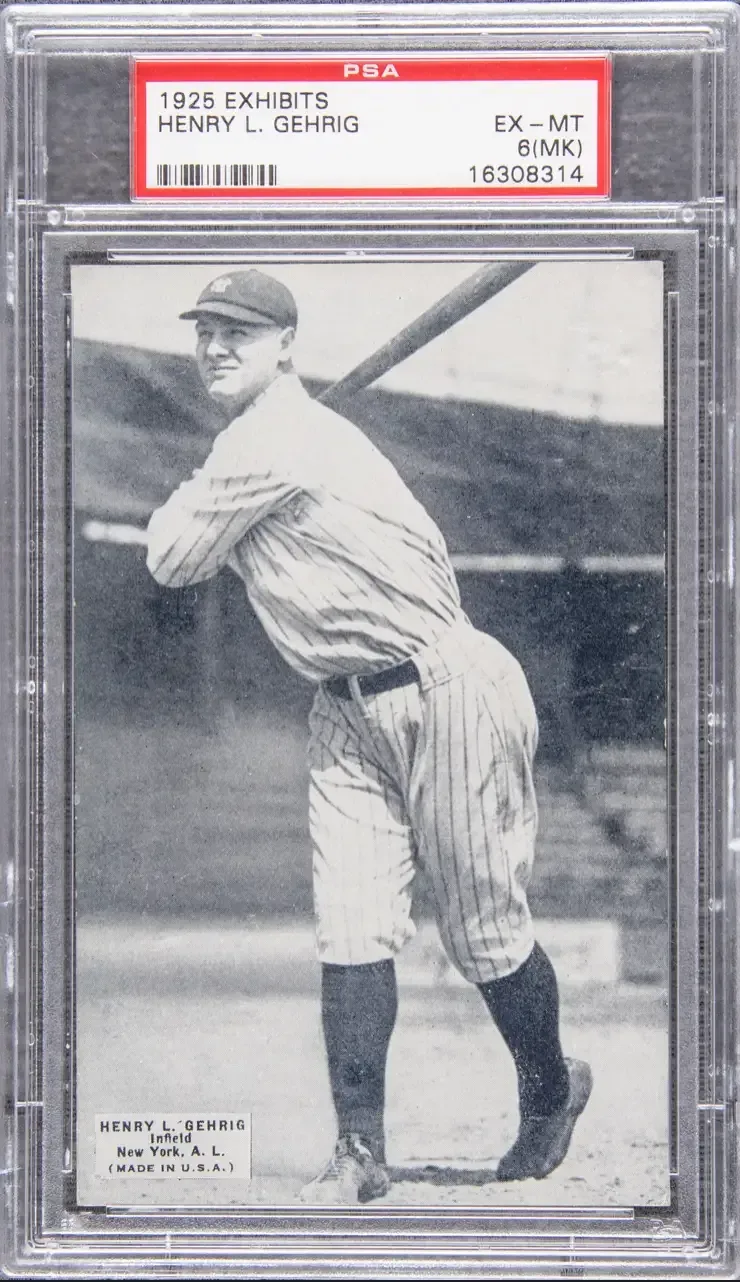
1920s: 1925 Exhibits Lou Gehrig
Lou Gehrig’s 1925 Exhibits rookie is the clear decade leader for the 1920s. It is Gehrig’s only recognized rookie card, and that alone gives it enormous weight in the market. Add in Gehrig’s stature as one of the game’s all-time greats, and the card has all the ingredients collectors want in a blue-chip vintage piece.
A PSA 6 reached a reported high of $782,400 in 2021. More accessible graded examples still sit well into five figures, with PSA 3 sales around $61,000 and PSA 4 sales around $172,000. The total population is 91, which is low enough to keep pressure on supply whenever a presentable copy appears.
The format is also part of the appeal. Unlike the gum cards that came to define later decades, 1925 Exhibits were oversized and distributed through arcade-style vending machines for a penny or two. That unusual release style gives the card a very different feel from mainstream issues of the 1930s and beyond.
For collectors who want a true 1920s cornerstone, this Gehrig is the decade’s headliner without much debate.
Budget alternative: 1923 Maple Crispette V117 Jim Bottomley rookie card #19, raw, around $700.
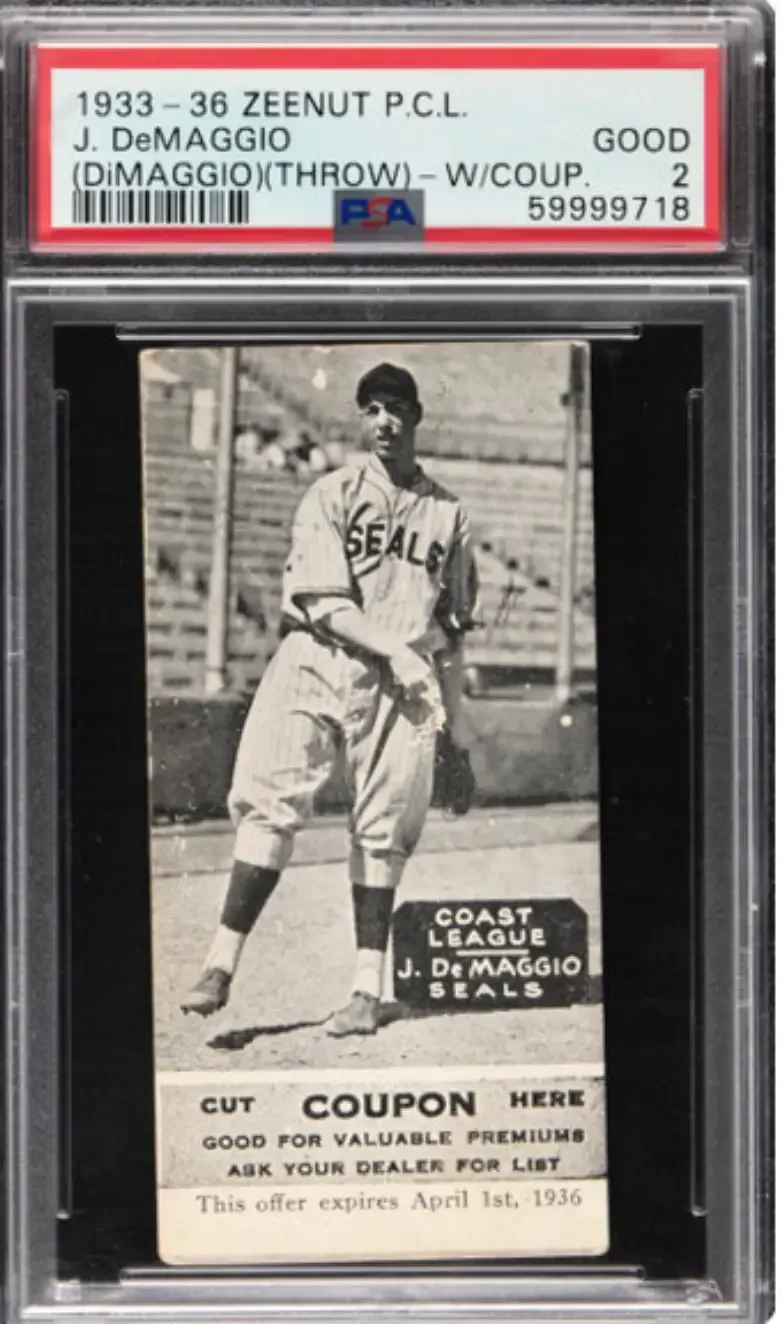
1930s: 1933-36 Zeenut Joe DiMaggio (Throwing)
The 1930s pick goes to one of the hobby’s great pre-Yankees rarities: the 1933-36 Zeenut Joe DiMaggio throwing variation. Before DiMaggio became a New York icon, he was starring for the San Francisco Seals in the Pacific Coast League. This card captures that earlier chapter, which makes it especially desirable to advanced collectors.
One copy with the original coupon attached sold for a reported $79,300 in 2025. A PSA 4 has sold around $59,000, and the total graded population is only 35. Cards with the coupon attached draw special attention because so many Zeenut cards had the bottom coupon removed by kids at the time.
Zeenut cards were inserted directly into snack packages, which helped create a survival challenge from the start. That scarcity, combined with DiMaggio’s enduring popularity, gives the card a profile far larger than its checklist footprint might suggest. There is also a batting variation, but the throwing version stands as one of the marquee DiMaggio rookies from the decade.
This is the kind of card that blends regional history, Hall of Fame star power, and genuine rarity in a way few 1930s rookies can match.
Budget alternative: 1934 Goudey Hank Greenberg rookie card #62 PSA 1, around $900.
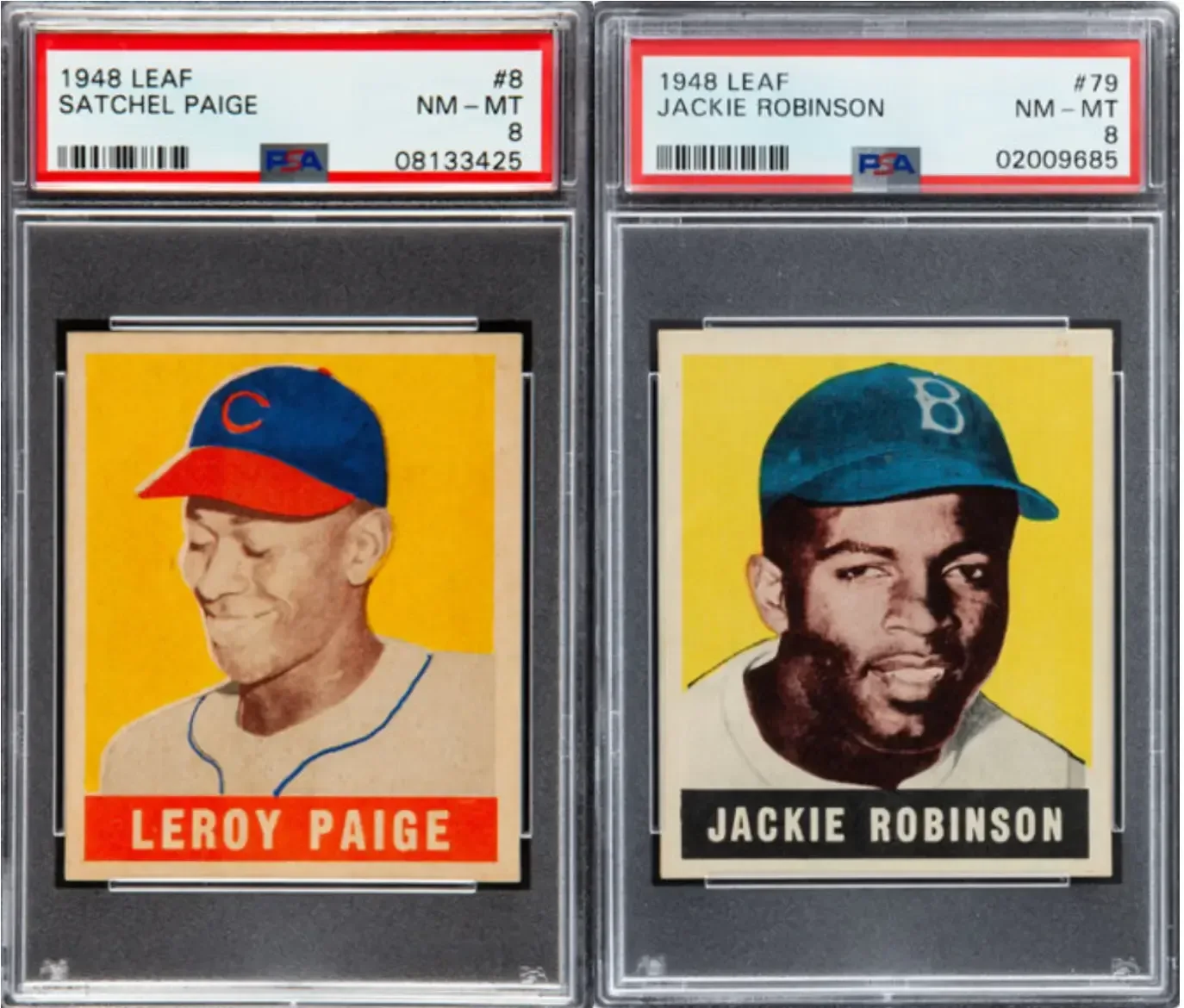
1940s: 1948 Leaf Jackie Robinson #79 and 1948 Leaf Satchel Paige #8
The 1940s are unusual because two cards have a legitimate claim to the top spot: 1948 Leaf Jackie Robinson and 1948 Leaf Satchel Paige. Both are foundational post-war rookie cards, and both carry immense historical significance beyond baseball statistics.
Robinson’s card has reached a reported high of $468,000, while Paige’s has topped out around $432,000. In mid-grade comparisons, Robinson PSA 4 examples have sold near $31,500 and Paige PSA 4 examples around $47,600. At higher grades, Robinson can edge ahead, with PSA 7 sales around $197,600 versus roughly $184,700 for Paige in PSA 7.
The population gap helps explain some of the pricing behavior. Jackie Robinson’s card has a much larger total population at 2,975, while Satchel Paige sits at 293. Paige’s lower supply supports stronger pricing in lower grades, while Robinson’s broad recognition and collector demand drive elite-condition prices.
Historically, both cards are monumental. Robinson broke Major League Baseball’s color barrier in 1947 and changed the sport forever. Paige, already a legend from the Negro Leagues, finally reached the majors at age 42. The Leaf set itself is a hobby classic, even though collectors have long noted its marketplace release came around 1949.
For the 1940s, it is fair to treat these two cards as co-headliners.
Budget alternative: 1948 Bowman Yogi Berra rookie card #6 PSA 2, around $750.
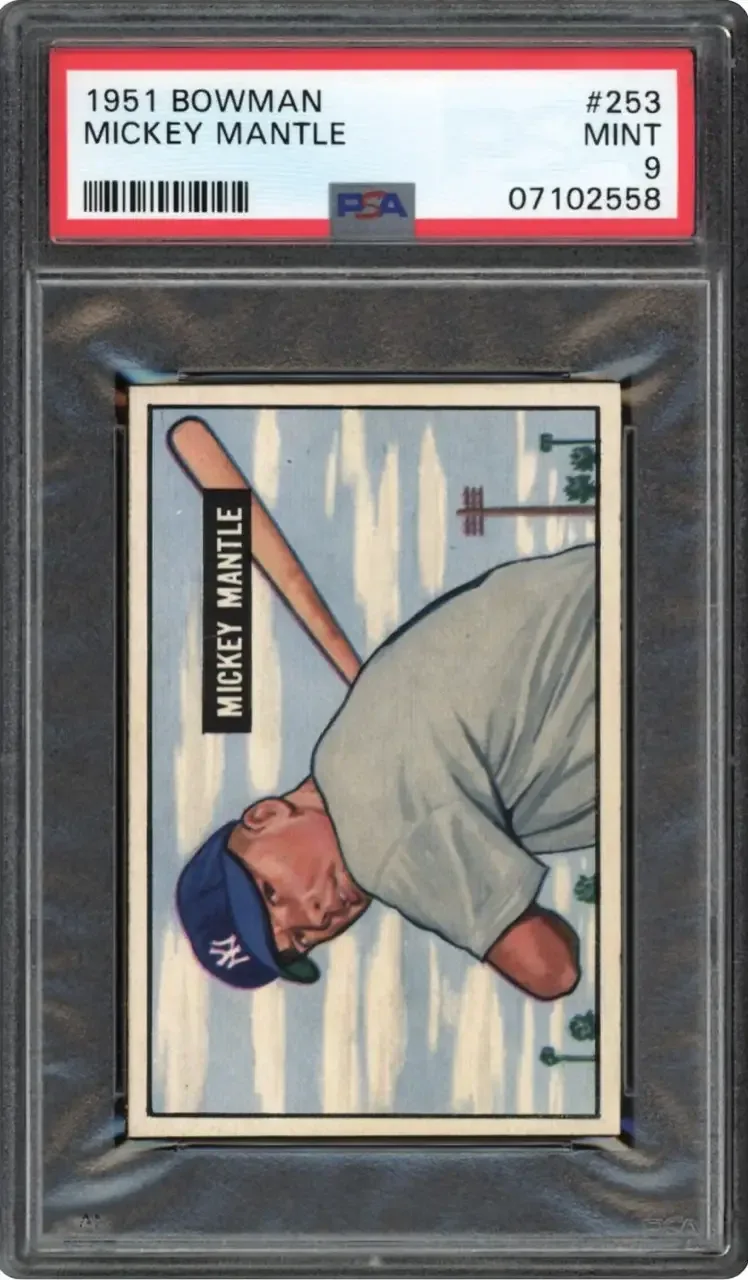
1950s: 1951 Bowman Mickey Mantle #253
No rookie card carries more brand recognition from the 1950s than Mickey Mantle’s 1951 Bowman. While the 1952 Topps Mantle is the hobby’s more famous image, the 1951 Bowman is Mantle’s only recognized rookie card, and that distinction keeps it at the center of elite vintage collecting.
A PSA 7 has sold around $125,800, while PSA 2 copies have changed hands near $19,100. At the high end, the card reached a reported $3.192 million in 2022. The population is much larger than some earlier pre-war icons at 4,349, but Mantle demand is so deep that strong examples remain highly competitive.
One of the most interesting market angles with this card is its relationship to the 1952 Topps Mantle. Many collectors still see the rookie as comparatively undervalued because it remains significantly cheaper than Mantle’s second-year card despite being the true rookie. That dynamic has helped keep the 1951 Bowman in constant demand among both vintage specialists and broader investors.
It is not just a key 1950s rookie. It is one of the essential building blocks of the entire baseball card market.
Budget alternative: 1955 Topps Sandy Koufax #123 PSA 1, around $870.
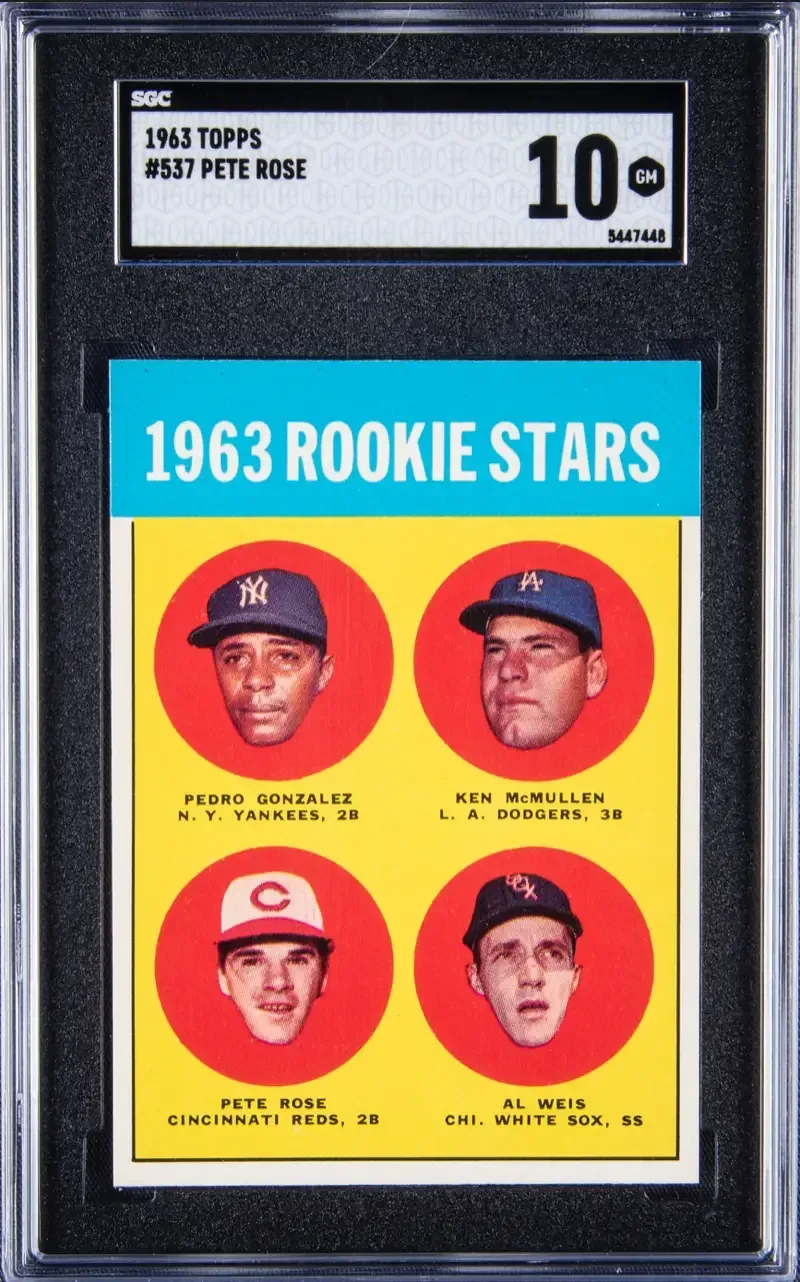
1960s: 1963 Topps Pete Rose #537
The decade’s leading rookie from the 1960s is the 1963 Topps Pete Rose card, one of the hobby’s most recognizable multi-player rookie issues. Rose shares the card with Pedro Gonzalez, Ken McMullen, and Al Weis as part of the Rookie Stars subset, but Rose is the reason collectors chase it.
A reported peak sale reached $264,000 in 2021. Lower-grade examples are much more accessible, with PSA 2 copies around $1,400, while PSA 7 examples have sold near $5,995. The total population is substantial at 11,236, making this one of the more available iconic vintage rookies on the list.
The card’s place in hobby history is important. Rose’s chase for the all-time hits record in the 1980s fueled heavy demand for this rookie and helped pull more collectors into the vintage market. Even today, it remains one of the most discussed cards from the decade, partly because any renewed Hall of Fame debate around Rose tends to bring fresh attention back to the card.
It may not be the rarest rookie of the 1960s, but in terms of recognition, popularity, and long-term market presence, few cards from the decade can rival it.
Budget alternative: 1967 Topps Tom Seaver #581 PSA 1.5, around $930.
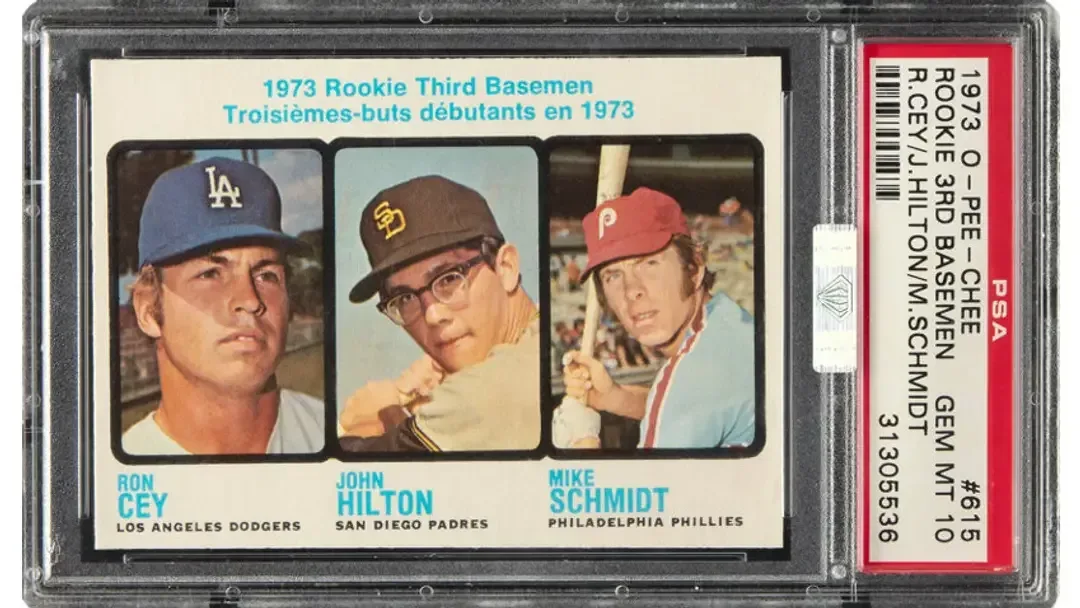
1970s: 1973 O-Pee-Chee Mike Schmidt #615
The 1970s selection is not the standard Topps Mike Schmidt rookie but the scarcer 1973 O-Pee-Chee version. That distinction matters. The O-Pee-Chee card features bilingual English and French text and is dramatically tougher than its Topps counterpart, giving it a higher-end niche in the Schmidt market.
A PSA 9 example reached a reported $6,710, while PSA 3 copies have sold around $319. The headline number came in August 2026, when an example reportedly reached $91,500. Population tells the story: the O-Pee-Chee version sits at 692 total graded examples compared with more than 20,000 for the Topps issue.
Schmidt’s career résumé does the rest of the work. He won three National League MVP awards, hit 548 home runs, and remains a frequent choice as the greatest third baseman ever. When scarcity and all-time greatness meet on a rookie card, the market usually responds.
The broader Topps rookie still has a strong collector following, but the O-Pee-Chee issue is the version that pushes the decade’s ceiling.
Budget alternative: 1975 Topps George Brett #228 PSA 8, around $860.
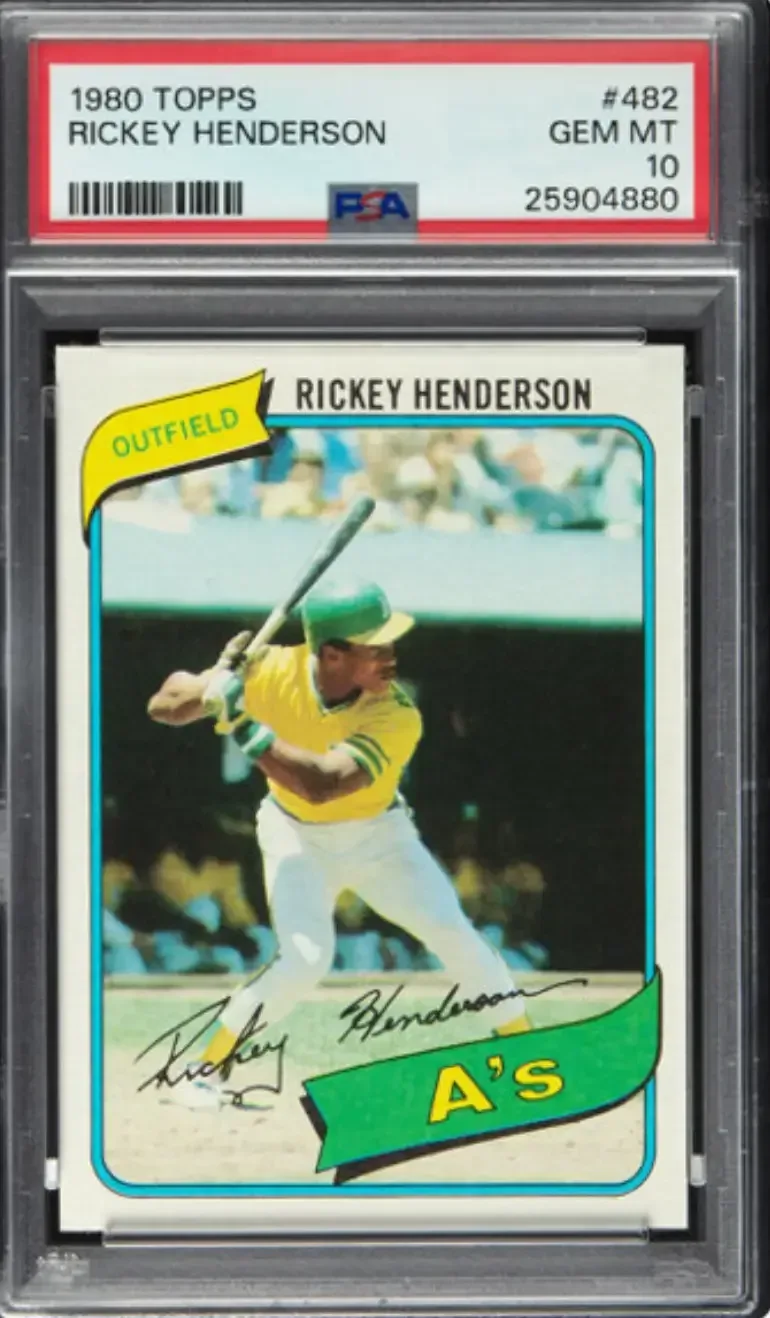
1980s: 1980 Topps Rickey Henderson #482
Rickey Henderson’s 1980 Topps rookie leads the 1980s because it combines superstar status, hobby familiarity, and a condition challenge that still matters decades later. Henderson is the stolen base king, a larger-than-life personality, and one of the signature cards of the era.
On the surface, population looks enormous. PSA has graded 72,237 copies. Yet the card remains difficult at the very top of the scale because centering and print quality often hold copies back. Only 26 PSA 10s exist, which explains why mint examples command such strong prices. Recent figures place PSA 3 copies around $65 and PSA 9 sales around $4,000.
Another factor working in this card’s favor is rookie-card simplicity. Henderson is the only true megastar of the 1980s whose rookie card came before Donruss and Fleer entered the MLB-licensed market in 1981, leaving him with one flagship rookie instead of a cluster of major-brand first-year options.
That combination of singularity and condition scarcity has helped the card remain one of the defining modern-vintage rookies.
Budget alternative: 1986 Topps Traded Barry Bonds rookie card #11T PSA 10, around $915.
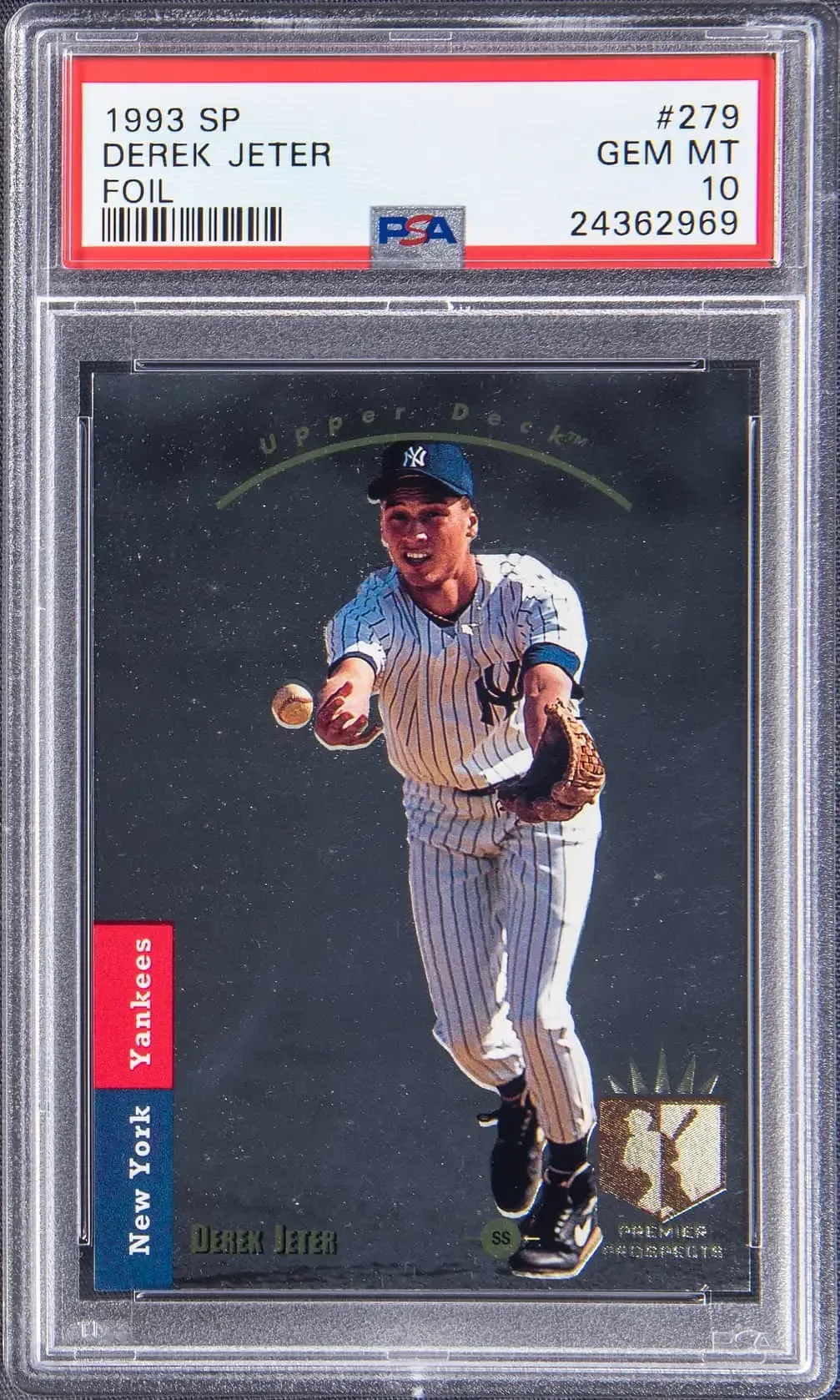
1990s: 1993 SP Derek Jeter #279
The most important baseball rookie of the 1990s is the 1993 SP Derek Jeter. Jeter has multiple rookie cards from 1993 and an even longer list of 1992 pre-rookie issues, but the SP is the card that towers over the rest of the field.
A PSA 9 example has sold around $8,500, while PSA 3 copies have sold for about $45. The card reached a reported high of $600,000 in 2022. Its total population is 53,412, which sounds plentiful until the condition issue comes into focus. The foil surface is notoriously vulnerable to chipping and wear, and only 22 PSA 10s are on record.
That condition sensitivity is the entire story with this card. Produced near the end of the junk wax era, it should not be scarce in a traditional sense. But elite copies are genuinely hard to find, and the hobby has treated them accordingly for years.
Jeter’s legacy only reinforces the card’s stature. A Yankees icon, Hall of Famer, and one of the most collected stars of the last 30 years, he gives the 1990s a rookie card that remains instantly recognizable to both vintage and modern collectors.
Budget alternative: 1991 Topps Desert Shield Chipper Jones rookie card #333 PSA 6, around $995.
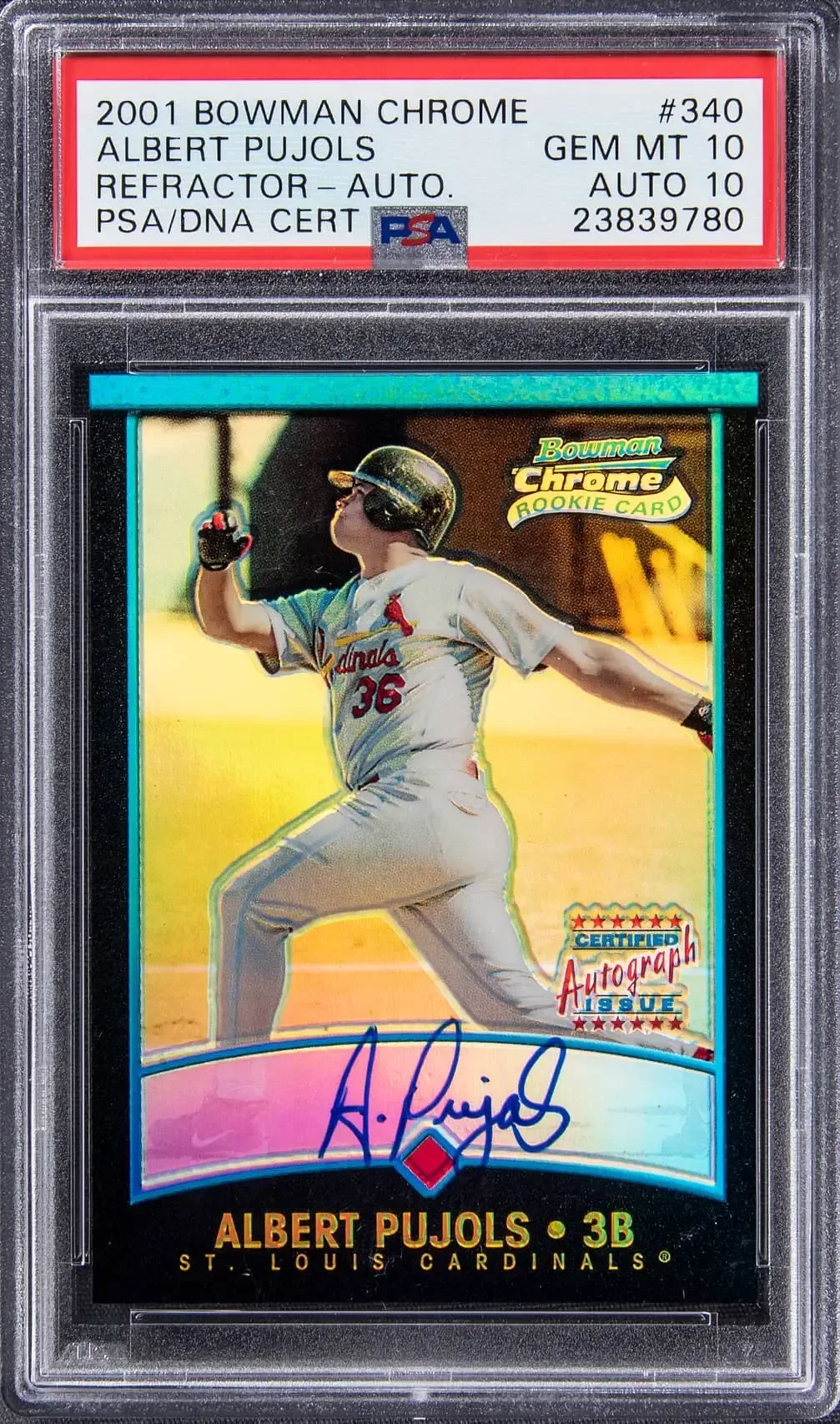
2000s: 2001 Bowman Chrome Albert Pujols Autograph Refractor #340 /500
The 2000s selection marks a shift toward the modern collecting formula that now dominates the hobby. Albert Pujols’ 2001 Bowman Chrome Autograph Refractor rookie, numbered to 500, brings together three features that define premium modern cards: a pack-pulled autograph, a refractor finish, and serial numbering.
A PSA 9 has sold around $34,000, and a PSA 5 has sold near $5,878. The card’s reported high sits at $462,000 from 2022. Those numbers show just how firmly the card has established itself as one of the era’s top modern baseball grails.
Pujols’ career numbers justify the attention. He finished with 703 home runs and a résumé that leaves little doubt about his standing among the greatest hitters ever. The card also benefits from being an early example of the Bowman Chrome prospect-and-rookie model that later became a hobby foundation.
For many collectors, this is the point on the timeline where rookie-card collecting starts to look more like today’s market, and Pujols is one of the clearest early pillars of that change.
Budget alternative: 2001 Topps Chrome Traded Ichiro Suzuki Retrofractor #T266 PSA 5, around $940.
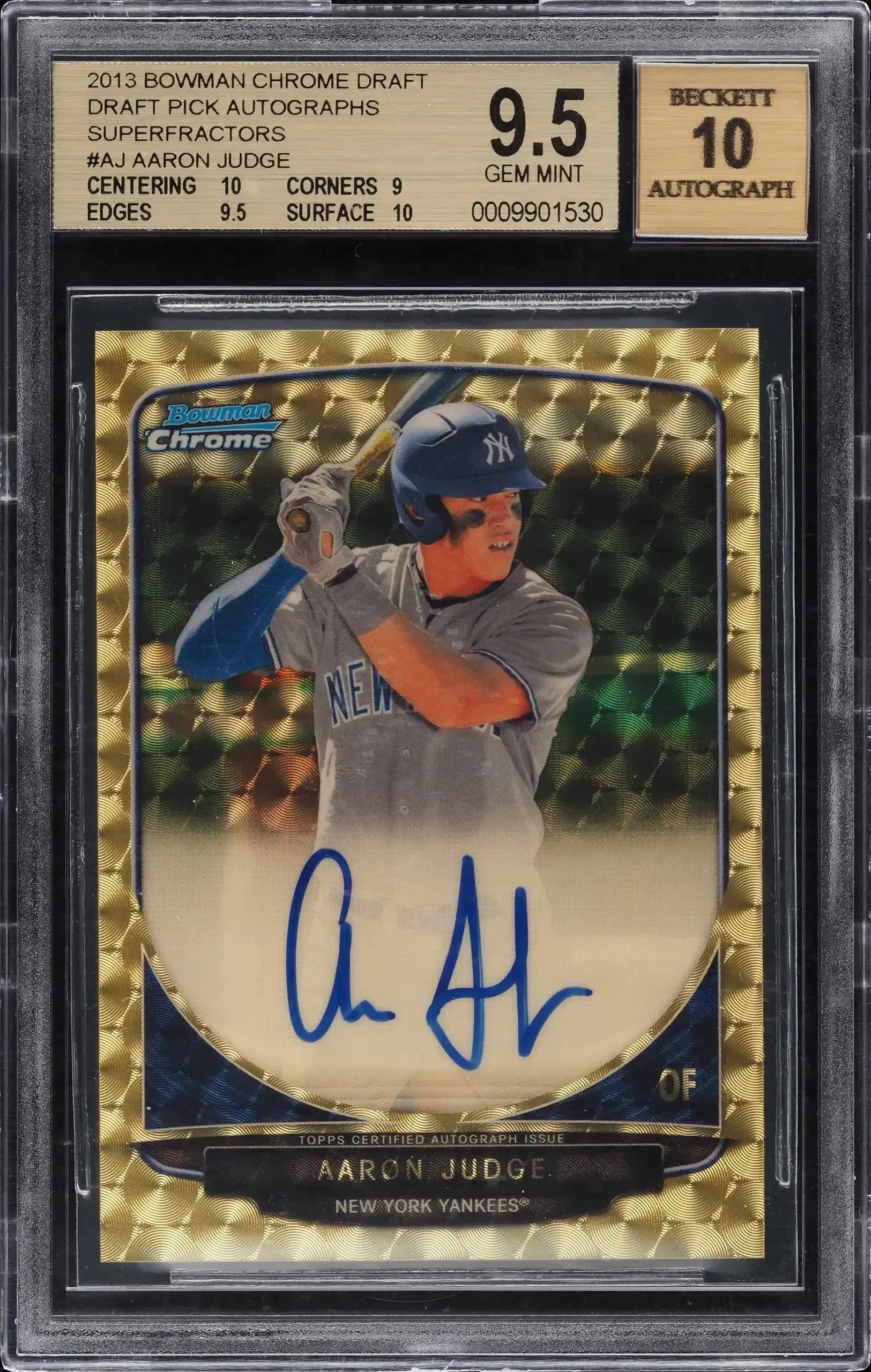
2010s: Aaron Judge 2013 Bowman Chrome Superfractor Autograph 1/1 and Shohei Ohtani 2018 Bowman Chrome Superfractor Autograph
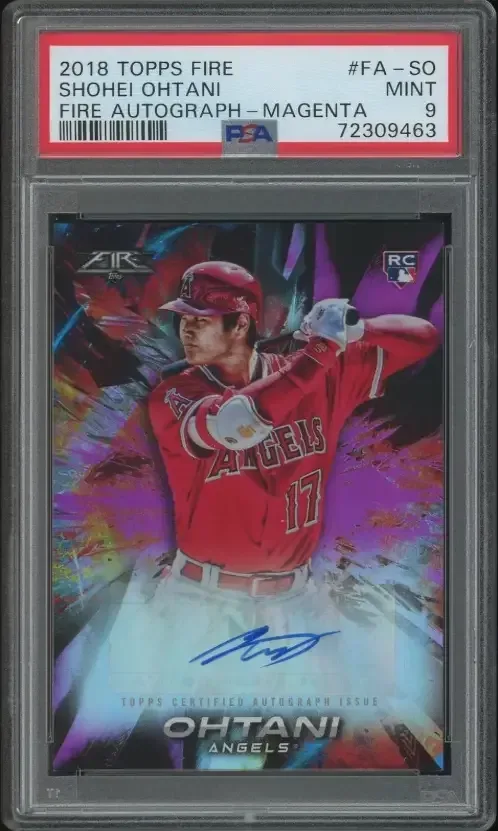
The 2010s are dominated by the highest-end one-of-one superfractor market, and two cards sit above the rest: Aaron Judge’s 2013 Bowman Chrome Superfractor Autograph 1/1 and Shohei Ohtani’s 2018 Bowman Chrome Superfractor Autograph.
Judge’s card reportedly sold privately for $5.2 million in 2026 in a BGS 9.5 holder, setting the benchmark as the most expensive modern baseball card publicly discussed in the market. Ohtani’s equivalent rookie has not had a public sale, but its hobby profile suggests it would be a major event if it ever surfaced in a transaction.
These are not just expensive rookie cards. They represent the absolute top of modern baseball collecting, where prospecting, chromium finishes, autographs, and one-of-one scarcity all converge. Judge and Ohtani are also the defining MLB stars of their era, which gives these cards a level of demand that goes well beyond scarcity alone.
Judge’s card already has the headline sale. Ohtani’s remains more theoretical in public pricing, but that uncertainty has only added to the intrigue around it. Together, they define the upper limit of the 2010s baseball rookie market.
Budget alternative: 2011 Topps Update Mike Trout rookie card #US175 SGC 10, around $950.
What This Decade-by-Decade List Shows About the Rookie Card Market
One trend is easy to spot across the full timeline: the hobby rewards a mix of greatness, rarity, and a compelling story. Babe Ruth and Lou Gehrig carry unmatched historical importance. Jackie Robinson and Satchel Paige bring cultural significance that reaches beyond the field. Mantle, Rose, Henderson, Jeter, Pujols, Judge, and Ohtani pair hobby demand with instantly recognizable careers.
Another clear shift is how the definition of a premier rookie changes over time. Early cards are often prized for survival rate and historical importance. By the 1990s, condition sensitivity becomes a major driver. In the 2000s and 2010s, collectors increasingly focus on serial numbering, autographs, refractors, and one-of-one parallels.
For collectors building a focused collection, the budget alternatives matter almost as much as the headliners. Not everyone is chasing a seven-figure Ruth or a six-figure Gehrig, but a lower-cost Speaker, Berra, Koufax, Brett, or Trout can still anchor a decade in a meaningful way. That makes a decade-based rookie run one of the most flexible and enjoyable ways to build a baseball collection, whether the budget is four figures or far beyond it.
Photo Gallery