Vintage G.I. Joe cards are back in the conversation, and the timing makes sense. With Upper Deck now holding a Hasbro licensing agreement that includes G.I. Joe, collectors are taking a fresh look at one of the franchise’s overlooked cardboard releases: the 1986 G.I. Joe Action Cards.
For longtime fans, the set taps directly into the peak years of G.I. Joe: A Real American Hero. The toy line, animated series, and comics turned characters like Duke, Snake-Eyes, Scarlett, Storm Shadow, and Cobra Commander into household names for a generation of collectors. While action figures and key comic books have long been the headline items in the category, the trading cards from that same era remain a more accessible lane for buyers who still want recognizable characters and vintage appeal.
Recent graded sales show that the top cards from the 1986 release are not exactly cheap anymore, especially in elite condition. They are still far less expensive than many high-grade toys or comics, but demand is clearly there when the right character and grade line up.
Why 1986 G.I. Joe cards are getting a closer look
The new Upper Deck and Hasbro partnership adds a modern catalyst to an already nostalgic property. The agreement covers several major Hasbro brands, including G.I. Joe, Transformers, Power Rangers, M.A.S.K., and Jem and the Holograms. Transformers is expected to be an early focal point, but G.I. Joe is also part of the longer-term card pipeline.
For more collector background, read 2026 Bowman Football Stock Watch After Week 3: Heisman Hopefuls Driving Early Hobby Interest.
That does not automatically mean vintage cards will spike across the board. New licensed products do, however, tend to put older material back in front of collectors. A new release can introduce younger buyers to a franchise’s trading card history, while older fans often start revisiting vintage sets they may have ignored for years.
The 1986 G.I. Joe Action Cards sit in a useful sweet spot. They are old enough to feel legitimately vintage, character-driven enough to attract franchise fans, and still obtainable enough to appeal to collectors priced out of sealed toys, carded figures, or top comic books.
G.I. Joe nostalgia still carries real value
The broader G.I. Joe market has already shown that nostalgia alone is not a small factor. High-grade examples from the toy and comic side of the hobby continue to bring substantial prices.
For another perspective on this story, read 1986 G.I. Joe Action Cards Show a High-Grade Market for Duke, Storm Shadow and Snake-Eyes.
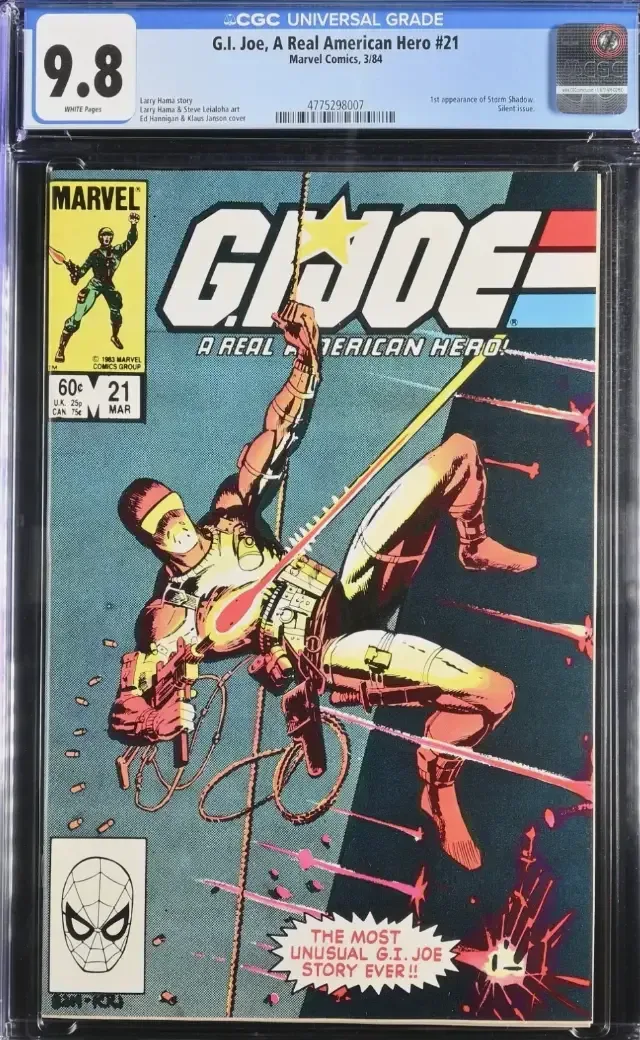
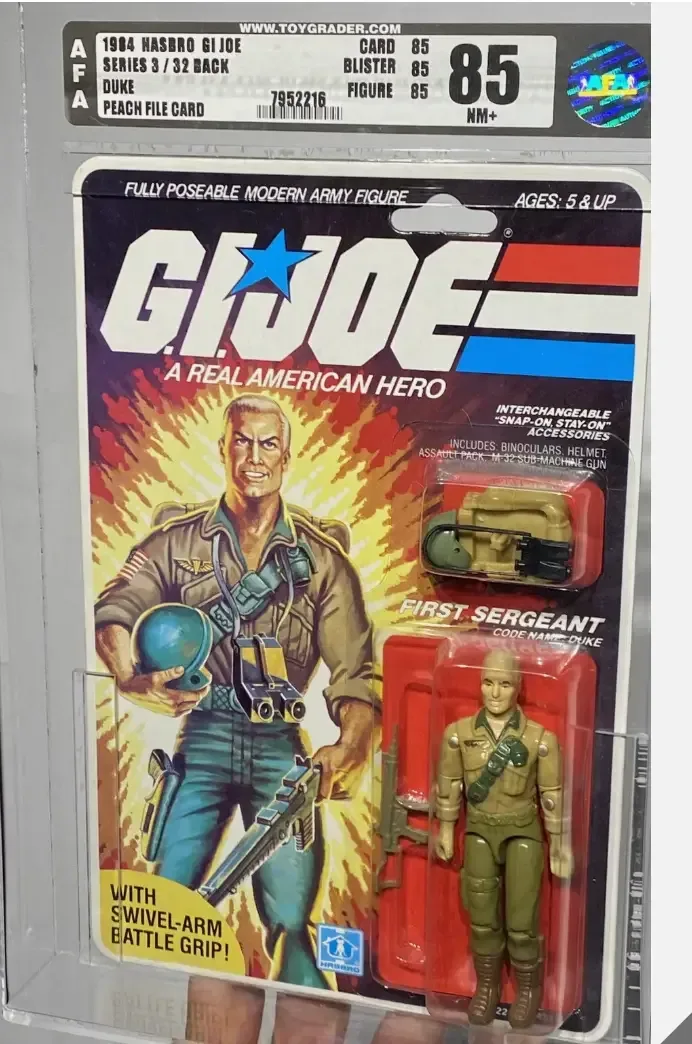
A 1984 Duke Series 3 action figure graded AFA 85 sold for $2,999.99 on August 31. On the comic side, a CGC 9.8 copy of G.I. Joe: A Real American Hero #21, notable for the first appearance of Storm Shadow, sold for $1,700 on August 25.
Those results matter because they help frame where the 1986 cards fit. Compared with premium figures and blue-chip comic books, the cards remain relatively approachable. Even so, top graded examples are now firmly in the range where buyers need to be selective and informed.
Recent sales show strength for key characters
Four notable recent sales offer a useful snapshot of the current market for the 1986 G.I. Joe Action Cards set. The common thread is easy to spot: grading matters, iconic characters matter, and low-population high-grade examples can command serious money.
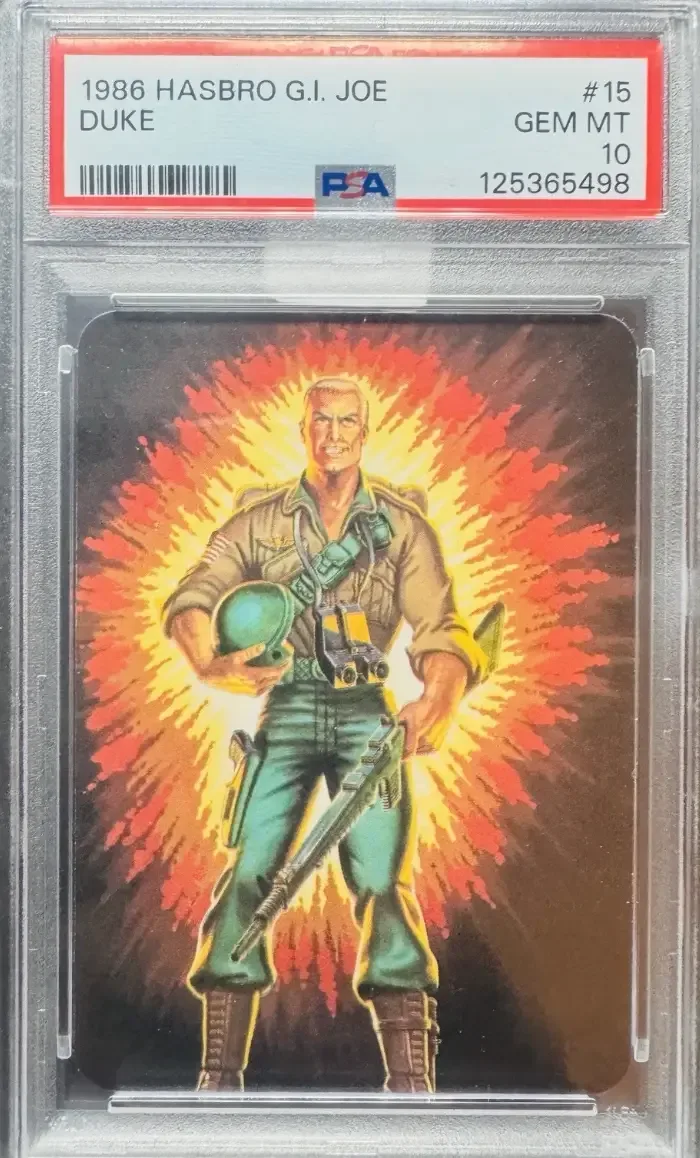
Duke #15 PSA 10 sold for $600
Duke remains one of the foundational characters of the A Real American Hero era, and his 1986 Action Cards presence still resonates with collectors. A PSA 10 copy of Duke #15 sold for $600 on September 14.
That result stands out not just because of the price, but because Gem Mint examples in niche vintage entertainment sets often trade infrequently. When one appears featuring a central character, motivated buyers usually have to act decisively.
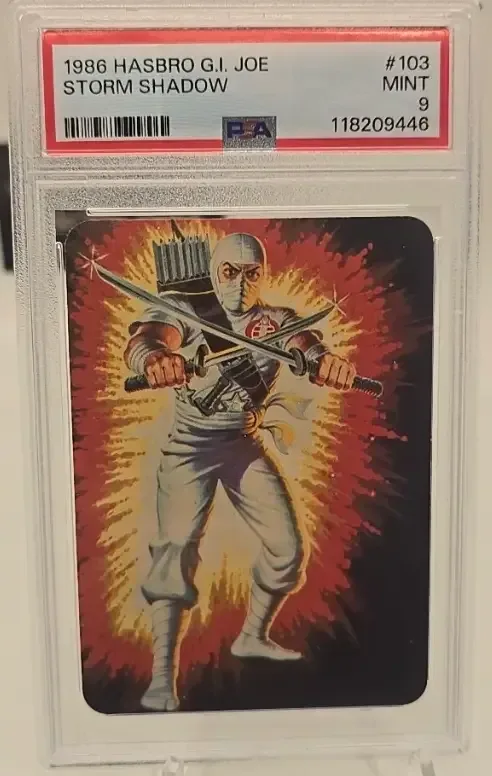
Storm Shadow #103 PSA 9 sold for $600
Storm Shadow matched that $600 level with a PSA 9 copy of card #103 that sold on August 26. Even without the bump of a PSA 10 grade, the character’s popularity carried the card to one of the strongest recent results in the set.
Storm Shadow has long been one of the most collected names in the franchise, and his crossover appeal stretches beyond cards into action figures and comics. That helps explain why even a Mint rather than Gem Mint example was able to reach the same price as Duke’s PSA 10.
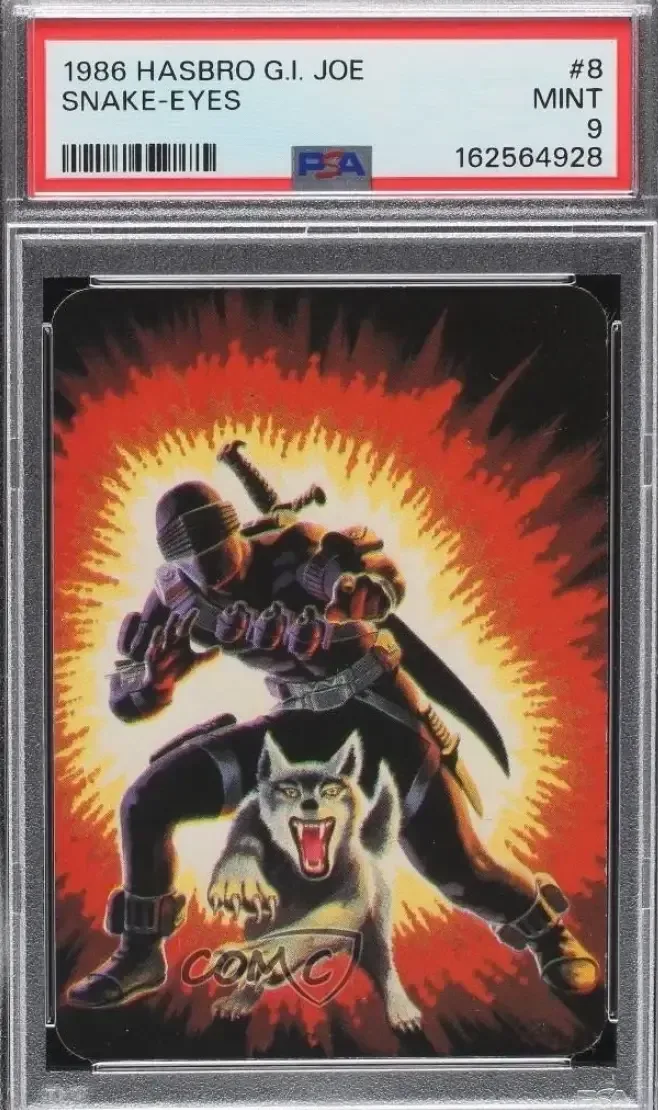
Snake-Eyes #8 PSA 9 sold for $520.44
Snake-Eyes remains one of the biggest names in the entire G.I. Joe universe, so it is no surprise to see him near the top of the recent sales list. A PSA 9 copy of Snake-Eyes #8 brought $520.44 on August 25.
For many collectors, Snake-Eyes is the character most closely associated with the brand’s enduring popularity. His demand tends to travel well across formats, whether buyers collect figures, comics, original art, or cards. That kind of broad fan support often creates a stronger pricing floor.
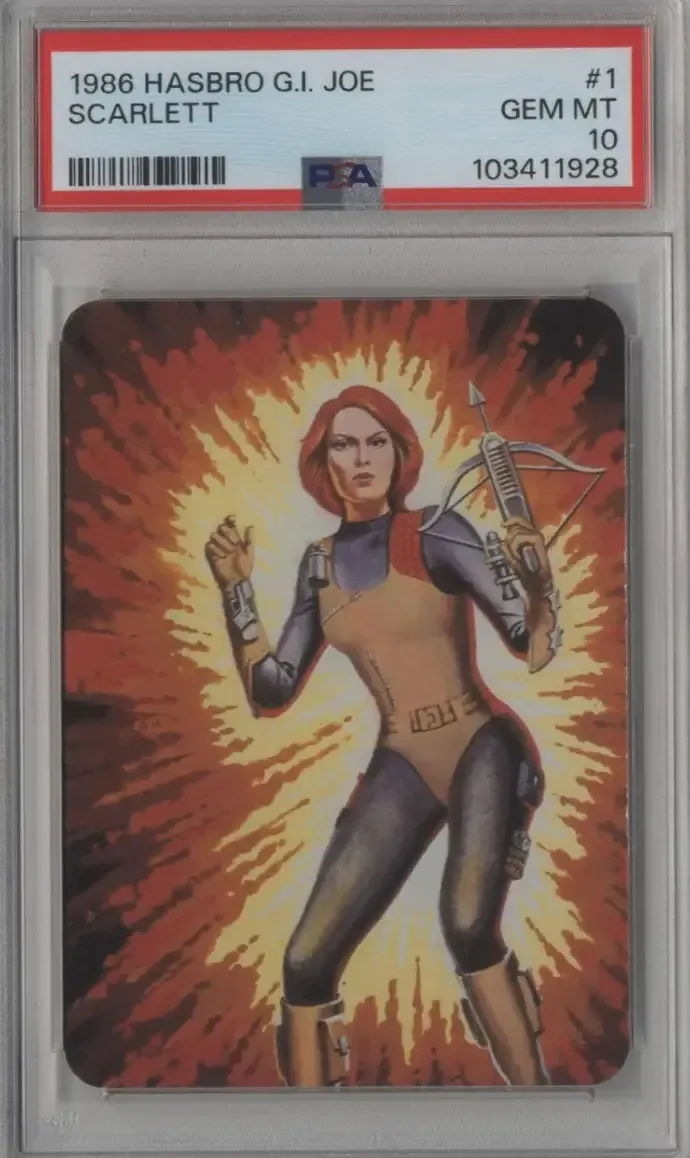
Scarlett #1 PSA 10 sold for $400
Scarlett’s card has two advantages working in its favor: she is one of the franchise’s most recognizable characters, and she appears on card #1. A PSA 10 example sold for $400 on August 26.
The Gem Mint grade is especially notable here because the PSA 10 population sits at just five. Low-pop numbers do not guarantee future gains, but they can make top-condition copies especially competitive when one surfaces.
What these sales say about the market
The biggest takeaway from these results is that the 1986 G.I. Joe Action Cards market is character-driven first and condition-sensitive second. Duke, Storm Shadow, Snake-Eyes, and Scarlett are not random cards in the set. They are central names that have remained popular across decades of collecting.
That matters for buyers trying to evaluate the set. If fresh interest enters the category because of future Upper Deck releases, attention is likely to concentrate first on the most recognizable characters rather than lifting every card equally. Key names tend to attract the initial wave of buying, especially in professionally graded holders.
The sales also show that there is room for multiple value lanes. A PSA 10 obviously carries a premium, but Storm Shadow reaching $600 in PSA 9 proves demand is not limited only to perfect-grade chases. In thinner niche markets, character appeal can sometimes offset the difference between Mint and Gem Mint.
How the cards compare with other G.I. Joe collectibles
The 1986 Action Cards are in an interesting position within the larger G.I. Joe hobby. Vintage toys can be expensive, especially if they are graded, carded, or tied to popular characters. Comics have their own established hierarchy, and top issues in high grade are already expensive enough to deter casual buyers.
Cards offer a simpler entry point. They are easier to store, easier to display, and often easier to buy one at a time without making a four-figure commitment. That does not mean the set is undervalued by definition, but it does mean collectors have another way to participate in the franchise without competing for the hobby’s biggest-ticket items.
The comparison to comics is especially relevant for a character like Storm Shadow. When a first-appearance comic in CGC 9.8 sells for $1,700 and a vintage character card in PSA 9 sells for $600, it illustrates the different price tiers within the same fandom. Some collectors will always prefer key comic books, but others may see the cards as a more attainable way to own vintage pieces tied to the same names.
What buyers should watch before jumping in
Collectors exploring the 1986 G.I. Joe Action Cards set should start with a few practical questions. First, are they buying for nostalgia, for character collecting, or for potential upside tied to renewed franchise attention? The answer can shape whether raw copies, mid-grade slabs, or top-pop examples make the most sense.
Second, population reports matter. Scarlett #1 in PSA 10 has a population of five, which helps explain its premium. Low populations can make a card feel scarce, but buyers should still compare sales frequency and demand. A thinly traded market can move sharply in either direction.
Third, buyers should expect uneven performance across the set. The headline characters are likely to remain the most liquid. Lesser names, vehicles, and secondary cards may still be enjoyable to collect, but they may not see the same level of competition when it comes time to sell.
Finally, it is worth remembering that renewed attention does not always translate into immediate across-the-board price increases. New licensed releases can be helpful for awareness, but vintage markets still depend on collector follow-through.
Why this set has staying power
The 1986 G.I. Joe Action Cards are compelling because they sit at the crossroads of several collecting worlds at once. They connect to the toy line that defined much of 1980s action figure culture. They reflect characters built up through animation and comics. And they exist in a card format that modern collectors increasingly understand and track.
That combination gives the set a durable identity beyond short-term hype. Even if new G.I. Joe releases from Upper Deck arrive with a different visual style and modern chase elements, the 1986 cards will still represent an original-era product tied directly to the property’s peak nostalgia window.
For collectors who grew up with A Real American Hero, that matters. For newer buyers discovering the brand through future licensed products, it could matter even more once they start tracing the franchise’s cardboard history. The market has already shown there is real demand for high-grade examples of the biggest names, and cards featuring Duke, Storm Shadow, Snake-Eyes, and Scarlett are giving a clear early signal of where collector attention is landing.
Photo Gallery